What Is UB-I: The AI Agent That Turns Location Chaos Into Location Performance
UB-I is Uberall’s agentic AI for location performance — an autonomous AI agent that monitors every location, decides what matters most, and does the work.

Key takeaways
- UB-I is the first AI agent built for location performance: one agent that covers local visibility, reputation, and engagement across every location from a single platform
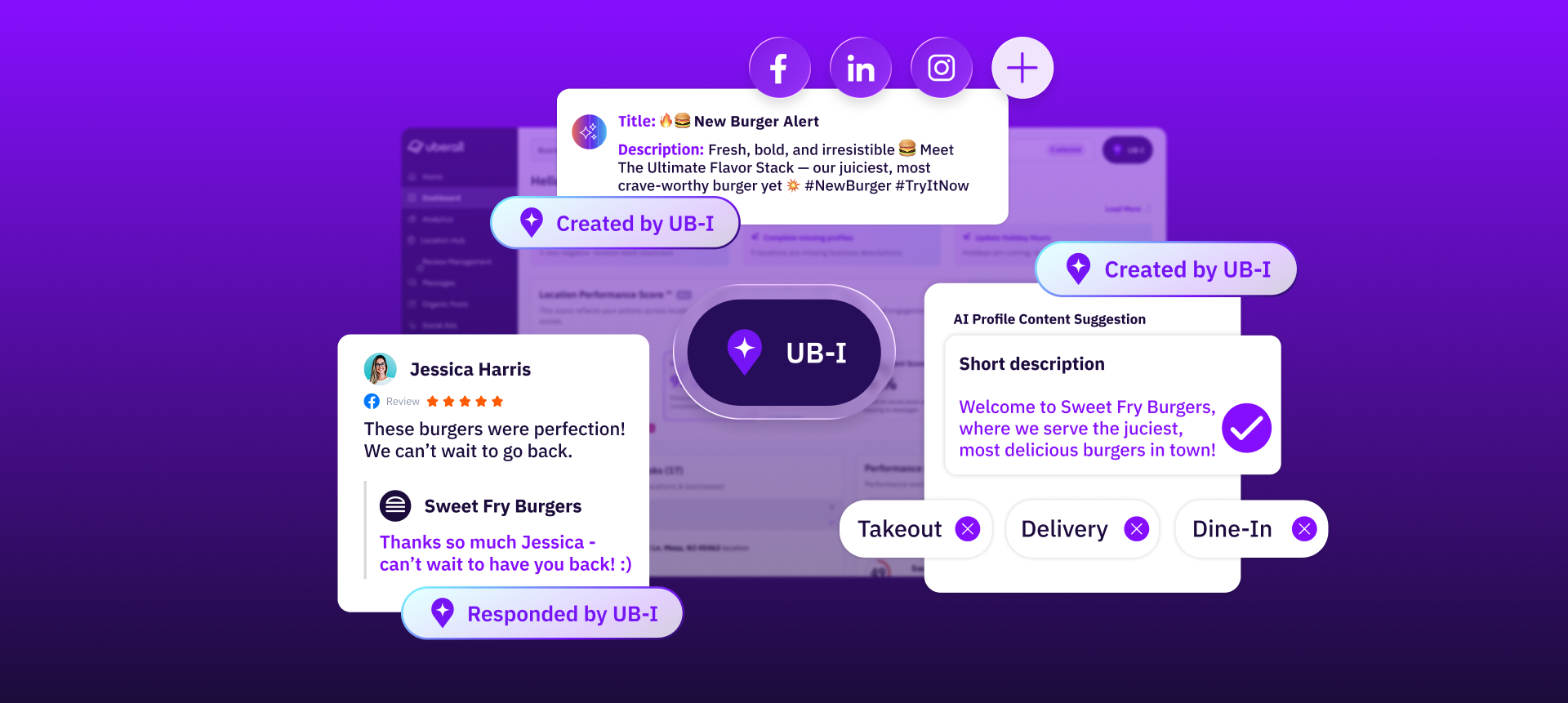
- Unlike AI assistants that wait for users to prompt before taking action, UB-I monitors your locations continuously, decides what matters most at that time, and prepares the work for you to approve
- Every action UB-I takes is prioritized by business impact, built on Uberall’s Location Performance Optimization (LPO) framework — and you stay in control at every step

Two in three CMOs at multi-location brands say local marketing is too complex — and here I am questioning how that number isn’t actually higher.
It’s never been easy updating business information everywhere, distributing content, managing reviews at scale — and now keeping AI search results accurate. But tooling has become so fragmented that easy, confident decision-making doesn’t exist anymore; local digital presence drifts far from the ideal; and brands are paying for it across every location.
Our team at Uberall understands this. One of our customers — a major energy provider with hundreds of EV charging stations across Germany — uploaded their locations in bulk when they first partnered with us. As the network grew, new stations were never added. For three years, auto-generated Google Maps listings just kept multiplying: listings the company didn’t own, couldn’t control, and where no one was managing reviews.
Customer stories like that are exactly why we built UB-I — an agentic AI designed specifically for location performance at enterprise scale. The rest of the market is heading the other way: One platform now ships more than ten specialized agents, another sells an AI that monitors your visibility and hands you a report, and more than one chatbot has been rebranded as an “agent” without gaining any new abilities. We’ve taken the single-agent path, giving Uberall users one agent that monitors every location, decides what matters most for visibility, reputation, engagement, and revenue, and does the work for marketing teams to approve.
One AI Agent That Covers Everything — Instead of a Dozen That Don’t
Maybe you’ve already recognized this: Most AI marketing automation tools give you more things to manage, coordinate, prompt, and QA — and therefore less headspace for strategic thinking.
A “suite of AI agents” sounds impressive in a press release, but in reality it means a reviews agent with one tone of voice, a social agent with another, a listings “agent” that isn’t remotely coordinated with what either of them is doing. On top of that there’s then the added price tag to “enjoy” this suite of agents before any of them have proven their worth.
The promise of greater efficiency with these tools is the Trojan Horse many marketers were missold: In fact, almost 9 in 10 leaders say their tech investments haven’t fully delivered, with integration complexity being the top reason.
UB-I takes the opposite approach, since it’s built into the Uberall platform and handles your multi-location marketing on every front, from a single agent page — at no added AI premium.
While you’re in a meeting, grabbing a coffee, or just not logged in — UB-I is already working.
It’s drafting the following:
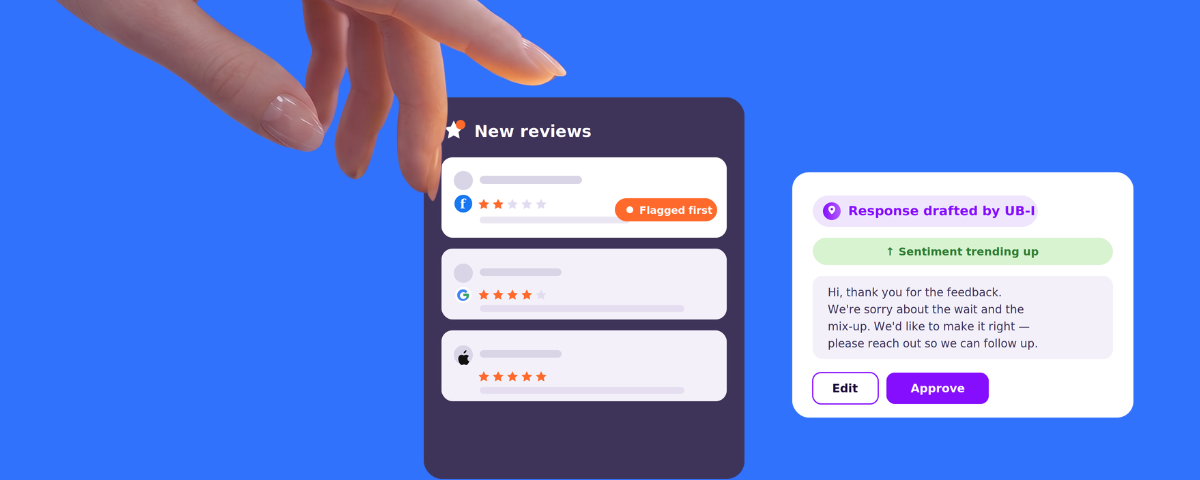
- Review replies: AI-drafted replies for all pending reviews according to your brand guidelines, negative reviews prioritized first
- Listing cleansing: Name and address formatting corrected to each directory’s requirements, preventing sync failures and suppressed visibility
- Profile completeness: Missing descriptions, attributes, and special hours generated from location data and queued for approval
Meaning all the headspace you need is to log into the Uberall platform and click once to approve or edit UB-I’s suggestions, not to discover what’s broken or decide where to rank it on your list of priorities.
We’re building UB-I to take on more with every update. Today, it monitors and prepares the work. With each release, it moves toward full orchestration, handling routine tasks autonomously while you stay in the driver’s seat. The vision hasn’t changed since day one: one agent that runs location marketing for you, without excessive prompting.
UB-I Will Act on Your Biggest Opportunities, Per Location
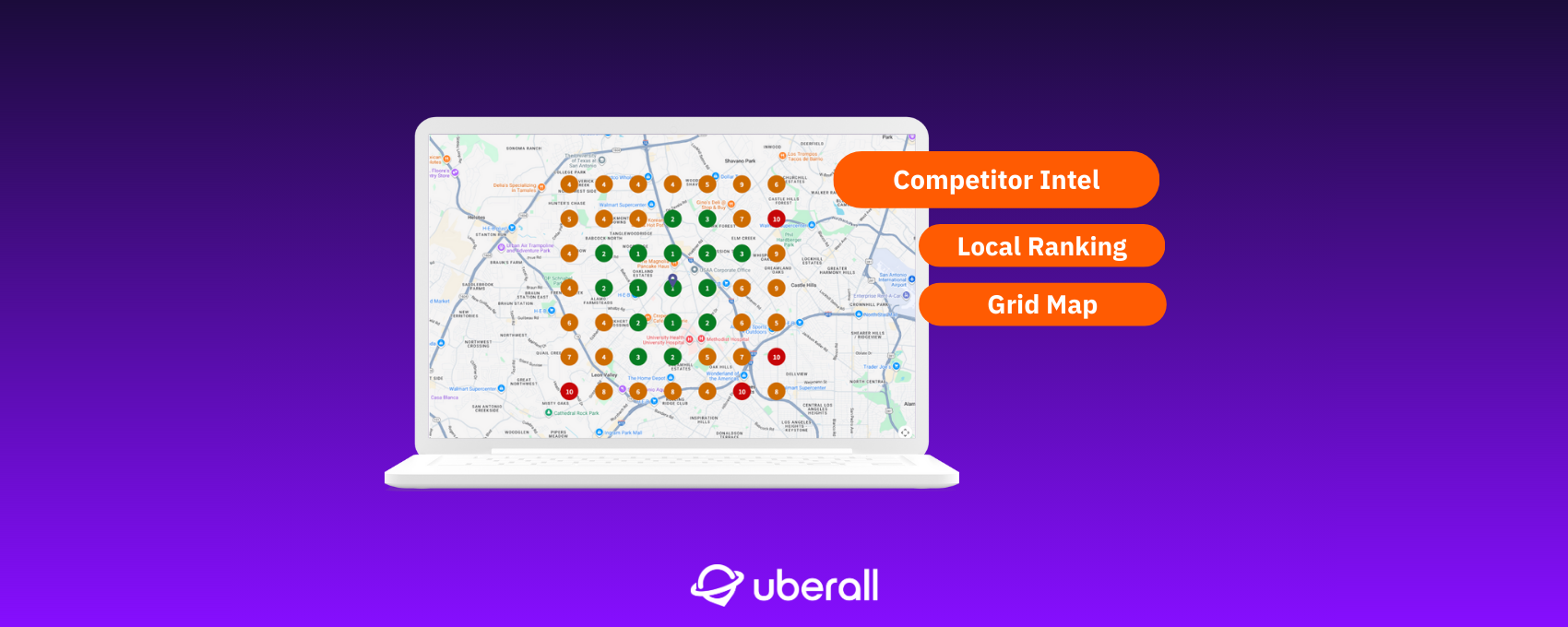
Plenty of AI tools in the location marketing space can tell you that your visibility dropped. Some will even give you a score for it.
We built UB-I to learn what dropped and fix it, correcting the listing data AI search engines rely on, closing the profile gaps that hide you in map results, drafting the review responses that rebuild trust and engagement — and to carry out the highest-impact fix first.
That’s because UB-I is trained on Location Performance Optimization (LPO), Uberall's proven framework that connects online visibility to local revenue. Every action UB-I takes or recommends is prioritized by its impact on your Location Performance Score (LPS) across four principles:
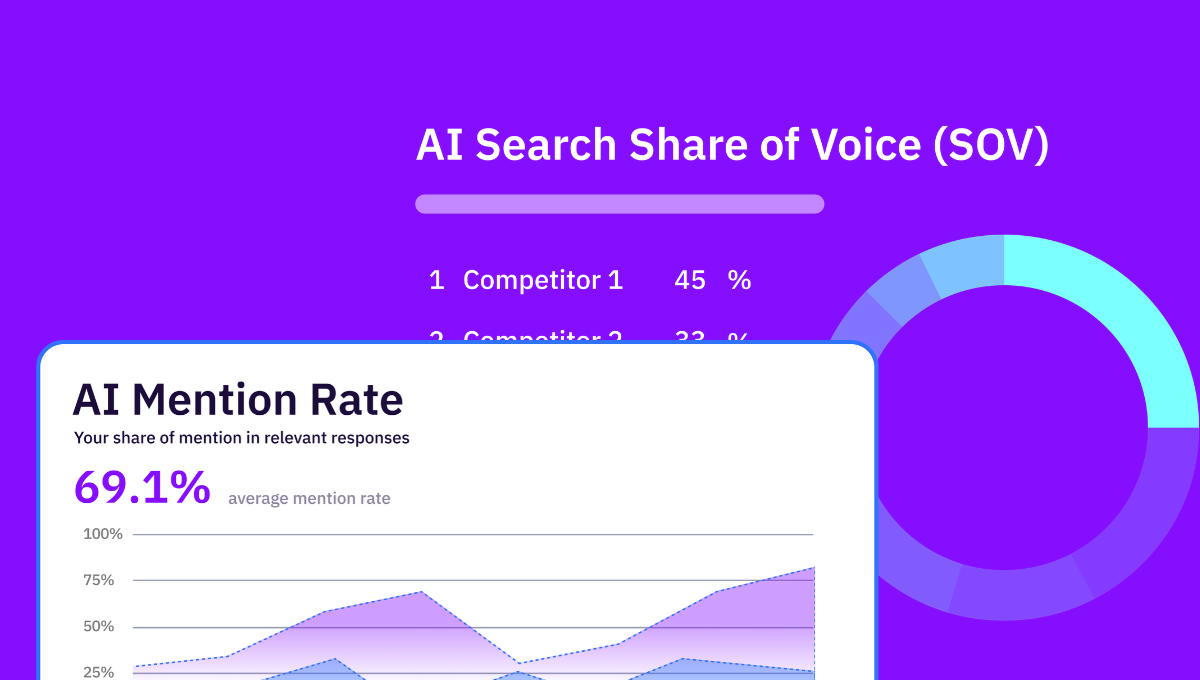
- Visibility: Making sure every location is discoverable across traditional search, AI search, and platforms like Google, Apple Maps, and ChatGPT
- Reputation: Monitoring and managing reviews to strengthen trust at every location
- Engagement: Keeping profiles complete, active, and relevant so customers engage
- Conversions: Connecting all of the above to the thing leadership actually cares about — revenue
That’s frankly the difference between an agent that completes tasks and an agent that understands the job to be done. UB-I doesn’t care about your to-do list (sorry, checkbox marketers) unless it’s tied to proven business impact.
When nearly three in four marketers aren’t fully confident in how their location marketing drives local sales, UB-I closes that gap — not by doing more tasks, but by doing the right tasks, in the right order, for the right reasons.
Most marketers don’t have the luxury of time to reflect on the true ROI of their tasks — whether it’s optimizing their Google Business Profile, pushing out social posts, or responding to reviews. That’s not okay, and UB-I doesn’t let marketing teams run like that.
Always Working, Always Yours to Direct
Our team built UB-I to scale a marketing team’s impact without sacrificing their control.
UB-I scans their locations continuously, showing our users listing gaps, review reply opportunities, and profile improvements without them having to ask. Some AI agents in this space only work when you do: They need to be prompted and briefed before anything happens.
Before our users even log in, UB-I has already identified what needs attention, prioritized it by impact, and prepared the work for teams to review.
But this isn’t a black-box AI that acts without permission. Every suggestion UB-I makes is visible. You can approve, reject, or modify anything. You decide which task types UB-I handles and which you’d rather manage yourself — and you can change that at any time. And UB-I learns from your edits.
As I wrote recently in my piece for Search Engine Journal, that’s the shift, from manually prioritizing the workload to governing the output.
We know trust has to be earned for users to really adopt UB-I into their everyday workflows. That’s why, today, your team approves every change. Each step only happens when you're ready.
Over time, as UB-I proves itself on routine tasks — correcting a listing format, filling in missing opening hours, drafting responses to straightforward reviews — you can give it more autonomy. This is how autonomous AI agents should work within your stack: task by task, under your guidance, and always with a full audit trail of every action taken.
That means you’re always in control. You’ll be able to track, review, undo, or adjust any decision UB-I makes automatically — and you can manually opt out of specific tasks if you prefer to handle them yourself. We know every business moves at its own pace, so we’ve built UB-I to be flexible, letting you choose which tasks to automate, which to manage manually, and adjust as you go.
UB-I: The Performance-First AI Agent Built into Our Platform
Managing location marketing at scale is complex. Partly because so many tasks are still manual. Partly because there are too many tasks to keep up with (whether you have 200 retail stores or 200 charging stations that keep popping up at large retail outlets). And partly because the tasks themselves are constantly evolving, with GEO and AI search.
You could throw an entire army of specialized AI agents at that problem and spend your week briefing, prompting, and QA-ing the fleet. Or you could use a chatbot that answers questions but leaves it to you to actually understand where to fix your listings. So, what is UB-I? Neither of those. It’s Uberall’s AI agent for multi-location businesses, built to monitor every location, prioritize what drives revenue, and act on it.
Remember those charging stations multiplying unmanaged on Google Maps for three years? With UB-I watching all your locations 24/7, drift like that doesn’t get three years. It doesn’t even get a day, and it doesn’t need special prompting.
And we’re just getting started. Every release brings UB-I closer to the vision: one agentic AI that runs location performance for you, taking on more as it earns your trust.



1,800 brands trust us to stay visible
— not just show up once or twice in local search.





Frequently asked questions
An AI agent in marketing is a system that identifies tasks, plans how to complete them, and takes action autonomously without waiting for a human to prompt each step. An AI assistant, by contrast, is reactive: It responds to a direct request, delivers a result, and stops until prompted again. For multi-location brands, this distinction matters because an agent can monitor every location continuously and act on what it finds, while an assistant only works when someone is actively using it.
Agentic AI in local SEO means an AI system that fixes the problems it flags. Instead of alerting you that a listing has outdated hours or a review needs a reply and leaving you to implement the fix, an agentic AI agent corrects the data, drafts the response, and queues the fix for approval. For multi-location brands, this shifts local SEO from reactive maintenance to continuous, autonomous optimization across every location simultaneously.
UB-I prioritizes tasks based on their expected impact on a location’s performance, using the Location Performance Optimization (LPO) framework. Each task is scored against four principles — visibility, reputation, engagement, and conversions — so the highest-impact action comes first. A negative review at a high-traffic location, for example, gets prioritized over a missing attribute at a low-visibility one. Read more about how UB-I ranks tasks by impact.
UB-I currently prepares all actions, review replies, listing corrections, profile updates, for human review before anything goes live. Every suggestion is visible, and teams can approve, reject, or edit each one. Over time, as UB-I proves itself on routine tasks like correcting a listing format or filling in missing hours, teams can grant it more autonomy. The model is progressive, meaning you decide which task types to automate and which to keep manual.
An AI agent for multi-location brands can handle review responses, listing data corrections, profile completeness checks, content distribution, and social posting — continuously across every location. UB-I currently drafts review replies in the brand’s tone of voice, cleanses name and address formatting per directory requirements, and generates missing descriptions and attributes from location data. Each release expands UB-I’s scope toward full location marketing orchestration.
Using one AI agent instead of multiple specialized ones eliminates the coordination overhead that comes with running separate agents for reviews, listings, and social — each with its own tone of voice, approval flow, and data model. A single agent sees the full picture of every location and can prioritize across functions, not just within them. It also avoids the integration complexity that nearly 9 in 10 leaders cite as the reason their tech investments haven’t fully delivered.
Traditional marketing automation follows rules you design in advance — if a customer does X, trigger Y. AI marketing automation uses artificial intelligence to plan, create, and optimize across your tools without you defining every step. The most advanced form, agentic AI, takes a strategic goal, breaks it into tasks, and executes them with human oversight at decision points. For local SEO, that means moving from static rule-based workflows to continuous, adaptive optimization.
Location Performance Optimization (LPO) is an operating model that connects local marketing efforts directly to revenue by unifying visibility, reputation, engagement, and conversion into one measurable framework. UB-I uses LPO as its decision engine: Every task it recommends or performs is scored against these four pillars so the highest-impact action comes first. This means UB-I doesn’t just complete tasks; it completes the tasks most likely to drive revenue at each location.