1 in 4 Franchisees Don't Know What to Post on Social Media — We've Got 6 Tips to Help Yours Out
Social media for franchises is now an AI visibility question, not just an engagement one. Here's the HQ/franchisee split that gets local pages posting on-brand.


Key takeaways:
- Keep the names of menu items, services, and offers consistent across all locations, and leave photos, timing, and community mentions to the franchisee
- Build social campaigns once at HQ so a location manager can subscribe and fill a month of posts in a few clicks
- Measure at the location level, not the campaign level — almost 96% of restaurant AI mentions are location-specific, so brand-level reporting misses a lot of the performance picture

If you run a franchise business, you already know that the off-brand scrappy post and the empty social page look like opposite problems. One franchisee team has taken too much local initiative and one is too anxious to post anything off brand.
When we surveyed 352 US franchise brands and franchisees this spring, one in four franchisees said they're confused about what content to produce, and in interviews, several told us they fall back on social because it's the channel they know, not because they've got a strategy for it.
But a strategy is key — because content posted on social platforms doesn't just reach followers or profile engagers; it gets ranked on Google and cited by AI tools. Facebook is one of the most-cited sources for ChatGPT and Google AI Mode — as is Instagram for AI Mode. As Cindy Krum explains in our Local Marketing Beat podcast episode: "If a brand is not doing [social media and video], they're missing out on a lot of context and data they could be feeding AI and LLMs to learn more about their brand."
There's a three-way split that makes franchise social media management work pretty well: It's what HQ defines across all locations, what the franchisee owns, and how brands post onto 300 local profiles without 300 people doing the scheduling or posting.
This is specifically what our webinar with Pizza Hut talked about: What does a franchisee touch, and what do they never get to change?
3 Things the Franchise Brand HQ Should Own
1. Set the Brand Rules in Every Campaign Template
Your product or service names, offer terms, logo, and any campaign dates should be for HQ to decide — along with brand colors, tone of voice, and template design.
Nobody at your Boston location should be renaming a product or service, inventing a discount, or posting in the wrong font. And no store or studio manager should be afraid of posting because they're unsure whether they'll be breaking brand rules.
2. Build the Campaign Once So Franchisees Subscribe, Not Recreate
We spoke to one salon franchise whose HQ was using one scheduler, while franchisees had no designated tool for their local social posting — their team (not us) called it "the wild west."
The last thing franchisees need in most industries (whether food and beverage, hospitality, or retail) is to build their own workflow or content calendar from scratch. They want something to opt into so they can just post.
The best way to manage franchise social media across multiple locations is to have HQ create a social campaign centrally for local managers to subscribe to. Pizza Hut runs it this way across almost 400 locations, with central campaigns going out for the big moments, like for the World Cup in 2026.
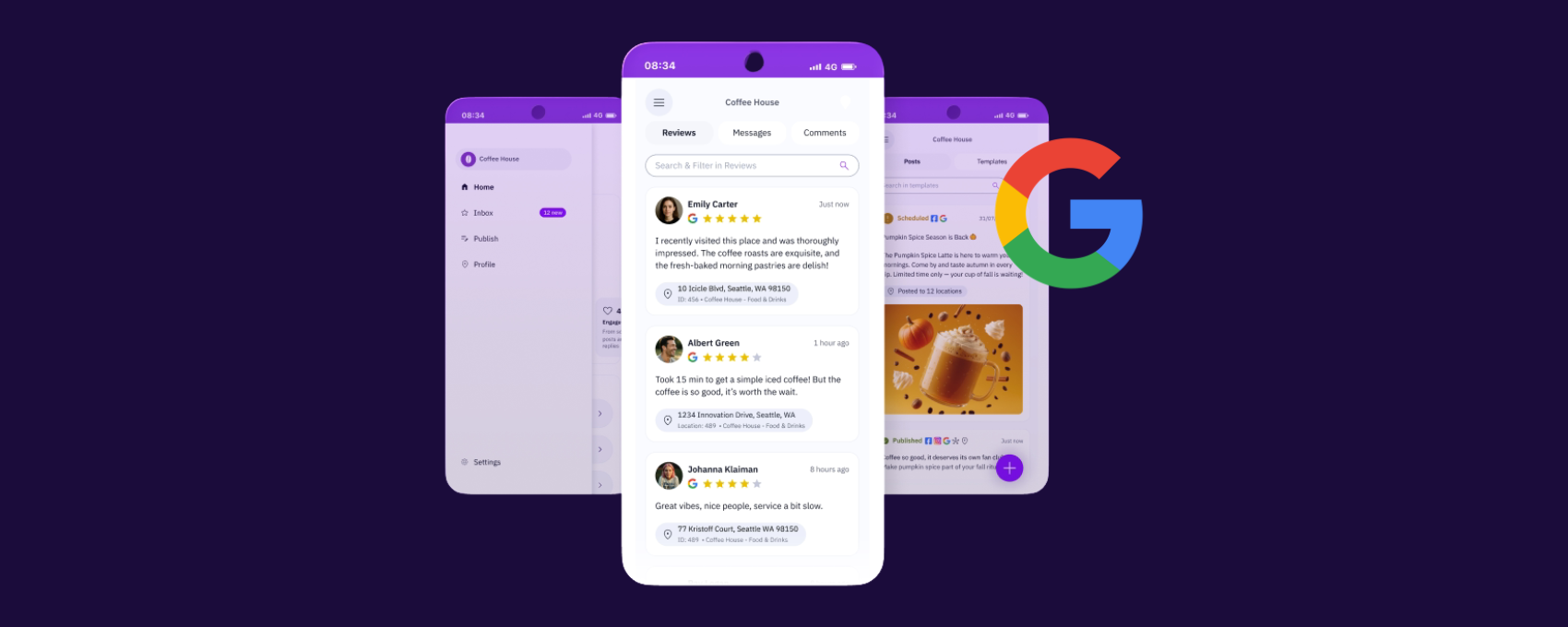
With Uberall's local social media management tool, brand teams build the campaign with certain fields already set — no edit access available to franchisees — a store manager, for example, subscribes, and fills out location-specific details per post, such as addresses, phone numbers, local page URLs. They can even do it with the Social Writer, which drafts posts inside brand rules and tone of voice.
3. Measure at the Location Level, Not Just the Campaign Level
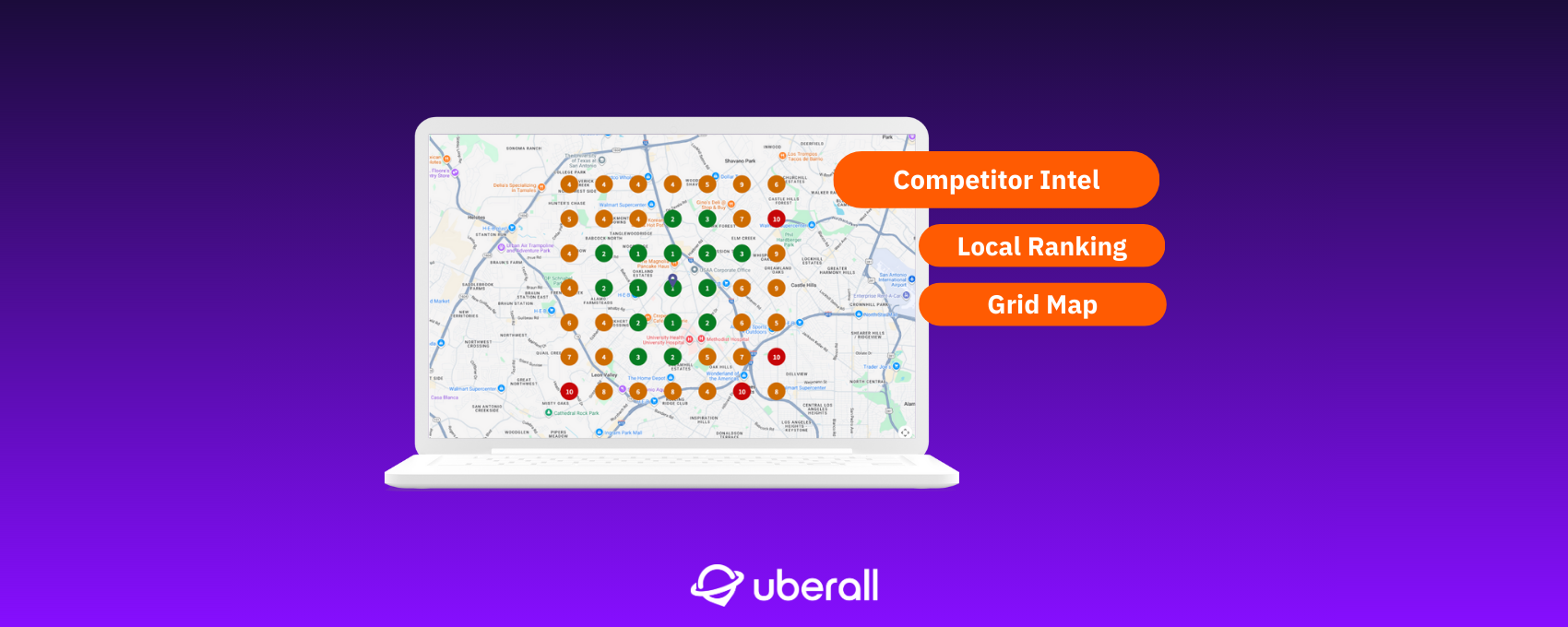
Not knowing what's working is the biggest challenge for both HQ and franchisees. And when HQ is measuring performance at a campaign level, not a profile level, there's a great big hole of enigma there.
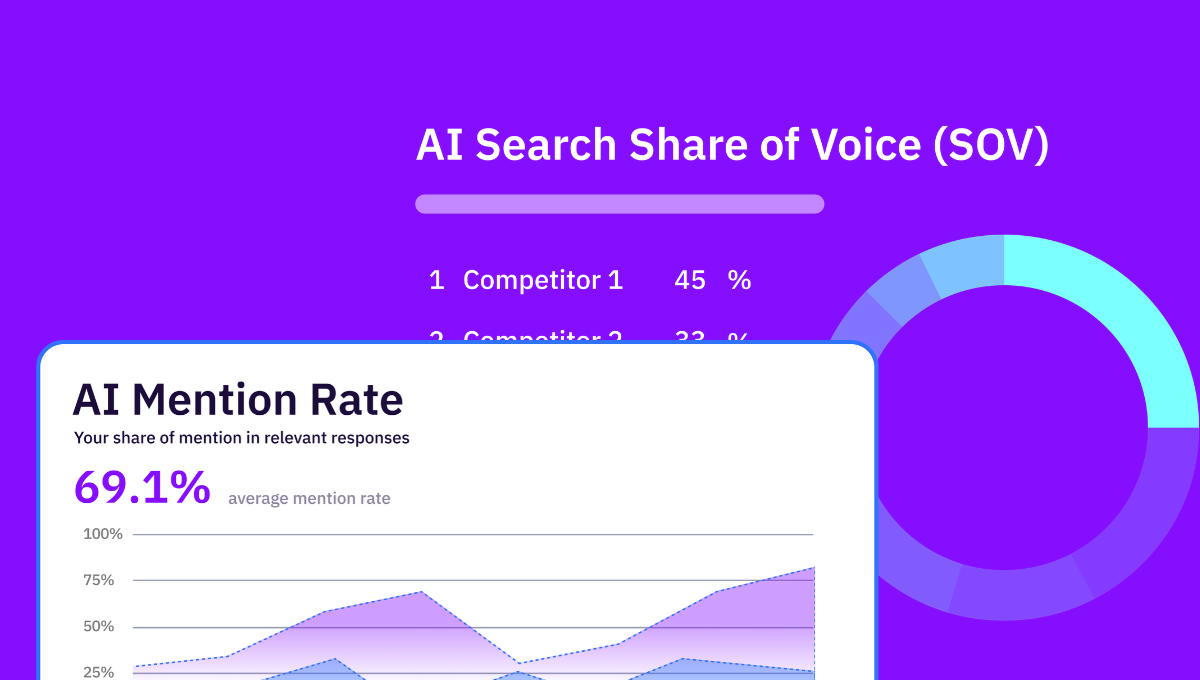
Our cross-vertical AI visibility research published on Search Engine Journal found that almost 96% of restaurant AI mentions are location-specific — meaning AI models often evaluate and recommend each location individually, not the brand as a whole.
Measuring local social campaigns for maximum impact means knowing:
- Which locations subscribed and/or posted
- Which locations added their own local flair beyond the HQ calendar
- How local customers engaged with profiles and posts
These kinds of granular analytics help on-site teams learn and develop their local social strategy further — not just to win engagement, but to win local reputation and visibility, which influences your performance in traditional and AI search.
That's what we call Location Performance Optimization (LPO).
3 Things Franchisees Should Do to Add Local Social Flair
4. Post Real Location-Specific Photos, Not Stock Shots
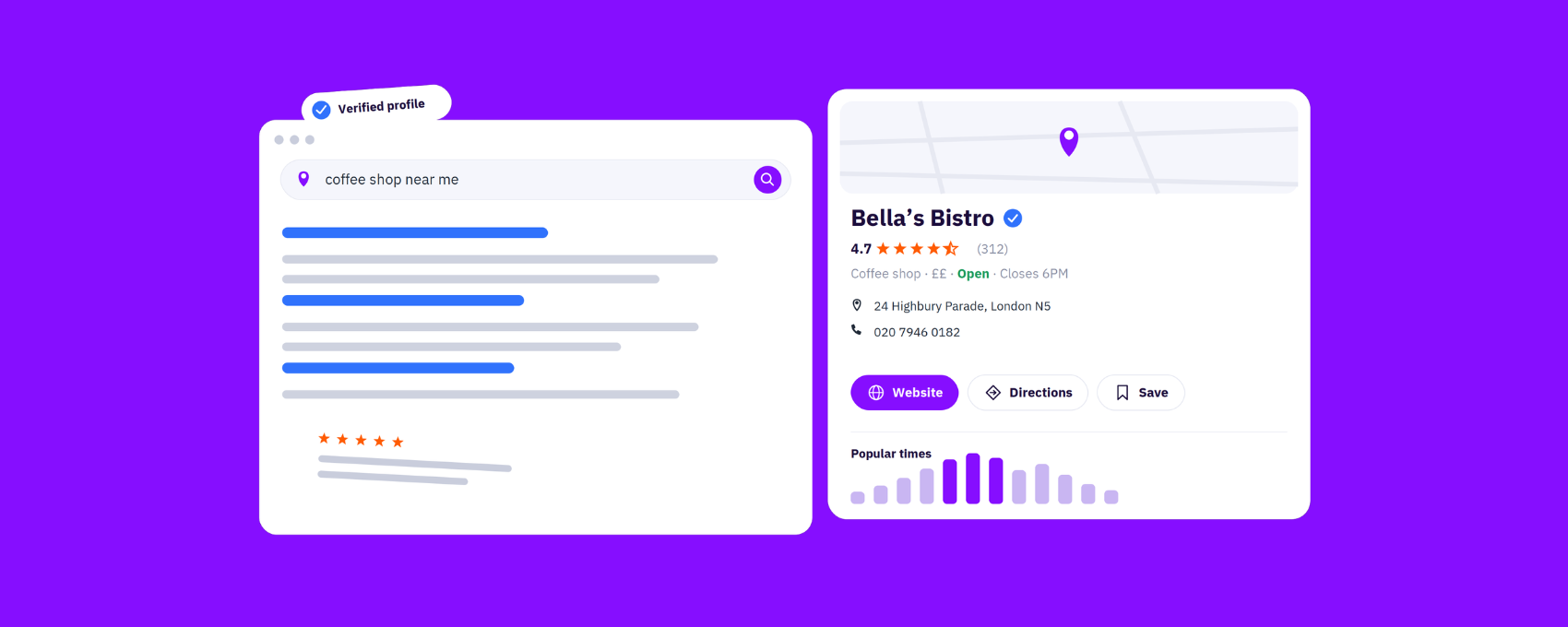
Customers in Seattle who visit your Google Business Profile (GBP), Apple Maps, or Instagram profile and only find photos of your New York location won't fully know what to expect when they visit you in their local store. And neither will Google or AI tools. It's up to franchisees to upload that local content regularly to provide that context customers, Google, and AI systems look for.
HQ can't capture videos of the sun shining in the studio or the outdoor summertime seating in the Seattle studio. They could, but it would usually be a hell of a commute. To address this, Pizza Hut franchisees send in photos and videos of pizzas being made, and HQ uses them alongside any brand assets.
Our AI visibility research found that GBP photo count is the single strongest predictor of whether a restaurant, for example, gets mentioned by AI. The top-mentioned restaurants average over 3,000 photos; the rest average around 1,000.
If every franchisee is blocked waiting for the same images to come through from HQ instead of uploading the ones relevant to their own location, it's AI visibility that could suffer.
5. Add the Local Context HQ Can't
No local context exists in a centralized content calendar, and for franchise brands with hundreds of locations, I think we all know it shouldn't. Owning that content calendar really would be the wild west (yeehaw).
Again, it's up to franchisees to post about the goings-on at their location, because they're the ones who know about them.
Amparo Gil from Pizza Hut explained on the webinar that franchisees can run locally relevant campaigns and put their own money behind deals that make sense for their hut. The important part is that they're doing it inside the brand's template, not outside it — so the local flair shows up on-brand and in a familiar way for customers.
This hyperlocal approach gives Google and AI systems something specific to say about that location — new menu, new manager, new service — which is how a franchisee in downtown Seattle ends up getting recommended separately from the one in New York. That's what makes social media publishing for multi-location franchises work: a clear brand template with the flexibility to give that template a local voice.
6. Listen to What Customers Are Telling You on Social
Franchisee social profiles are full of signals about what customers actually think — but we know that most teams aren't even looking at them.
Comments on posts, tagged stories, UGC content such as videos or photos, reviews left directly on Facebook or Google, even the questions people ask in DMs. That's all reputation data — even content ideas — waiting for their moment.
When a local customer tags your Seattle location in a story about their morning coffee, or leaves a comment on a post saying the new outdoor seating is great when the sun's out, that's what you should post about on your Seattle profile. Chances are, another customer would appreciate that info — not to mention Google and ChatGPT, for example.
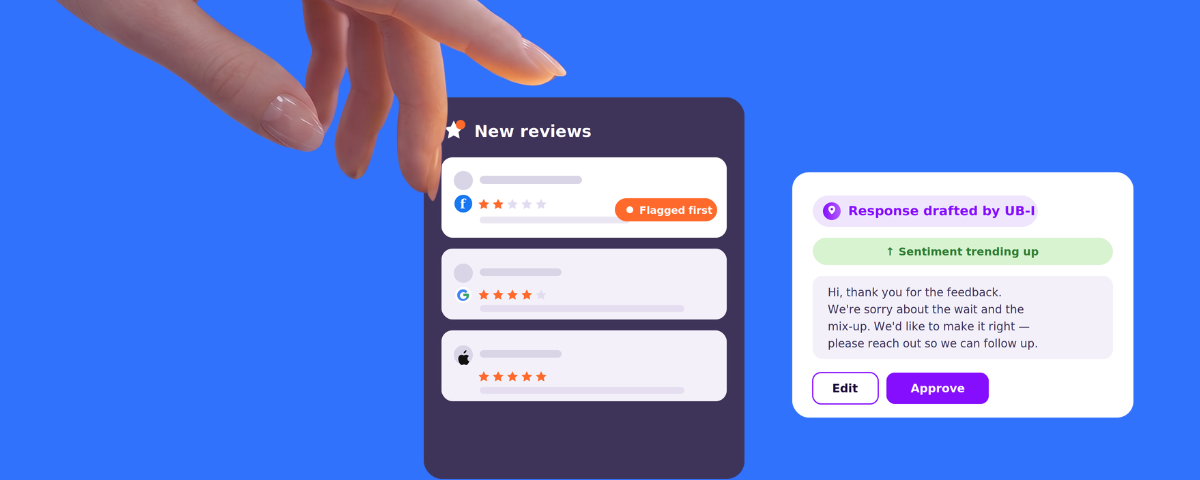
Franchisees who look at what customers say on their profiles — and respond, reshare, or use it — are working smarter. Because every comment replied to, every tagged photo reshared, every review answered tells search systems — traditional or AI — that that specific location is active and engaged in the local community.
Make It Easy to Post On-Brand, and the Franchisees Will Follow
Social media for franchises is way too important to be a fall-back channel in your multi-location marketing strategy. In AI search it's become where customers validate whether a location is actually worth visiting — whether that's for a coffee, a haircut, or a pizza.
Our data found that Instagram is the number-one predictor of AI mention frequency for boutique hotels, and for dentists, Facebook has a 4.7× follower gap between businesses that get mentioned by AI and those that don't. These two data points alone make it clear that social more than deserves a spot at the table of your franchise marketing strategy.
Uberall's local social tool makes the next step easy. Build one campaign for next month, invite every location to subscribe, and count how many locations posted, how many added extra local context, and how much engagement that won per location.



1,800 brands trust us to stay visible
— not just show up once or twice in local search.


Frequently asked questions
HQ should publish social media content by building campaign templates with locked brand fields — product names, offers, logos, colors, tone of voice — and letting local operators subscribe and fill in location-specific details like photos, addresses, and local promotions. Pizza Hut runs it this way across almost 400 locations. The key is that franchisees opt into a ready-made campaign rather than building content from scratch.
You can manage social media for several franchise locations from Uberall by having HQ create campaigns centrally with brand rules already locked in. Each location subscribes to the campaign and adds their own details per post. Uberall’s local social media management platform lets store managers line up a month of posts in a few clicks, with a Social Writer that drafts content inside brand guidelines.
Social media publishing for multi-location franchises does affect AI search visibility. Facebook is one of the most-cited sources for both ChatGPT and Google’s AI Mode, and Instagram appears in AI Mode’s top sources too. Uberall’s AI visibility research found that GBP photo count is the strongest predictor of whether a restaurant gets mentioned by AI, and a stale local profile gives the models less to work with.
Franchise brands should look for a social media management platform that lets HQ build campaigns with locked brand fields and open local fields, so franchisees subscribe and publish without approval delays on each post. Per-location analytics — which locations posted, which haven’t, and where engagement differs — matter more than campaign-level metrics. These granular insights help franchisees who don't know what to post on a location level.
Franchisees should post real, location-specific content that HQ can’t create from a central office — photos of the actual space, videos of the team at work, local events, community partnerships, and seasonal promotions relevant to their neighborhood. Customer-generated content is another strong source: Tagged stories, review highlights, and comments all double as content ideas. The key is that the content reflects what makes that specific location worth visiting.
Franchise brands can identify user-generated content by monitoring what customers post on local profiles — tagged stories, comments, reviews, photos, and DMs. When a customer tags a location in a story or comments about a specific experience, that’s a content idea the franchisee should reshare or build on. Every comment replied to and every tagged photo reshared tells Google and AI tools that the location is active and engaged locally.