We Asked 300 Franchises Who’s Winning at AI, and It Wasn’t HQ
Franchisees are ahead of HQ on franchise AI adoption — and that’s not the problem brand marketers think it is. A smarter local franchise marketing approach, backed by new research.


Key takeaways
- About 90% of both franchise HQs and franchisees now use AI, but franchisees use it more often, and for more of their day-to-day work, than HQ does.
- Franchise marketing has always assumed HQ is ahead on new tools and local follows. With AI, franchisees are the ones moving faster.
- Start by getting HQ and franchisees on the same AI platform for reviews, local social, and Google Business Profile updates.
Earlier this year, we asked 300 franchise brands a straightforward question about digital marketing for franchises: Who’s actually using AI in their local marketing — HQ or the franchisees running the locations?
Most of us would assume it’s HQ, obviously. They’ve got bigger budgets, corporate marketing teams, agencies on retainer — that’s how franchise tech has always rolled out, with HQ first and franchisees second.
But our data said the opposite. “Franchisees were ahead of brands in terms of their adoption,” industry analyst Greg Sterling told us on our recent webinar, walking through findings from the study he ran with us on franchise AI adoption. “They were moving more quickly.”
About 90% of both HQs and franchisees now use AI in some form. The difference is that franchisees are the ones answering a negative review from their phone at 8pm, drafting a social post between customer visits, updating a Google Business Profile the second something changes. HQ is meanwhile still deciding which AI tools to approve and drafting the guidelines.
Franchisees moving faster isn’t the problem — it’s that HQ is trying to catch franchisees up on AI, or control which tools they use. That won’t work. What HQ can do is put everyone on the same AI platform, so franchisees keep their speed and HQ gets visibility across every location.
Why Local Is Moving Faster and What HQ Keeps Missing
Look at it from the franchisee’s side and the speed makes sense.
Franchisees realize their social post is overdue at 8pm on a Saturday. They know when they’ll be short-staffed tomorrow; they’re already on their phone. After all, they’ve got fewer approval layers, smaller budgets (so experimentation is cheaper), and the very physical pressure of a customer standing in front of them. This is local franchise marketing: The AI tool that helps them right now gets used right now.
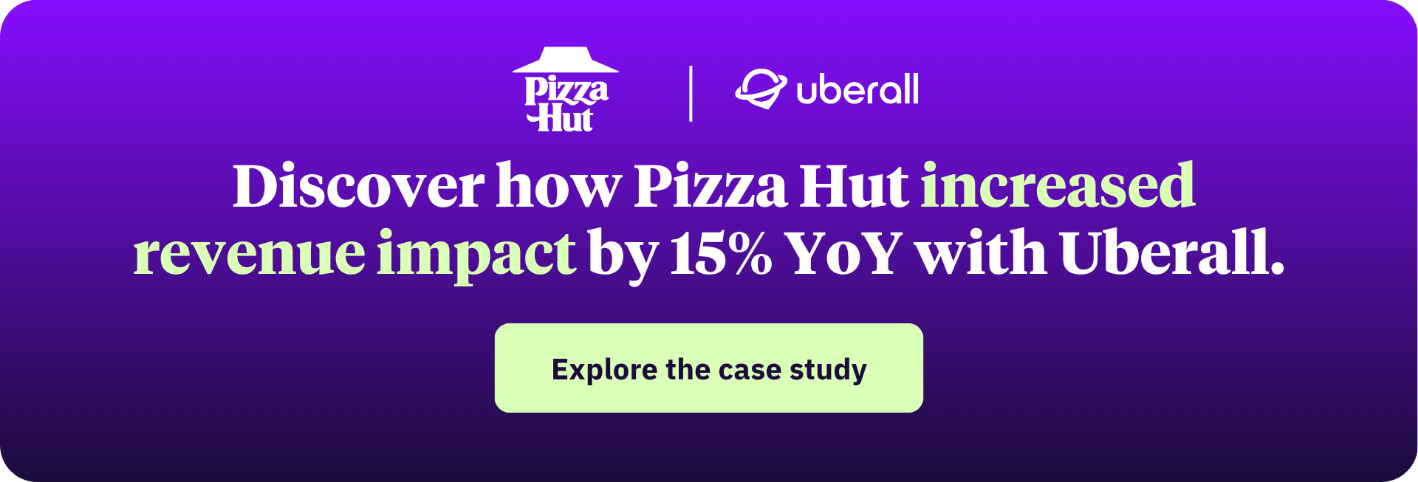
When a mobile app lets them push a social post or a listing update in the moment, they push it. No HQ approval workflow blocks them from doing what they need to do in any way.
But, as Greg points out, “AI was not being used very heavily by local franchisees to manage reviews or to analyze reviews, even though that was one of their primary pain points.”
Answering a single review from your phone is one thing. Spotting that five reviews this month mention the same slow-service issue, drafting a standardized response the whole team can use, or catching a service problem in the sentiment data before it negatively affects your rating and reputation — that takes time, structure, and a view across the whole location. Franchisees don’t have any of the three, but HQ does.
Speaking on the same webinar, Amparo Gil, Digital Growth Marketing Lead at Pizza Hut, explains: “Sometimes local franchisees might not have the knowledge or the big budgets to run certain things.” HQ’s job here is to build the systematic review layer (templates, cross-location pattern-spotting, sentiment analysis) that franchisees plug into and use from their phones.
HQ and Franchisees Both Use AI — But Is It the Same AI?
Franchise marketing runs on one of three models:
- Top-down: HQ decides, franchisees execute
- Bottom-up: Franchisees run their own marketing
- Hybrid: HQ & franchisees split tasks between them
Greg sums up what’s currently happening on the webinar: “None of these have ever completely worked smoothly. There’s always tension; there’s always a difference in sophistication.”
All three models were built on the same assumption: HQ has the marketing capability — that is, the budgets, the agencies, the analytics — and franchisees don’t. So the tools and the decisions start at HQ and move down to the locations.
Now AI changes who has the capability. HQ today gets tools that enforce brand rules and give oversight across every location. Franchisees now get an AI writer on their phone that produces on-brand social posts without waiting for corporate sign-off.
Both groups got more capable at the same time, which is why sorting franchises into “HQ decides” or “franchisees decide” no longer describes what’s happening. Both sides already use AI, so the question is whether they use the same AI.
Amparo describes how Pizza Hut divides the work: “We have that split of efforts between centrally doing the heavy lifting on brand consistency and encouraging franchisees to use some of the local tools to run specific campaigns and specific deals that are locally relevant.”
HQ manages brand-level consistency; franchisees run locally relevant campaigns and deals. Both run at once, on the same platform.
Connect HQ’s AI and Franchisees’ AI to the Same Platform
Most franchise brands are still asking “which AI tool should we roll out?”
That question is a year late, because both sides already have AI. The problem is that HQ’s AI and the franchisees’ AI are separate systems, meaning they don’t share data; they measure different things; and the results never combine into a single view.
The brands pulling ahead over the next two years are the ones connecting both to the same platform, so a franchisee’s action and HQ’s oversight draw on the same data. Or, as Greg put it: “AI tools can help resolve some of this structural tension that’s always existed in the franchise market.”
Here is what that setup does.
- HQ builds an approved, on-brand campaign in the marketing platform.
- Local managers subscribe with a click and post it to their locations. That’s franchise marketing automation doing what it should — no off-brand content, no wait for corporate approval, no one drafting copy in a Google Doc at midnight.
- The same platform gives franchisees an AI agent that tells them what to fix on their profile today, so HQ is no longer the only one who knows what a good profile looks like.
- Franchisees carry out their work (responding to reviews) from the mobile app, and that work flows into the same analytics HQ uses to spot patterns across every location.
Amparo describes this process at Pizza Hut: “We have the AI agent that gives you on-the-go and live recommendations of how to improve your profile — what quick wins you can action today.” Franchisees don’t have to become AI experts. They use the AI on their phone, and every action they take feeds the same data HQ sees.
Where to Start on Monday Morning
If you’re working out how to create a local marketing strategy for franchise locations in the AI era, start here with these four things.
- Audit what AI your franchisees are actually using. Not what they’re supposed to be using — what’s on their phones right now. Whether that’s personal ChatGPT accounts, freelance-agency-supplied automations, the AI features baked into whatever loyalty platform you rolled out three years ago.
- Pick two or three tasks where speed matters most. For most franchise brands, this will be managing reviews, local social, Google Business Profile updates.
- Move to one platform where oversight and autonomy coexist. What’s important here is approved AI templates HQ can control and mobile-first execution for the people on the floor.
- Measure whether the two systems are truly connected. How many locations are actually using the AI HQ deployed? How consistent are review response times across the network — for example? Where’s the variance widest? Those are the numbers that tell you whether your franchise marketing strategy is running as one system or two.
For all the insights — including what franchise marketers are using to measure ROI and where AI is affecting the customer journey — watch the full webinar with Greg Sterling and Amparo Gil or download our latest franchise report.



1,800 brands trust us to stay visible
— not just show up once or twice in local search.




Frequently Asked Questions
Franchisees are adopting AI faster than corporate HQ because they face immediate, practical pressure that rewards speed. They’re short-staffed, on their phones, and dealing with customers in real time — so any AI tool that helps right now gets used right now. HQ, meanwhile, is navigating approval workflows, vendor evaluations, and policy drafts. Research from Uberall and FranConnect found that while ~90% of both groups use AI, franchisees use it more often and for more daily tasks.
Franchise marketing automation today means HQ builds an approved, on-brand campaign once and franchisees subscribe to it with a single click — publishing it to their locations without drafting copy or waiting for sign-off. The same platform feeds every action (review responses, social posts, profile updates) into shared analytics, so HQ spots patterns across the network while franchisees keep moving at their own speed.
Franchise brands keep AI-generated content on-brand by using a shared platform where HQ sets the rules and franchisees create within them. An AI Social Writer lets local teams produce social posts that follow corporate guidelines without needing approval on every piece. As Pizza Hut’s Digital Growth Marketing Lead describes it, the split works when HQ handles brand consistency centrally and franchisees run locally relevant campaigns on the same system.
Franchise brands should hand review management, local social media, and Google Business Profile updates to AI first. These are the tasks where speed matters most — a late review response or an outdated profile costs real visibility and customers — and where franchisees are already using AI on their own. Once both sides share one platform for reviews, social, and listings, HQ can extend the same model to local ads, landing pages, and campaign reporting.
You measure whether HQ’s AI and franchisees’ AI are connected by tracking three things: How many locations actively use the tools HQ deployed, how consistent review response times are across the network, and where the variance between top- and bottom-performing locations is widest. If those numbers look worlds apart — or don’t exist at all — HQ and franchisee teams aren’t connected.
Franchise brands — especially with 200+ locations, for example — should look for a local marketing platform where HQ controls brand templates and oversight while franchisees get mobile-first execution they can use in the moment. At that scale, the essentials are shared AI tools for reviews, social, and listings that work across every location.