The Great SEO Upskilling: The New GEO Specialists Driving AI Visibility
GEO specialists are the upskilled SEOs helping multi-location brands increase AI visibility, authority, and performance across the entire search journey.



Key takeaways:
- The practices behind good GEO are the same ones behind good SEO — what’s changed is the blind spots in reporting and optimizing.
- A GEO specialist monitors AI visibility, analyzes prompts, engineers AI-readable content, coordinates across teams, and iterates on performance.
- Brands that invest in upskilling their SEOs into GEO specialists will be the ones that get chosen, cited, and trusted.
AI engines like Google AI Mode and ChatGPT are changing the local search landscape quickly — and with it, the job descriptions for search engine optimization specialists.
There’s a visibility crisis we’re seeing in search: Two in three local businesses appear incorrectly or insufficiently in AI results, often due to fragmented data, thin content, or inconsistent location signals. This is a problem traditional SEO strategies and dashboards weren’t built to solve alone.
Who’s reporting on how multi-location brands are being perceived and recommended by AI agents? That’s exactly the gap the upskilled SEO — the GEO specialist — is meant to fill. A new kind of search expert who combines strong SEO foundations and is focused on increasing visibility, brand authority, and location performance across the entire search journey, wherever consumers are.

Why the GEO Specialist Role Exists Now
Let’s cover the obvious first.
The practices that make up good Generative Engine Optimization (GEO) today are the practices that made up good SEO yesterday. We know this because we know that AIs are citing pages that are performing well on Google often enough that there’s a correlation.
What has changed is that brands now face blind spots in understanding how they appear in AI responses — and which competitors are being surfaced alongside them. Many brands struggle to track citations, mentions, and AI-generated recommendations across multiple locations, leaving them unsure where they stand or how to influence outcomes.
These are important blind spots if you want to increase not only AI visibility but also brand engagement and conversions, because while these may well still come from organic search, the highest-intent searches are increasingly flowing through AI search streams. In fact, $750 billion is expected to flow through AI search by 2028.
Good SEOs are, however, nothing if not adaptable. They’ve been adjusting to algorithms, penalties, and Core Updates for decades. They’ve had to learn on the go, use their initiative and critical thinking, and strategize further. And where there is potential money left on the table from not appearing optimally across AI search, they will find ways to close that gap.
And thus, the GEO specialist was born. A role that treats AI visibility as a strategic business metric with direct impact on the bottom line. This specialist bridges the gap between brand strategy, content execution, measurement, and AI optimization.
What Is the Typical Day Like for an AI Search Specialist?
What does an SEO specialist do in today’s search?
A GEO specialist does much of the same work as the traditional search engine specialist — but with an added layer: optimizing how AI systems perceive and surface their brand.
They’ll still be deciding what’s just “search noise” versus legitimate industry signals (maybe even more so than before). Overoptimization has always been a problem in search, and the upskilled SEO will continue to have to decide on their priorities based on fact versus fiction.
These characteristics define the GEO specialist role, which we explore some more in our GEO Playbook.
1. They Monitor AI Visibility
A GEO specialist tracks how their brand appears — and doesn’t appear — in AI-generated responses across major platforms. They benchmark location accuracy, trust signals, mentions, citations, and competitive performance to understand where AI sees their brand and where it doesn’t.
2. They Analyze Prompts and Intent
Understanding the questions consumers actually ask AI is central to this role. GEO specialists map high-value prompts to content opportunities — often using query fan-out — identifying the queries where their visibility influences the bottom line most. They prioritize optimizing thin or missing content to fill these gaps.
Many brands are looking for quick GEO wins, but no amount of “new” tactics will help a GEO specialist if their content is thin and not answering the prompt in a helpful way (the more detailed, the better). If their content doesn’t hold up, AI systems seek out more detailed content from a competitor whose on-page signals are cleaner. The upskilled SEO needs the strategy and the substance.
3. Strategic Content Engineering
A solid GEO strategy doesn’t just involve creating quality optimized content like before; it’s about making it AI-readable. Specialists structure everything — from location pages to FAQs to review responses — so generative systems can interpret, trust, and cite it confidently. They think in terms of coverage and authority, not just locally relevant keywords.
This isn’t about chunking or creating long-form content, though, this is about structured, self-contained passages marked with the right headings. For example, if one of your high-value prompts is:
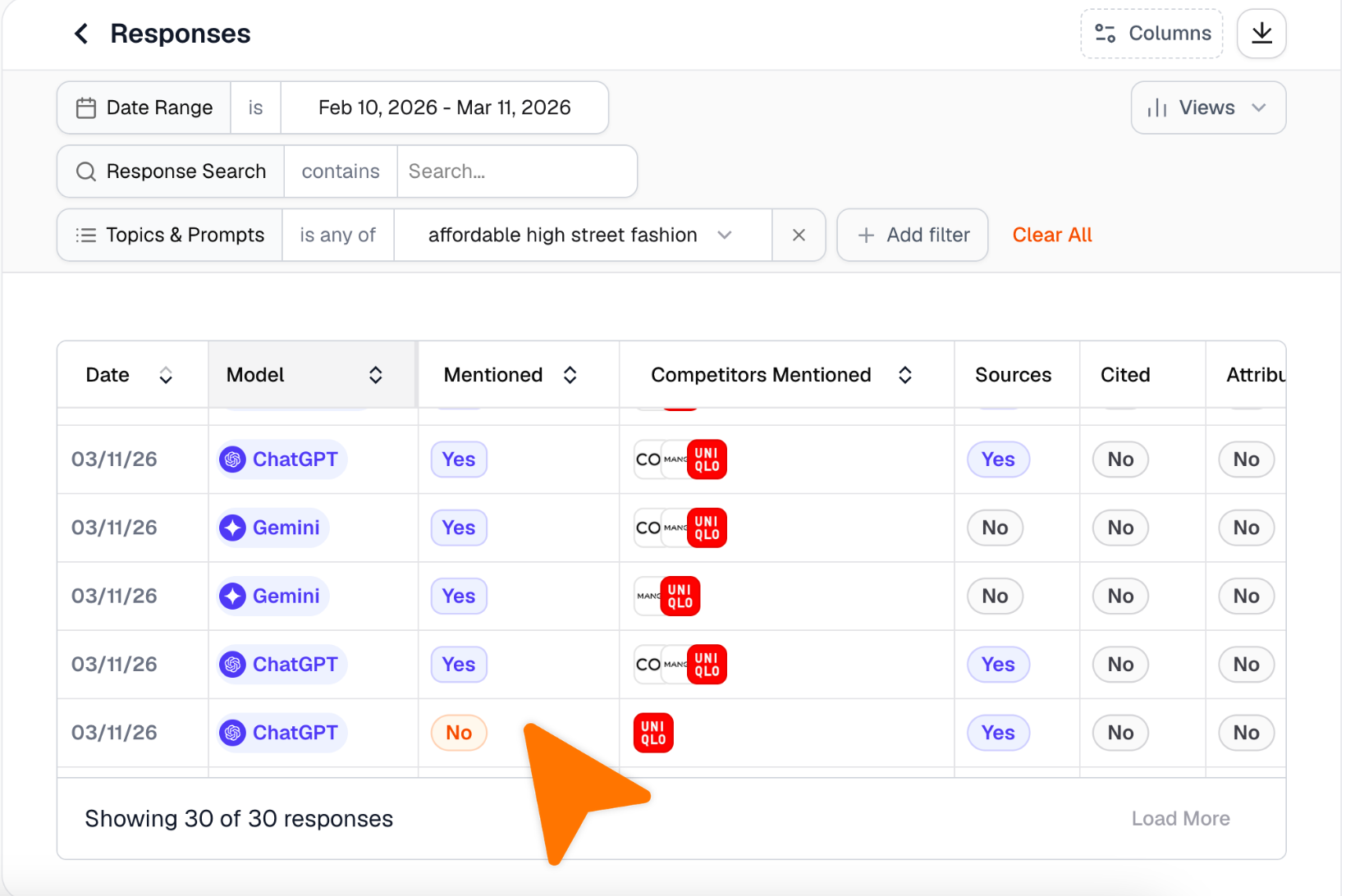
“Where can I find affordable high street fashion near me?”
You’ll make it clear to skimming humans, crawling Google bots, and information-retrieving AIs, that you’ve answered that question in sufficient detail and clarity that there’s no confusion.
.png)
44. They Coordinate Across Teams
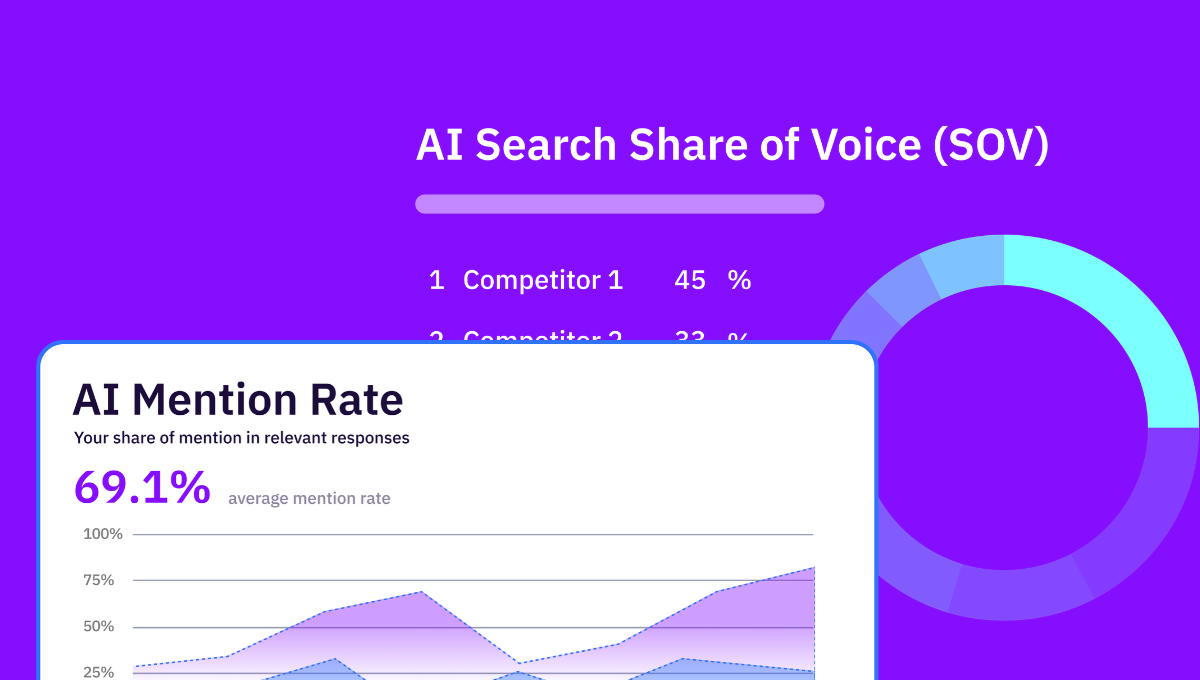
This role collaborates with SEO, content, product, and analytics teams, aligning stakeholders around shared goals like Mention Rate, Citation Rate, and Share of Voice — GEO metrics that reflect actual AI visibility.
Once the GEO specialist has worked out their baseline for these metrics using their GEO tool, they’ll communicate potential goals — these can at first be conservative while they’re understanding how quickly recommended actions lead to better performance.
5. Measurement and Iteration
But a GEO specialist obviously doesn’t stop at reporting; they audit, optimize, and go again. They audit performance, test approaches, and iterate on content and data strategies to continually improve how their brand is perceived by AI systems.
This is the mindset that separates gold-level teams from the rest. In our LPO Gold Certification, we explain why the highest-performing multi-location teams don’t ask “Why did our rankings drop?” — they ask “Where are we becoming harder to recommend?”
They treat reduced inclusion in AI responses as an early warning, a loss of confidence, a data problem — not a failure (because we’re all human). It’s the GEO specialist who reads those signals, diagnoses the root cause, and turns them into action via the steps above before they compound into lost visibility and revenue.
It’s the Era of the Upskilled SEO — the GEO Specialist
I mean a search engine specialist has never stopped upskilling. But AI search now demands a certain skillset and access to specific data.
And the stakes when SEOs fall short of these skillsets and lack access to this data are high. More than half of consumers, after all, now turn directly to AI systems for answers.
Brands that treat AI visibility as a core business function — not a side project — are the ones that will get chosen, cited, and trusted. Those who actively support and facilitate the upskilling of their SEOs will by extension ensure their brand- and location-level content is consistently structured, trustworthy, and comprehensive.
Forgive the cliche, but with great power comes great responsibility — and the upskilled SEOs are going to be instrumental in funnelling those high-intent consumers into converting customers by
- Deciphering GEO noise from proven optimization methods and communicating insights to teams
- Building long-term authority recognized by both humans and AI systems
- Diagnosing visibility gaps across prompts and models
- Driving measurable business impact from AI discovery


1,800 brands trust us to stay visible
— not just show up once or twice in local search.


.png)
