It’s Here: GEO Reporting for the Next Generation of Local Search Marketers
Is it time to ditch your SEO benchmarks? Revisit your search strategy? Spruce up your reporting? Bring GEO Studio to your teams.

Key takeaways
- GEO reporting introduces a new vocabulary: Mention Rate (are you in the conversation?), Citation Rate (are you trusted enough to be sourced?), and Share of Voice (are you winning against competitors?)
- The Mention Gap shows the difference between your mention rate and your competitors’ across the same prompts
- Prompt volume and value enrich keyword volume, so teams can prioritize where consumer intent is strongest and where early content investment will have the biggest impact

We’re well within the answer engine era.
Today, more than 1 in 3 consumers already use AI to find answers to their local queries, whether it’s “Best coffee shops for working in Boston” or, more specifically, “Best vegan-friendly coffee shops to work in near South End, Boston.”
Yes, AI answers are here, but this new reality opens the floodgates to new AI questions for businesses and marketing teams:
- Which metrics matter most for visibility now?
- How does GEO reporting differ from my current SEO reporting?
- How should I track and communicate my brand’s AI search performance?
If local businesses aren’t tracking their visibility in AI search, they’re blind to how 30+% of consumers now discover them. That’s why GEO is now a top priority for enterprise CMOs — and why budgets are shifting toward GEO in ways traditional SEO never did.
With AI search platforms generating billions of referral visits to brand websites every month, teams need to know which queries drive customers to them — and which send them to local competitors.
There’s a new layer of visibility your optimizations need to hit. There’s a new layer of visibility you need to report on, with new key metrics for measuring GEO success (which we’ll go on to discuss). This is precisely why we’re launching the very first GEO reporting tool for multi-location brands.
Why Traditional SEO Reporting Is No Longer Enough
Traditional SEO reports were designed for blue links. They measure SERP rankings, clicks, and traffic.
But in generative answers, there’s no page one and no list of blue links. If a brand isn’t mentioned, cited, or recommended in these answers, it may be invisible at the moment of decision.
The new era of reporting on search performance must adopt this new layer of AI visibility. These reports must identify where AI engines trust a brand, where competitors dominate, and which content gaps are limiting visibility. And marketers must master a new language, with vocabulary of key terms in AI search including Share of Voice, Mention Rate, Citation Rate, and Prompt Volume.
Multi-location marketers: Your traditional SEO report might look strong, but if you do nothing to actively influence your AI visibility, you risk more than traffic loss. You risk not being part of the conversation when it matters.
Uberall’s new GEO Studio reveals what SEO reporting cannot. It measures whether a brand is:
- included in AI answers
- recommended as a solution
- cited as a trusted source
- recognized as authoritative across key prompts
It will help multi-location brands and teams answer the following questions:
1. Am I Visible At All?
Let’s start with Absolute Mention Rate and Impressions Captured.
A mention is any neutral reference to your brand in an AI-generated answer. It signals visibility but doesn’t indicate the AI’s preference.
Your Absolute Mention Rate (AMR) measures how often your brand appears across all AI responses, regardless of competitor mentions. If we come back to my example about Bostonian coffee shops, think of it as “How often do I even get in the ring?”
Impressions Captured estimates how many people could see content from a specific website or domain. For example, if your Boston coffee shop is cited in an AI answer reaching 10,000 users, that’s 10,000 impressions captured. Tracking this helps you see which websites or domains put your brand in front of the most potential coffee-drinking customers.
Together, AMR and Impressions Captured represent the visibility pillar of Location Performance Optimization (LPO): They show whether your brand is present, discoverable, and reaching real audiences when it matters.
2. Am I Winning Versus Competitors?
The real question is how your brand performs relative to local competitors in AI-generated answers. This is where we move on to Relative Mention Rate (RMR), Share of Voice (SoV), and Mention Gap.
Relative Mention Rate (RMR) shows how often your brand appears when brands are mentioned at all, compared to competitors in the same set of AI answers. GEO Studio calculates this by excluding responses with no brand mentions, making RMR a good indicator of competitive strength: When the AI names names, how often is it naming you versus everyone else? You can gauge whether competitors are outperforming you in AI search and identify where small content tweaks could move the needle fast, which is critical insight for CMOs and SEO managers.
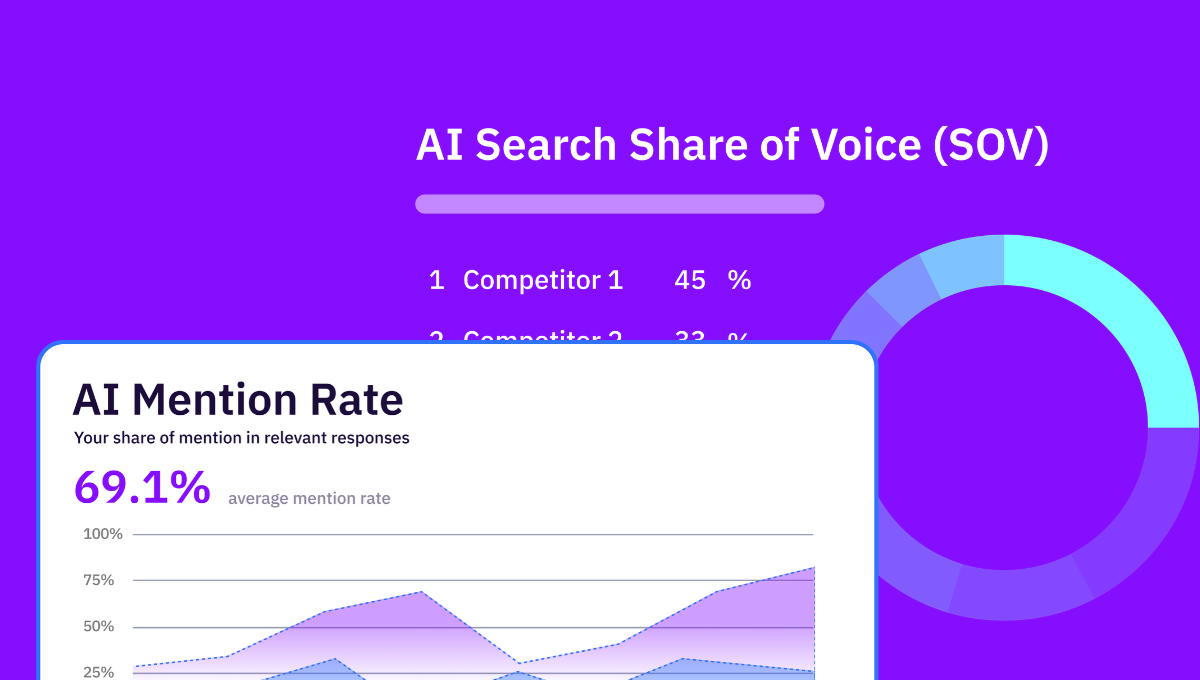
Share of Voice (SoV) shows how frequently your brand appears in AI-generated answers within a specific category or prompt set. This is the AI equivalent of paid and search SOV — only you don’t buy impressions. AI SoV is earned through strong coverage, credibility, and high-quality content — not media budgets or rankings.
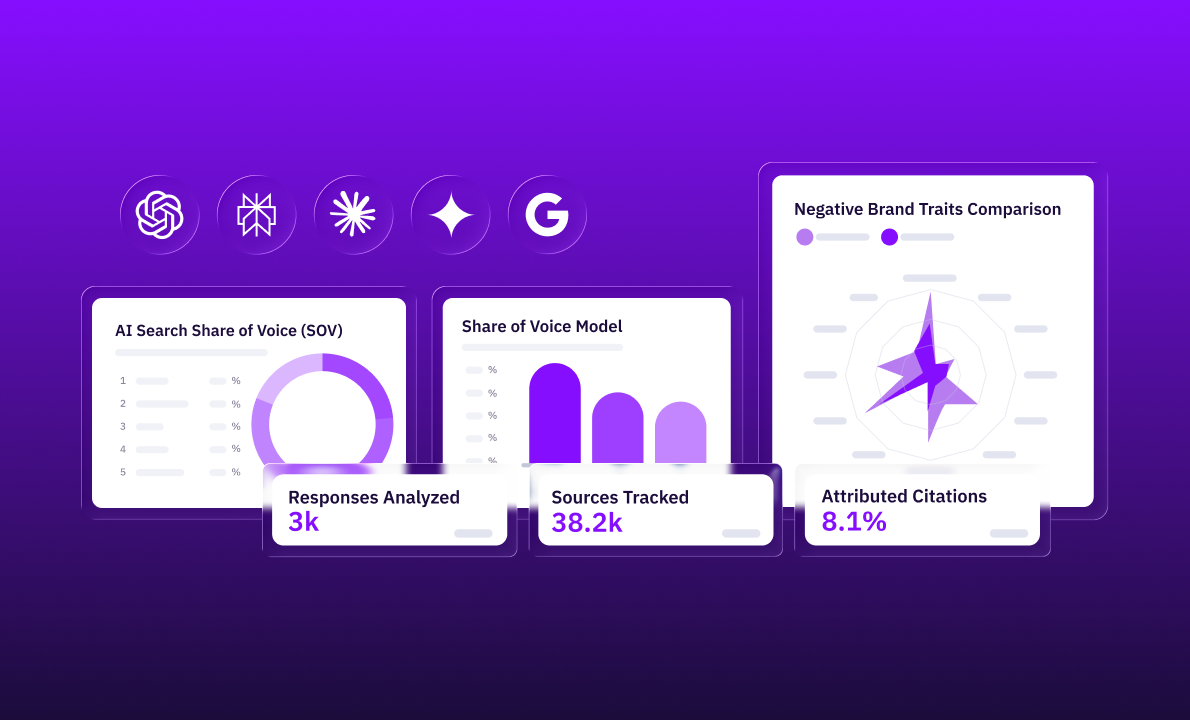
GEO Studio visualizes SoV through both a donut chart and a daily stacked bar chart, making it easy to track brand authority momentum over time and see exactly how much of the conversation belongs to you versus your competitors.
The tool also measures your relative SoV across various AI models, such as ChatGPT, Gemini, Perplexity, Copilot, and Claude. This helps you see where your brand appears most often and where there are gaps in your coverage. This is especially important as AI ecosystems are likely to evolve and consolidate. With consumers naturally switching to try out various models for themselves, brands can’t afford to show up in just one model, and consistent visibility across models is the way to go.
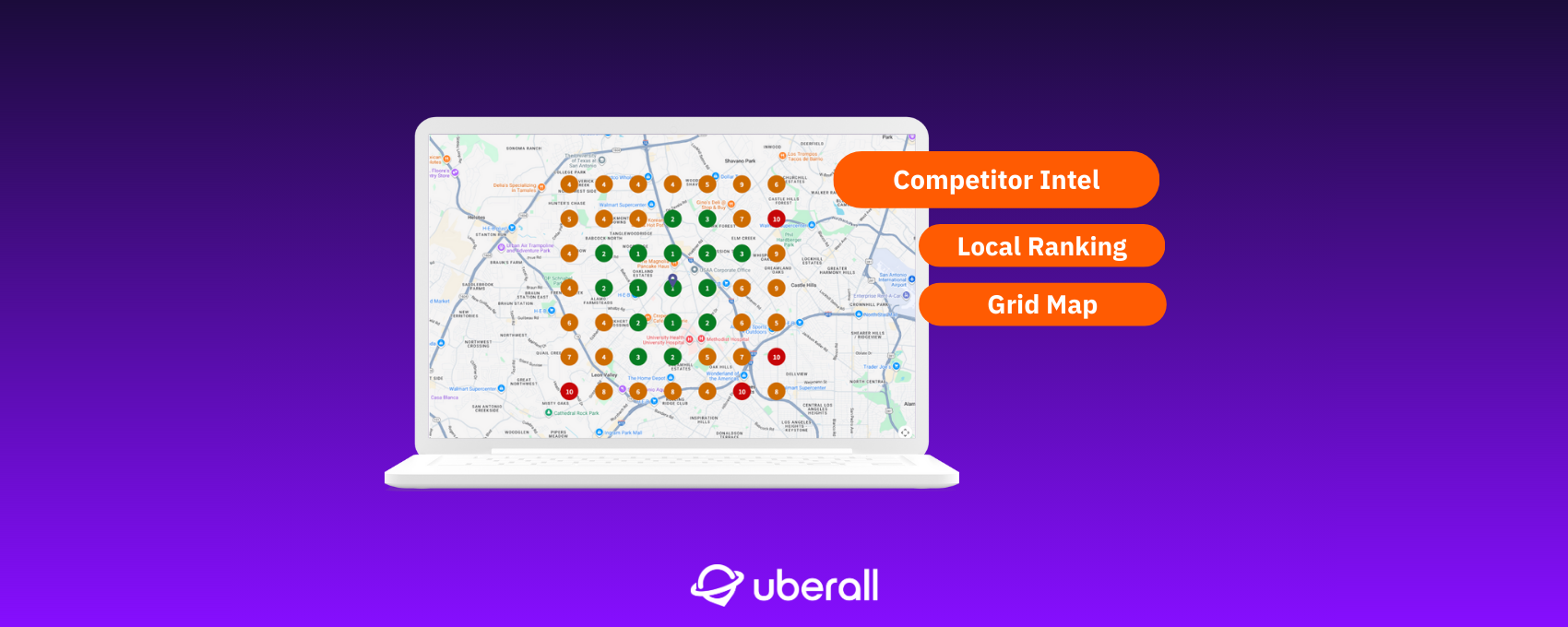
Finally, your Mention Gap is the most important strategic metric in your GEO reporting. It’s the difference between your Mention Rate and your competitors’. Green means you’re outperforming the field — you’re doing great work. Red signals missed content, coverage, and authority opportunities where competitors are showing up in AI results more often than you are. We’ll cover how GEO Studio helps you seize these opportunities more in another article.
3. Am I Trusted and Influential?
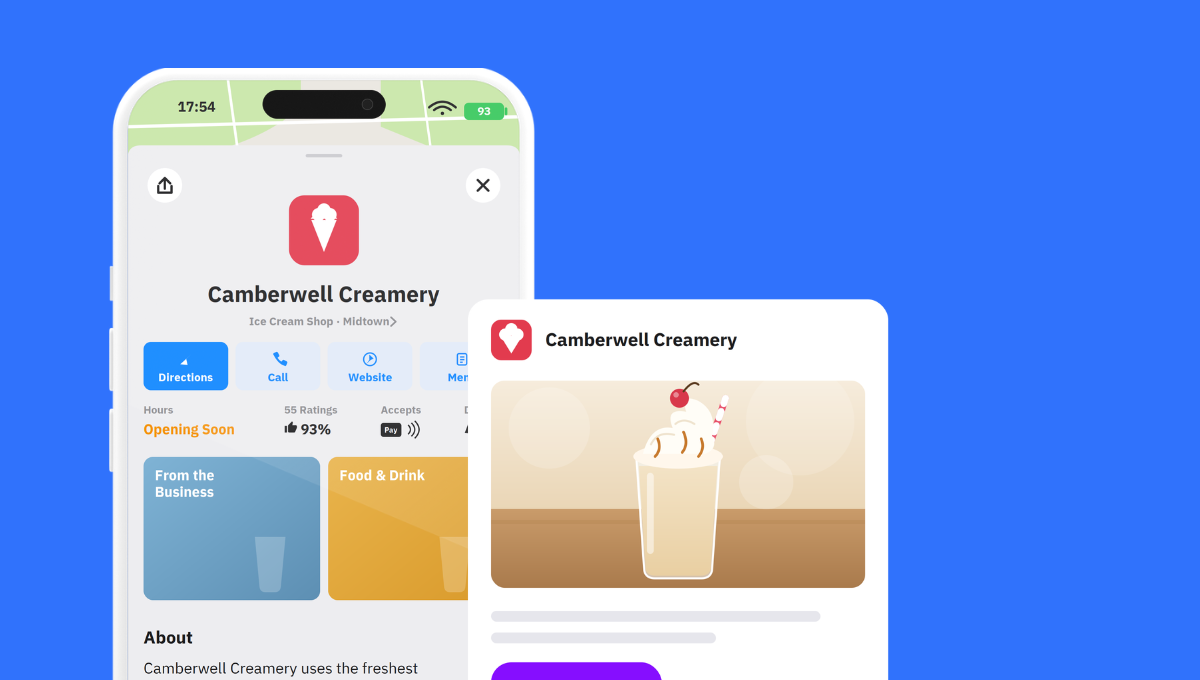
A citation is any reference, explicit or implicit, to your brand in an AI-generated answer. For example, when a consumer asks ChatGPT for a coffee shop in Boston, they might be directed to your local South End webpage; this counts as a citation.
GEO Studio tracks your Citation Rate, showing the percentage of times your brand is cited in AI answers compared to all other brands for the topics you’re monitoring. A higher, more consistent rate signals stronger authority and influence.
Your Citation Gap highlights missed opportunities. It measures the difference between your current Citation Rate and the top-performing competitor across the same set of prompts. Closing this gap helps ensure your brand is referenced more frequently, strengthening visibility, credibility, and authority at the moment of decision, which ties directly to the reputation-building pillar of Location Performance Optimization.
Sentiment analytics add another layer to your GEO reporting. GEO Studio tracks how your brand is perceived — positive, neutral, or negative — and visualizes this in radar charts that map traits like “friendly,” “innovative,” or “reliable.” These insights are grounded in the same sources AI relies on to answer questions — and not one-off interpretations, but consistent patterns across your content, listings, reviews, and trusted third-party sites over time.
Brands can influence these traits by improving content clarity, reinforcing key messaging across their online footprint, keeping listings accurate, and responding to reviews. Over time, these actions influence not only consumer sentiment but also how AI systems understand and describe your brand — increasing the likelihood of being cited and recommended in AI answers.
Finally, source attribution is when an AI engine tells you where it got its information from. AI can pull data from your owned content, local pages, blogs, or authoritative third-party sites like TripAdvisor, Yelp, or Google Business Profile.
AI models directly cite a brand’s domain in 14.9% of responses on average, which is up 30% since last year. So, local marketers: You know what you have to do. Diversify where you talk about your brand, make sure your information is accurate and consistent across channels, and expand your digital presence beyond your own domain for better LLM visibility.
4. What Should I Do Next?
A prompt is the question or instruction a user gives an AI engine. Prompts reflect real consumer intent and shape what information AI retrieves, compares, and ultimately recommends. A prompt might include (you knew this was coming): “Best coffee shops for working in Boston.” This is where a customer’s discovery begins.
GEO Studio assigns each prompt an estimated Prompt Volume, similar to keyword search volume, to signal how often that question is being asked.
It then layers in Prompt Value, calculated as prompt volume multiplied by a comparable keyword bid price. It’s important to remember: This metric in GEO Studio is designed to guide your prioritization, not forecast pipeline, predict revenue, or replace paid media reporting. The estimated value helps teams understand where AI visibility could rival or outperform paid search performance.
From there, Prompt Opportunity surfaces trending prompts over time, identifying where early content investment could unlock visibility. When your brand or location becomes the authority on a growing prompt, this impact compounds.
And from that list of opportunities, you should prioritize prompts with the highest combination of monthly volume, value, and growth. That’s how you invest effort where consumer intent is strongest, where visibility gains and consumer engagement with your brand will move fastest — and where you’re most likely to move the needle. These facilitate the engagement and conversion pillars of Location Performance Optimization, where the end result is customer actions.
Let’s summarize everything we just said and why it matters.
For example: Let’s come back to our coffee shop prompt, “Best coffee shops for working in Boston.” Let’s say the business is called Oat Habits Die Hard. It specializes in hot vegan beverages.
The customer journey is messy today, yes. Marketing teams are unsettled by this dark funnel where buyer research and decision-making happens outside traditional channels we know how to measure performance for. But with the right GEO reporting tools, and by understanding how to shape that performance, that black box starts to become more transparent.
GEO Reporting for Next-Gen Marketing Teams
When the thought of reporting in this new era makes you feel like you’re in the middle of an eight-lane highway, just know you’re not suffering solo.
The sooner multi-location businesses start monitoring and reporting on AI visibility, the sooner they can protect their presence, outpace competitors, and grow influence at the moment of decision. AI search traffic is currently a small fraction of the total search market now, but it is growing rapidly and is predicted to surpass traditional search visitors by 2028.
To capture these searchers across your locations, start small, track the metrics, and scale your visibility, authority, and engagement.
Early adoption of these GEO visibility reports is key, which is why we’re launching GEO Studio — the first of its kind — to give marketers a clear view of their AI visibility, one location at a time.


1,800 brands trust us to stay visible
— not just show up once or twice in local search.




Frequently asked questions
A GEO visibility report shows how your brand appears in AI-generated search responses — whether you’re mentioned, cited as a source, recommended over competitors, and perceived positively. Unlike traditional SEO reports that track rankings and clicks, a GEO visibility report answers four questions: Am I visible at all? Am I winning versus competitors? Am I trusted and influential? And what should I do next? GEO Studio is the first tool built to deliver this reporting for multi-location brands.
Traditional SEO metrics (rankings, clicks, impressions) were designed for blue links. GEO metrics measure something different: whether your brand is included in AI-generated answers at all. In generative search, there’s no page one and no list of links. If your brand isn’t mentioned, cited, or recommended in the AI response, it’s invisible at the moment of decision. GEO metrics like Mention Rate, Citation Rate, and Share of Voice track that new layer of visibility.
Share of Voice (SoV) in AI search shows how frequently your brand appears in AI-generated answers within a specific category or prompt set compared to competitors. Unlike paid search SoV, AI Share of Voice is earned through strong content coverage, credibility, and authority, not media budgets. GEO Studio also measures your relative SoV across different AI models — ChatGPT, Gemini, Perplexity, Copilot, and Claude — so you can see where your brand shows up and where there are gaps.
Mention Rate measures how often your brand is referenced in AI-generated answers — any neutral mention counts, whether the AI names you in a list or describes your service. Citation Rate measures how often AI links to your content as a source. A mention means you’re visible; a citation indicates you’re trusted. A brand with a high Mention Rate but low Citation Rate is being talked about but not linked to, which means the AI may be pulling your information from third-party sources rather than your own content.
Prompt Volume estimates how often a specific question is being asked by consumers in AI search — similar to keyword search volume in traditional SEO. GEO Studio layers in Prompt Value (volume multiplied by a comparable keyword bid price) and Prompt Opportunity (trending prompts gaining traction over time). You prioritize by targeting prompts with the highest combination of volume, value, and growth — that’s where consumer intent is strongest and where AI visibility gains will move fastest.
GEO visibility reports improve local SEO strategies by revealing a layer of performance traditional reports miss entirely. If local businesses aren’t tracking their visibility in AI search, they’re blind to how more than 30% of consumers now discover them. A GEO report identifies which prompts drive customers to you versus competitors, which content gaps are limiting your AI visibility, and where small authority investments can close the Mention Gap or Citation Gap fastest, turning AI search from a black box into an actionable channel.