How Charge Point Operators Are Maximizing EV Station Utilization
Back up with EV index insights, we show you how to boost your charging stations profitability through local digital marketing. 🔌



Every idle charger is leaving money on the table for charge point operators (CPOs) in the EV industry.
And while maximum charging station utilization directly influences profitability, there’s more to it than that. Every CPO must go beyond just delivering electricity to drivers in transit and collecting revenue. They have to optimize everything surrounding the charge.
As competition intensifies and consolidation accelerates, charging point experiences are now what separate scalable networks from struggling ones. This means that EV marketing strategies must focus on the full customer journey — accessibility, onboarding, payments, driver loyalty, and customer service — that is, easy navigation and easy utilization.
That is what customers remember when they navigate the roads with their EVs — and especially, when they’re facing range anxiety.
Here are four key areas where forward-thinking CPOs are investing to increase utilization, build trust, and stay ahead in a radically competitive market.
1. Maximize Your Visibility
Visibility isn’t optional for charge point operators. It’s what facilitates EV charging station utilization in the first place.
If drivers are ever going to overcome range anxiety, it will only be because they have real-time, accurate charging point information at their fingertips — wherever they’re searching.
And if you’re ever going to reduce idle times across your network, it will be because you’ve made that information visible and consistent across every platform drivers use to plan their routes.
Being found first — and trusted — determines whether a driver chooses your charger or the one across town. A strong online presence makes your stations easier to find (both literally and digitally), driving more foot traffic, higher charger utilization, and stronger profitability.
Here is how you maintain maximum online visibility across traditional and AI search.
Optimized Listings and Location Data
Whether they’re preplanning charging stops en route or spontaneously checking for chargers near them in the city, EV drivers need precise location data.
And that means all your EV charge point locations must be accurate and optimized to appear in the nearby results.
Your claimed and verified Google Business Profile (GBP) remains the single most important local ranking factor across AI and traditional search. A complete, optimized profile with the following details helps your stations appear — or be recommended first — when drivers search for “EV charging near me” in real time.
- Name
- Address
- Phone number
- Relevant categories (“EV charging station”)
- Relevant attributes (“wheelchair-accessible”)
- Charging speed
- Connector types
- Availability
- Reviews
- Operating hours (“24/7”)
- Restrooms
- Food and shopping outlets
- Recent high-quality photos
- Helpful location-specific business descriptions
Of course, this is the ideal scenario. Many CPOs still manage listings manually or have unclaimed or inconsistent profiles across Google, Apple Maps, Waze, and PlugShare — leaving them vulnerable to conflicting or outdated information. Navigation platforms, after all, often report challenges in obtaining accurate and up-to-date data on charging station locations.
And there’s a lot at stake: Manual management is time-consuming for teams and confusing for customers — and a confused customer will always say “no.”
That’s why leading operators like EWE Go are investing in multi-location listings management tools to ensure consistency everywhere their brand appears. With automated data synchronization across maps, directories, and navigation apps, they maintain high accuracy standards — and spend a fraction of the time doing so.
Local Search Optimization
There’s a lot of debate about whether SEO is really dead — but we’re here to tell you it’s not; your priorities just may look a little different.
User-friendly websites, relevant long-tail keywords that signal intent to both consumers and AI systems, and well-structured pages that demonstrate E-E-A-T are still nonnegotiable parts of your strategy. Traditional on-page optimizations remain just as critical for business websites.
If you’re worried about declining website traffic or fewer clicks, don’t be. The destination for consumers might be shifting — sometimes it’s your website; sometimes it’s an AI-generated summary — but the intent hasn’t changed. Drivers are still looking for charging stations, directions, and accurate information. That information should start with, and be supported by, your website.
The focus now for charge point operators is on optimizing every destination their customers might reach during their discovery phase — whether that’s their website, a business profile, or an AI tool like ChatGPT.
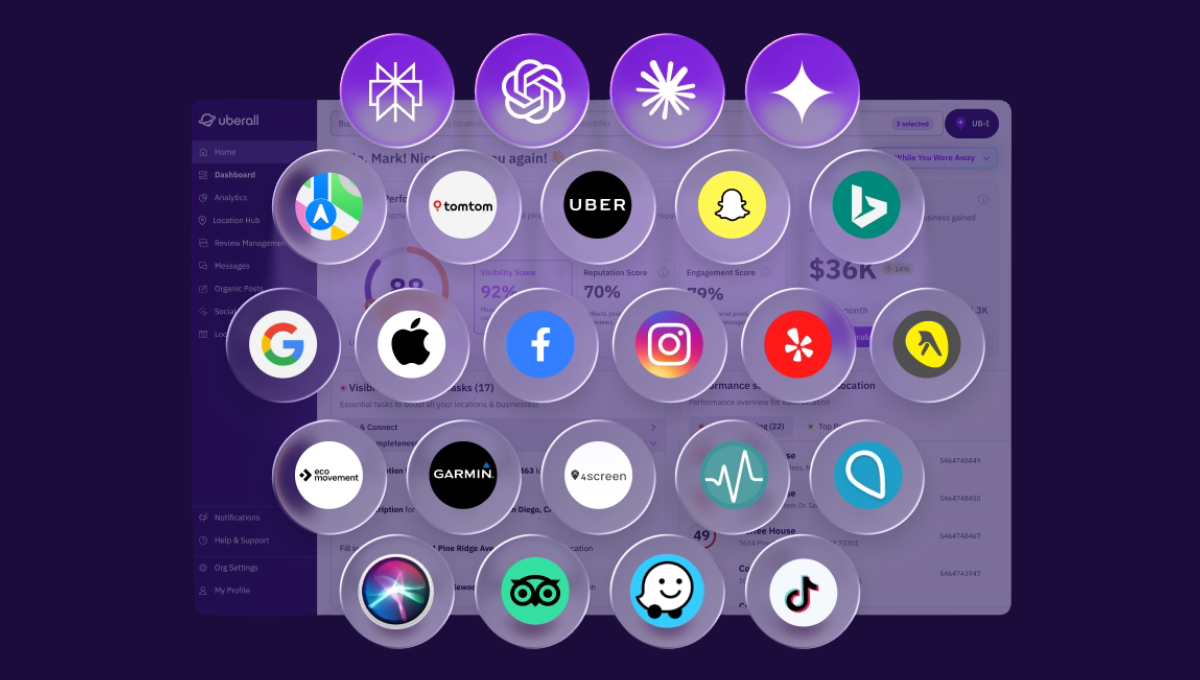
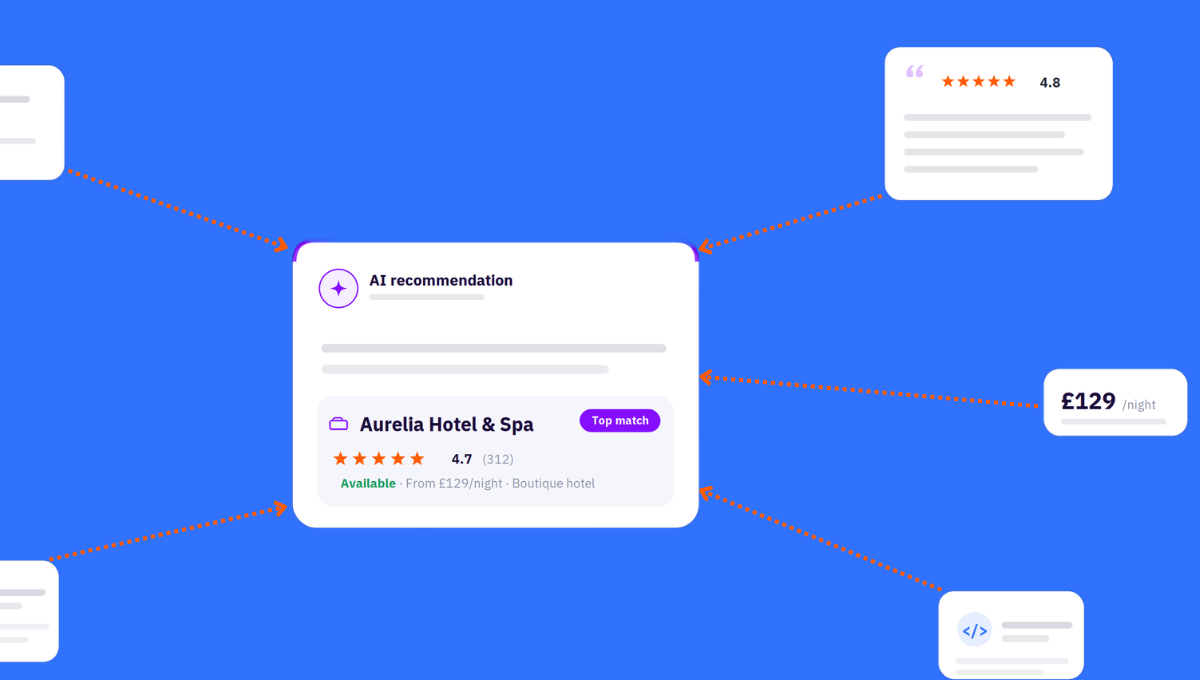
Our own research shows that AI systems consistently draw from a specific set of data sources when generating summaries. These are the platforms where your business needs to be visible:
- Google Business Profile
- Apple Maps
- Bing Places
- Yelp
- Industry-specific directories (e.g. PlugShare)
- Foursquare
- TikTok
- Your own website or blog
If your website is stale or unoptimized, customers will remain unaware — and unconvinced — when there’s another charger nearby. The charging points that stay visible, consistent, and credible across both search and AI discovery will be the ones drivers trust first.
2. Foster Trust Through Reputation
It’s not just about what happens while drivers charge their EVs. It’s about everything that happens before and after.
A seamless experience matters: Quick payments, clean and well-maintained stations, and real-time availability updates all play a role. But what really drives a driver to your charger instead of the one down the road?
Not just visibility, but a good reputation.
Online reputation remains one of the biggest differentiators between charge point operators. Businesses in the general energy sector average a profile rating of 3.7 stars according to our latest report, and less than half of all reviews receive a response. That’s a missed opportunity — especially when reviews are one of the strongest signals influencing both local search conversions and customer trust.
On top of that, businesses in the energy sector, including charge point operators, have collected an average of 4,500 reviews — the most successful have received more than 64,000 — which reveals the eye-opening discrepancies in this space.
What does an active review management strategy entail? Encourage satisfied drivers to share their experiences, and make sure every review — positive or negative — gets a thoughtful, timely reply. A quick, brand-consistent response shows that your brand values feedback and acts on it. Over time, this builds stronger relationships and improves sentiment across your locations.
3. Engage Offline and Online
When it comes to engagement, charge point operators have more options than ever to boost EV charging station utilization. They can pair charging with dining and retail, like at Tesla’s Destination Charging sites — and consider additional online initiatives.
Social Profiles
Create targeted, location-based marketing campaigns that reach drivers where it matters most: on the road, in the community, and across their digital journeys.
As a charge point operator, run location-specific offers and promotions to encourage repeat visits, and build partnerships with nearby retailers, coffee shops, or local events to add extra value to every stop. These collaborations turn a quick routine recharge into a positive brand experience.
Consistent posting on LinkedIn, Instagram, TikTok, and Facebook strengthens engagement even when drivers aren’t actively searching for a charger. Share authentic, hyperlocal social updates that speak directly to your audience — from:
- Local partnerships and promotions
- Station amenities
- User-generated content that highlights convenience and service quality
- Sustainability insights
- Customer stories and testimonials
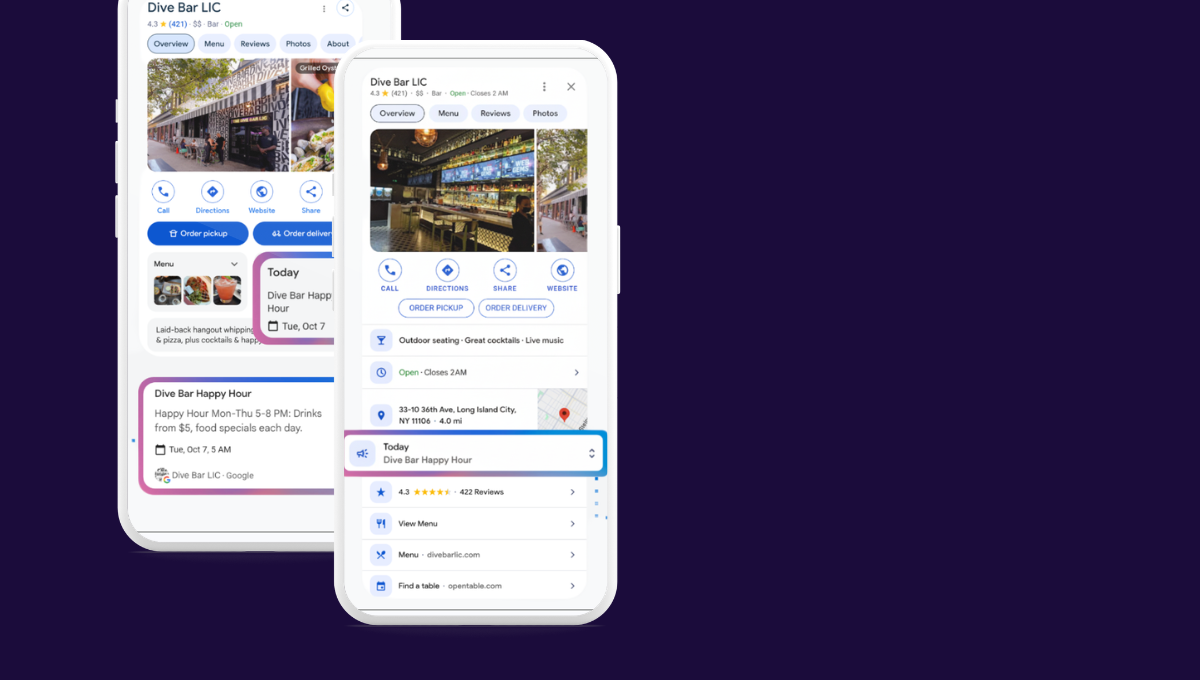
Don’t forget: You can also repurpose these posts for your Apple Maps or Google Posts to not only make your life easier — you’ll also keep your business profiles fresh, relevant, and discoverable. Regular updates don’t just boost engagement before drivers arrive; they also improve your visibility across both AI-driven and traditional search.
In an industry where reliability builds loyalty, consistent engagement is one of the most powerful ways to deepen trust, drive repeat visits, and increase customer lifetime value.
Your Website
Your website is where you remind drivers why they’re choosing you — whether it’s the environmental benefits of electric vehicles, simple charging how-tos, or your local sustainability initiatives.
Use it to answer the questions drivers are already asking:
- Compatibility with specific EV models
- Pricing
- Availability
- Amenities
Add dedicated location landing pages for each charging point to give both consumers and AI systems more context — complete with high-quality photos, clear amenities, and the details that inspire confidence and action.
And remember, consistency counts. Keep your website, listings, and social channels aligned with your brand identity to emphasize credibility and authority when you do become your customers’ first choice.
4. Make Converting Easy Every Time
To reframe what all of this is for: better visibility, stronger reputation, and consistent engagement all lead to one outcome — higher customer lifetime value and lower idle times.
When you implement the right initiatives across your locations, you make it easy for drivers to choose you.
Across the energy and EV sector, our report tells a clear story. In the first half of 2025, locations received an average of 262 direction clicks — but top performers reached nearly 2,800. That’s a tenfold difference, showing just how critical map visibility is when drivers are on the move and making split-second decisions about where to recharge.
And your website still matters. Improving ROI and CLV comes down to connecting every touchpoint — listings, maps, websites, and service interactions — into one seamless experience. Use location-specific URLs from your listings, make CTAs clear, and ensure your pages load fast. Every second saved counts.
Because conversion is about removing every possible barrier between online discovery and on-site action — and aligning what your customers want with what search systems need.
For charge point operators, the key is transforming visibility, reputation, and engagement into measurable revenue — completing the Location Performance Optimization (LPO) loop.

Maximize EV Charging Station Utilization with Location Marketing
Visibility is what fuels utilization, trust, and long-term profitability. Every accurate listing, real-time update, and verified review strengthens that trust, while every seamless interaction, from search to charge, keeps drivers coming back.
For charge point operators, success will come from more than just installing new chargers. It’s about optimizing the ones you already have — in terms of multichannel visibility, review management, and customer loyalty.
By aligning visibility, reputation, engagement, and conversion, you’re not just filling chargers — you’re building loyalty, increasing ROI, and future-proofing your brand.



1 800 marques nous font confiance pour rester visibles
— pas seulement apparaître une ou deux fois dans la recherche locale.