The AI Martech Stack: How to Feel Confident with Your AI Tools
We don’t want you to be hesitant or to leave money on the table. That’s why our AI marketing tools are intuitive & help you boost your efficiency.



Multi-location marketers and business owners are currently under immense pressure to jump somewhat blindly into AI to avoid falling behind. But before diving first into new AI-powered workflows and tools, many are hesitantly asking themselves:
- Will I still have control over my brand?
- Will customers still trust the experience?
- What’s the actual outcome I’m aiming for with AI?
- And perhaps most importantly — can I even trust AI?
Your competition will, of course, act like they’ve cracked the AI code – but the reality is that everyone is learning, and the data is still developing. It’s hard to predict exactly what the future of AI in multi-location marketing will look like.
What we do know is this: Managing customer interactions across hundreds of profiles, listings, and social channels isn’t getting any easier. And if you don’t tackle that complexity, you risk leaving serious revenue and foot traffic on the table.
We don’t want you to be hesitant or to leave money on the table. That’s why we’ve weaved intuitive AI capabilities into our Uberall products to take the load off your back. Here’s our take on what your priorities should look like in this new AI era.
Be Where Your Customers Are
Everything is changing, but as a multi-location business, you still want to follow your customers first and marketing trends second. That hasn’t changed.
Despite AI entering the picture, good marketers know they need to be where customers are. And where are their customers right now?
1. Google Search
Headwinds are strong in organic search at the moment: Impressions are generally up; clicks are down.
Even so, our most recent consumer insights report shows us that 91% of consumers still search online before visiting a local business. And Google is still dominating the beginning of the consumer journey, with almost eight in ten consumers starting their search with Google.
Summary
Google still matters, and no — SEO isn’t dead, despite what the headlines say. What’s really changing is how people discover businesses. To keep up, it’s time to evolve your approach. It’s not about chasing the algorithm; it’s about staying discoverable wherever these developments take us.
2. Listings
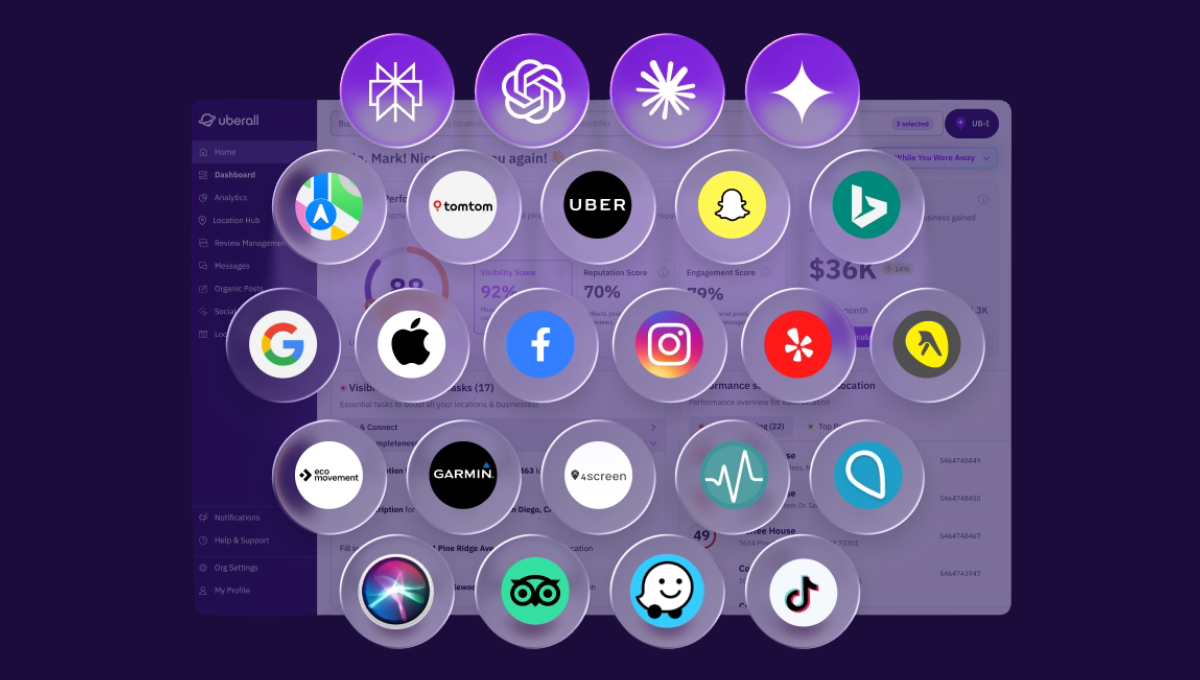
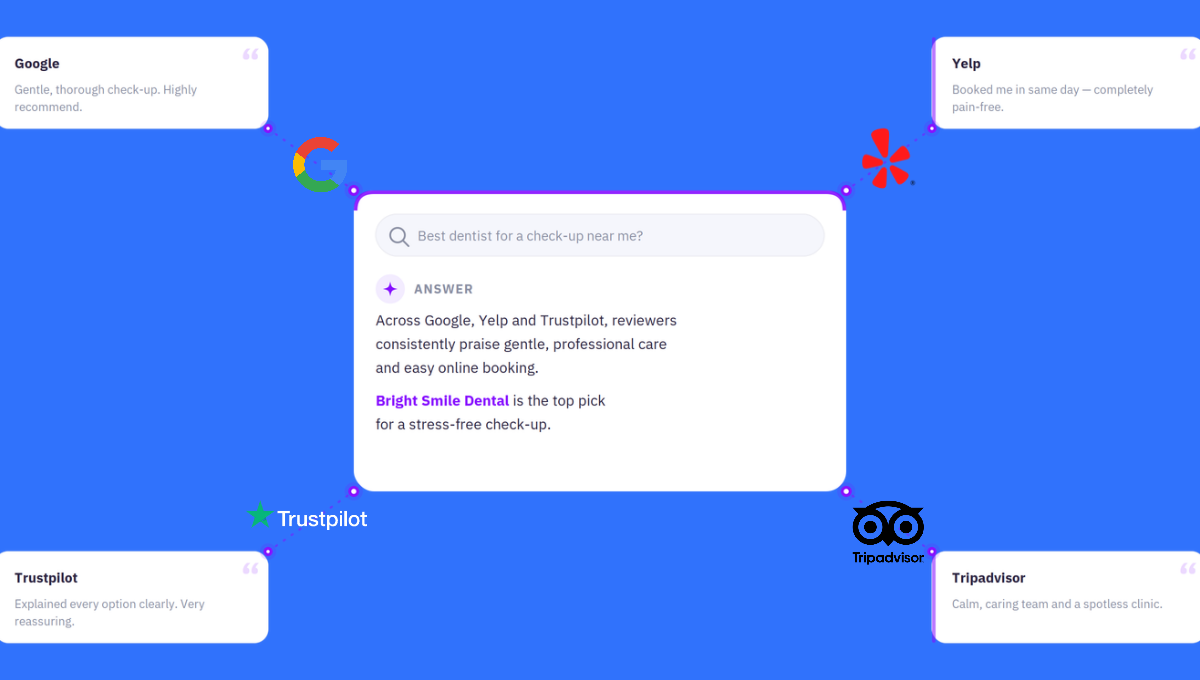
Consumers today scroll, compare, and decide which business to visit online or offline based on trust. That trust is often built through listings — on Google, Apple Maps, Yelp, Bing, and others.
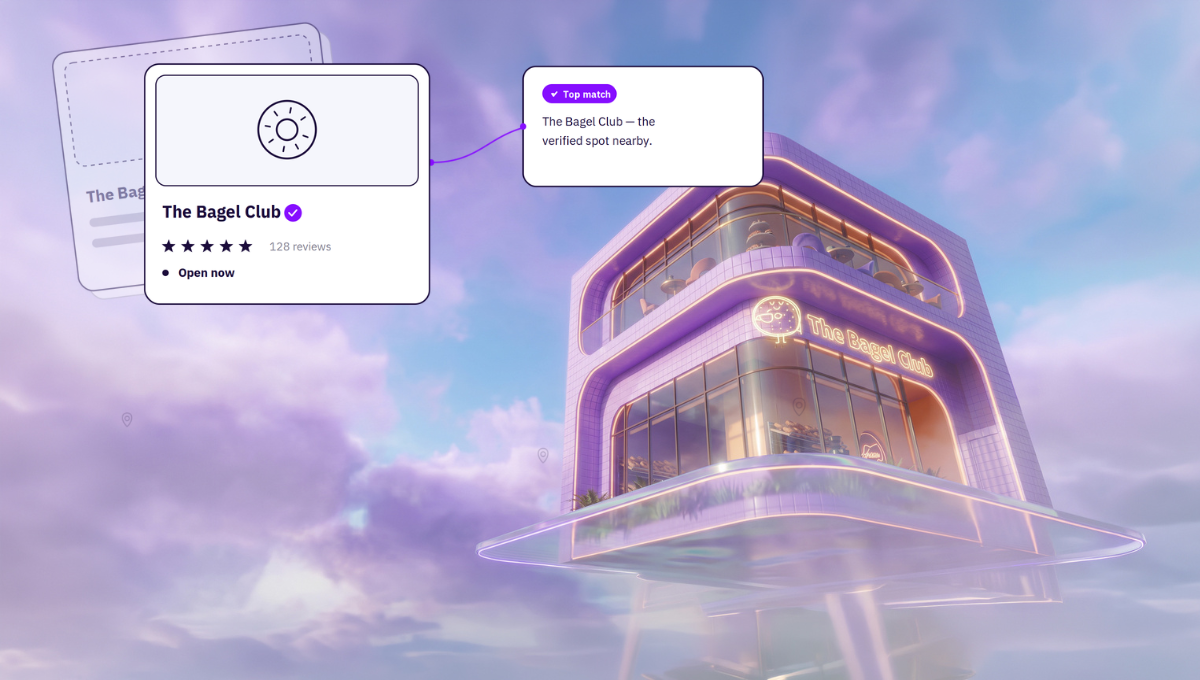
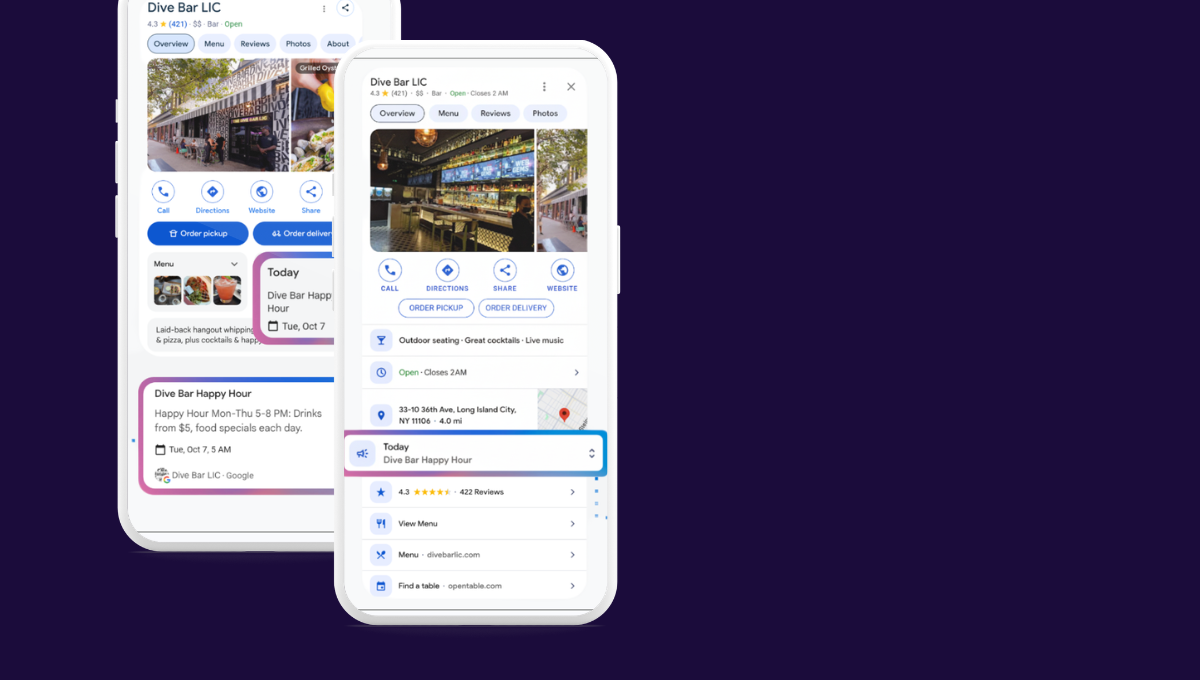
Businesses need to stay relevant by showing up in the very conversations and summaries AI tools are synthesizing. Lisa Landsman at Google told us: “At Google, we see 5× more views for regularly updated Business Profiles, so we recommend not only filling out your listing but also updating it to share what makes you unique.”
Summary
Your listings must be clear, accurate, and up to date — there is no way to get away from this if you want to be found in AI-powered search results.
3. Social Media
Don’t omit social media from your new strategy: Around 15% of the consumers surveyed in our report said that social media presence and engagement were important factors in visiting a local business. More than one in five said they would visit a social media page before stepping through their door.
This will only grow more important. Platforms like TikTok and Instagram offer both consumers and AI models valuable, crawlable context about your business and reinforce the experiences you offer, along with your business’ core attributes and services. Not only that — consistent, fresh social content through regular posts signals activity and topic relevance, which together influence how LLMs determine your business’ authority and trustworthiness.
Summary
Showcase your locations in short-form video — it’s the fastest way to build trust and tell your story to humans and algorithms alike.
4. AI Engines
AI engines are now the fourth most-used method to find local businesses — according to our report. A portion of organic traffic is now shifting to LLMs, such as ChatGPT, Perplexity, and Gemini. Few consumers (9%) said that AI suggestions directly influenced their visit decision, but this may change the more comfortable consumers feel using AI for decision-making.
Summary
Avoid LLMs telling your brand and product story for you without your input. Ensure your brand messaging/positioning across owned and earned channels is consistent and clear. For more concrete advice on how to prepare for AI-powered search results, read our article on generative engine optimization (GEO).
This isn’t an exhaustive list of our recommendations — managing your reviews effectively is also nonnegotiable. But being discoverable in all these places all at once is still a mighty ask, and you might be asking: How can small multi-location businesses manage this?
Be Better at Being Where Customers Are
This brings us to the real reason we’re such strong advocates for leveraging the right AI marketing tools.
They will enable multi-location marketing leaders to show up everywhere their customers are — without burning out in the process. More importantly, their brand won’t just appear in these spaces; it will show up with strength, consistency, and impact.
So, how can you get better at showing up where your customers are? Smart generative AI features will for sure have something to do with it.
Clear and Fresh Brand Messaging
You might:
- have new business locations
- want to update multiple locations at once
- want to promote a seasonal change or special event
Whether it’s brand- or location-level messaging, it must be consistent and compelling to attract and retain customers from Google, listings, social media, and AI engines (to name a few). Too many businesses have neglected this for too long.
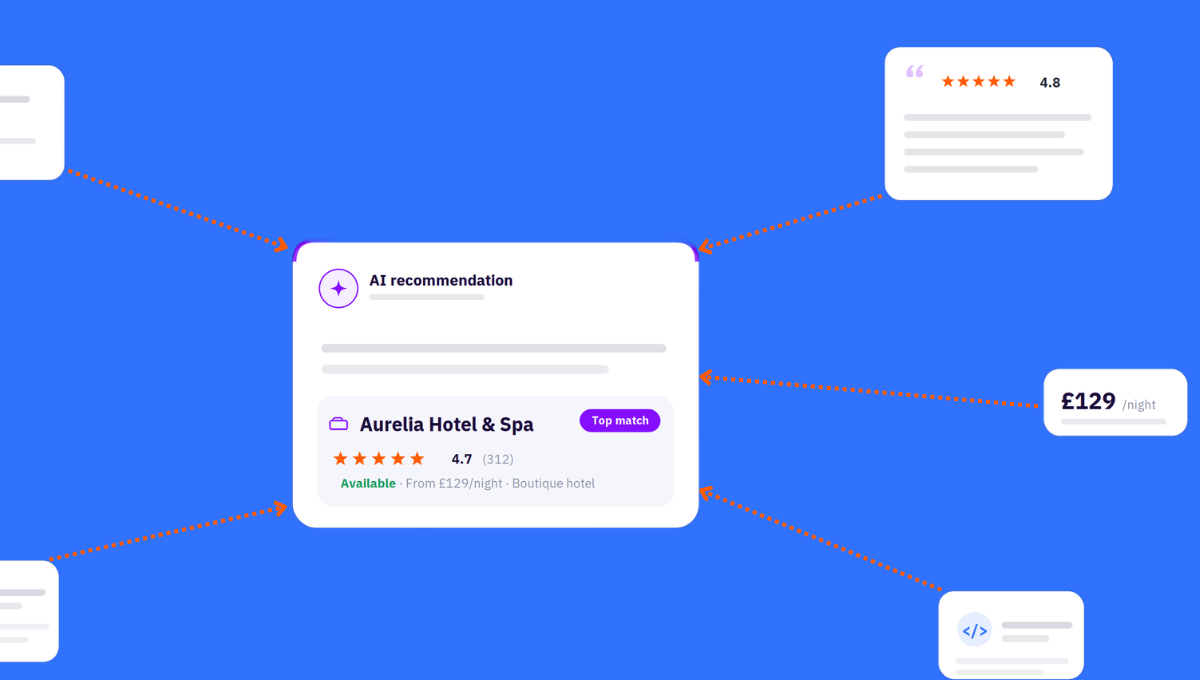
That won’t cut it much longer. Generative search engines are now skipping brands with inconsistent or unclear information.
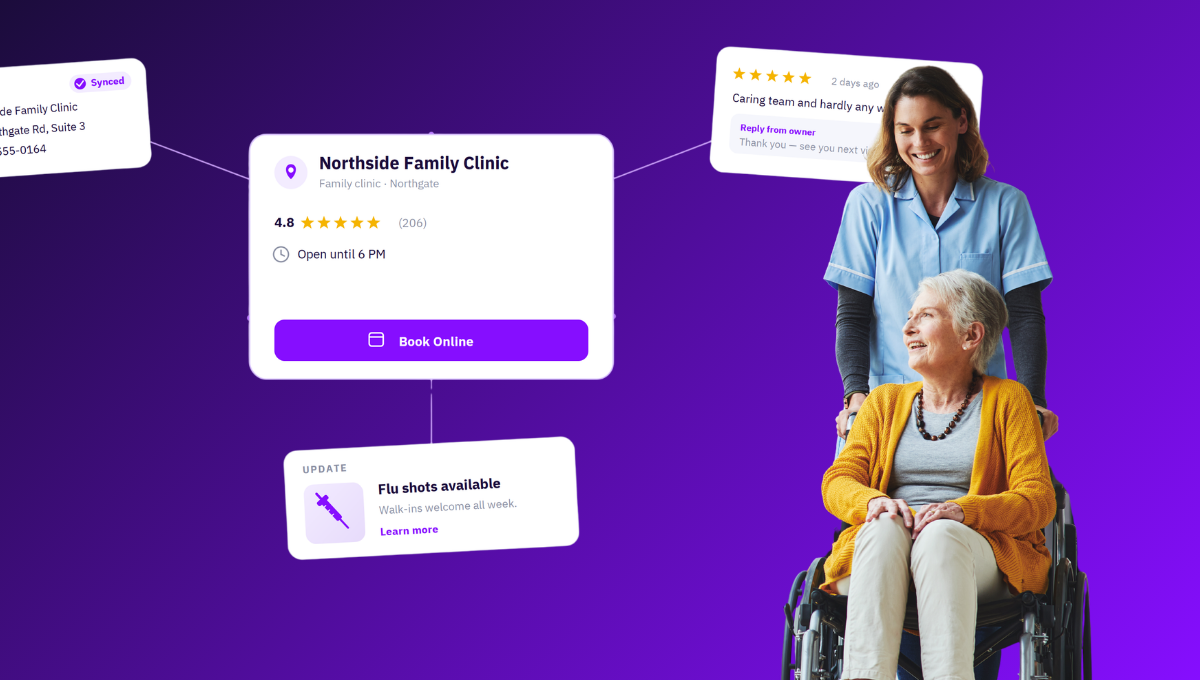
The good news: our listing management tool uses real-time API integrations with Google, Apple Maps, Bing, Yelp, and more — so updates are reflected quickly across the web.
Even better, the same tool lets you instantly generate compelling, accurate, and optimized business descriptions. This helps multi-location businesses stay consistent, discoverable, and up-to-date with minimal effort.
We know creativity is hard with outdated or incomplete listings. That’s why this key part of your AI martech stack helps marketers:
- Update for seasons, promos, or rebrands: Quickly refresh content across one or all locations.
Scale with bulk updates: Make changes across many locations in just a few clicks. - Save time and boost consistency: Cut manual work and keep a unified tone across listings.
What about your local pages? Beyond listings, they let you control your brand’s online narrative. By optimizing them for traditional and AI search, you ensure search engines can access and accurately represent your content — leading to:
- Better visibility: AI systems surface your content in relevant local searches.
- Stronger brand awareness: More visibility means greater trust and recognition.
- Higher engagement: Easy-to-find content leads to more site interaction and in-store visits.
This context-aware strategy boosts trust, conversions, and AI search presence. Tools like our AI Visibility Grader help you see how your brand appears in search and offer clear, actionable ways to improve.
Review Management for Customer Trust
Google considers your review response rate a trust signal — the more responsive you are, the more credible your business appears. And this is nonnegotiable for both acquiring and retaining customers today.
That’s why the right review management tools will still form a critical part of your martech stack. They will help businesses streamline the process of receiving, managing, and replying to customer reviews. But it won’t just be about firing off quick responses blindly — it will be about automating this process in a way that still fosters genuine connections with customers.
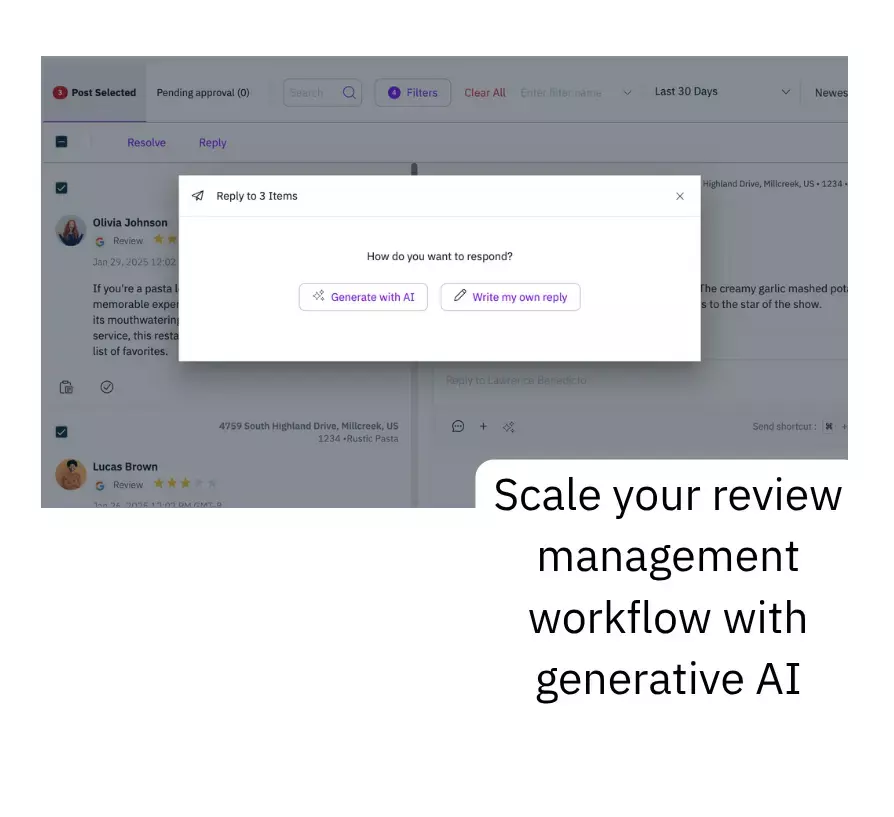
Our AI-powered review management tool gets your brand, understands your tone of voice, and crafts responses that resonate with your customers to build that all-important engagement and loyalty. It automatically generates responses and sends them out if the trigger conditions are met. You can put your review management on autopilot and ensure every review — good or bad — is met with the right tone, message, and language. Teams can then modify AI-generated responses to add additional details or personalizations.
Automated yet personalized responses mean multi-location businesses can handle a larger volume of customer reviews without increasing their headcount or workload. This leads to better productivity, more efficient use of resources, and operational cost savings — and happy customers, too.
More Efficient Content Generation
As marketers we want to enjoy creativity – but not at the cost of growth. And when creative tasks are incredibly manual, it’s hard to scale your efforts.
Bulk AI content generation tools will be met with hesitancy as much as with gratitude — especially, among franchise marketers. The best in the market will give you the confidence that you won’t be firing out content blindly into your unimpressed audience; you’ll simply speed up the rate at which you generate quality content that is fully aligned with what you’ve published in the past.
Social media tools, such as ours, will help teams effortlessly generate engaging, on-brand posts in seconds, leveraging AI that learns from their existing content for optimal tone and messaging. This is to captivate audiences and drive interactions, while staying relevant across all networks. Better yet, AI learns from the performance of previous 50 posts, so you don’t have to click through the analytics. You just get posting across Google, Apple Maps, Facebook, Instagram, LinkedIn, and more with confidence.
The Next-Gen Martech Stack Uses Generative and Agentic AI
We want to resist it; we want to embrace it. AI influences what we need in our marketing toolkit as much as it directly shapes the products and technologies in our toolkit. But its intuitiveness is what will be key for adoption.
Everything listed above — these are the generative AI additions and enhancements we’ll see in our AI martech stacks. Generative AI will continue to cut time and pressure for marketing teams. But for AI to really save marketers time and energy, it has to be intuitive. That’s where agentic AI will come in — it will understand the job to be done (and what to prioritize) without needing a prompt.
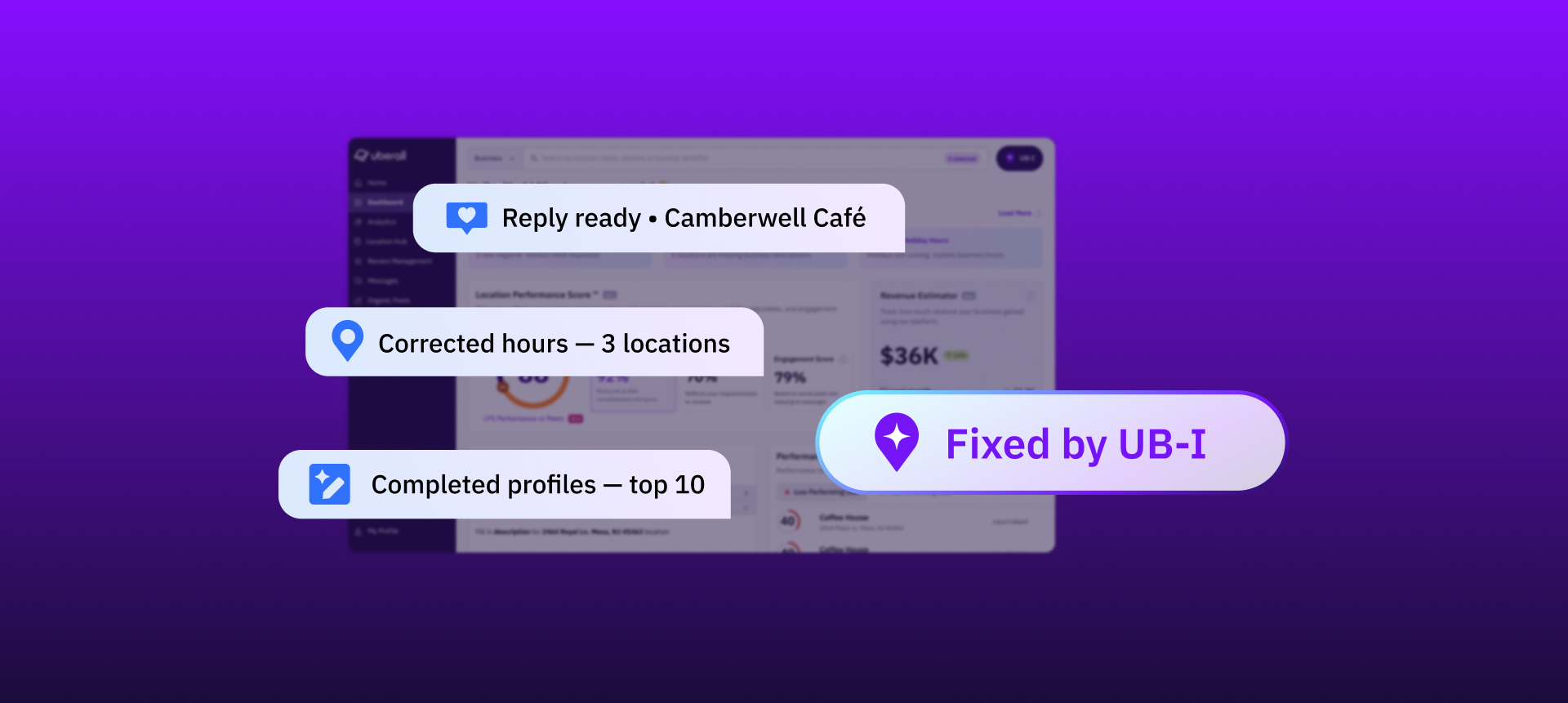
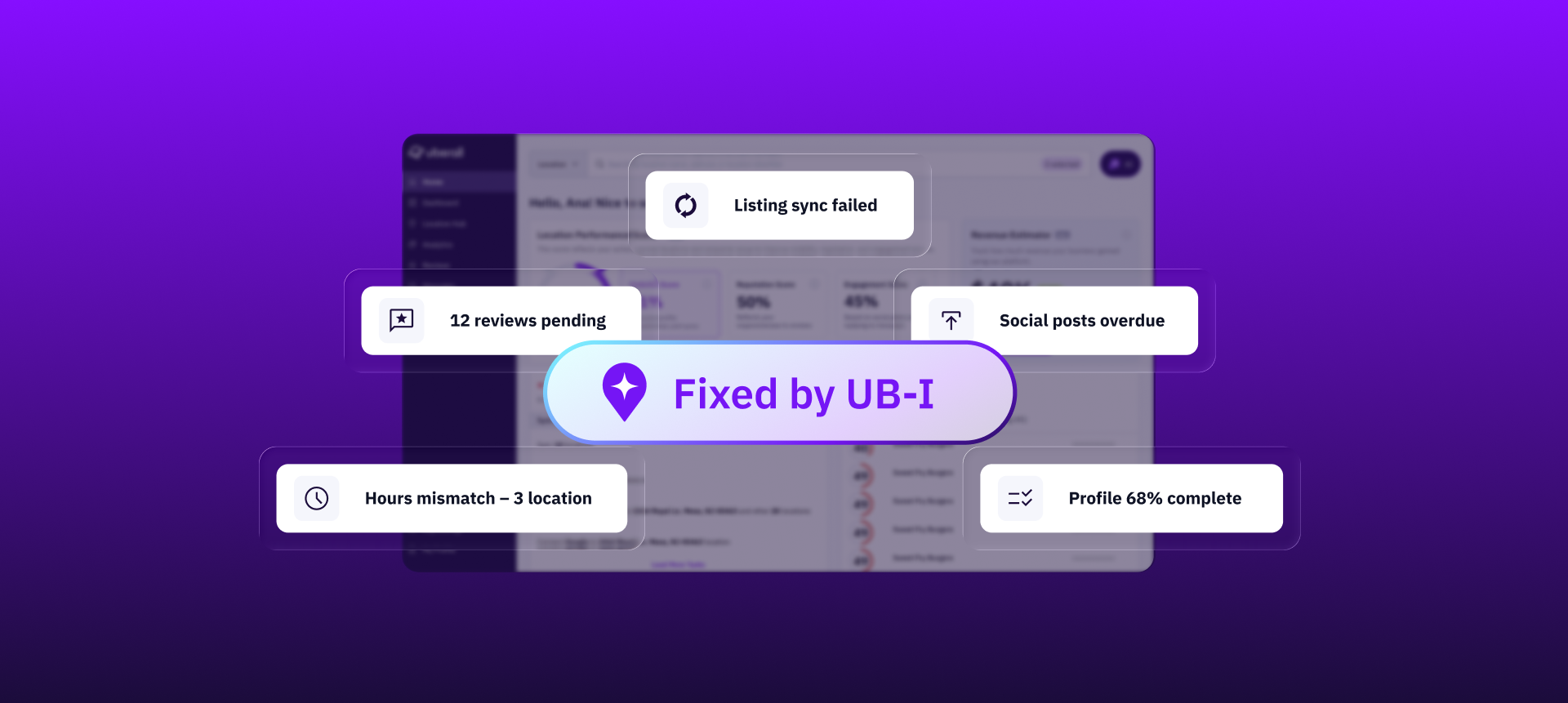
Imagine this: A marketer knows they need to improve their location data but isn’t sure where to start. Agentic AI, built on an ever-evolving MCP model, steps in with actionable insights and clear next steps — no support tickets, no relying on endless “how-to” articles, no workflow disruption. Even better, the next time they log in, they might find a custom report showing the real impact of their completed tasks on their Location Performance Score (LPS).
This setup with a combination of gen AI and agentic AI is perfect for marketers who want to begin their tasks without stressing about where to begin.
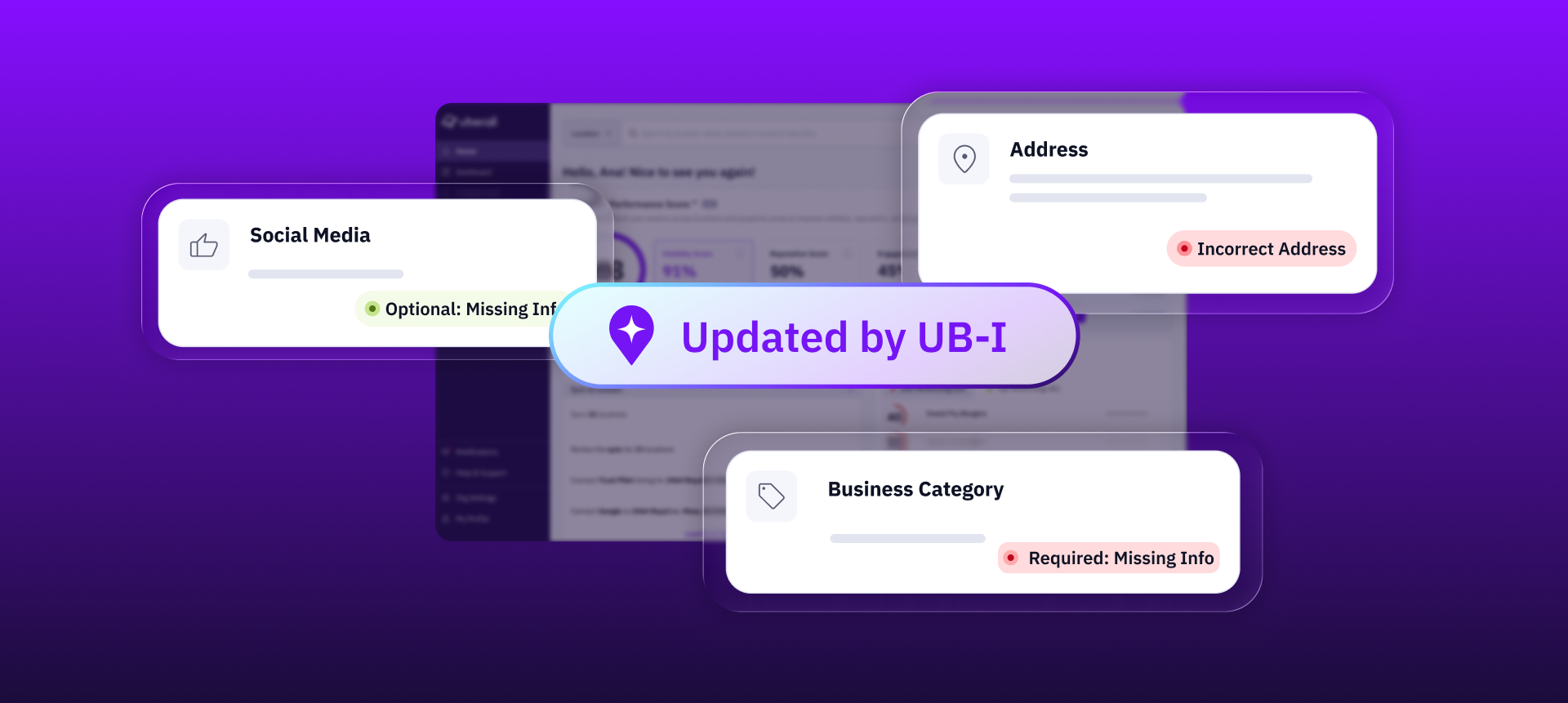
This is exactly where our own AI marketing tools come in, such as UB-I. With this agentic AI, combined with our existing in-platform generative AI features, we help free up your brainpower for the creative, strategic work you actually enjoy — and take the guesswork or manual work out of everything else.

The AI Marketing Tools Businesses Deserve
Some tools push you to use AI blindly. The right tools empower you to use AI thoughtfully — as a strategic, integrated part of your marketing approach.
To stay visible where your customers are, you need to show up across platforms — and show up well. But we know, from experience, this is challenging with the budgets and resources marketing teams have at their disposal.
That’s why we advocate for AI marketing tools that help teams scale without burnout. They’ll boost ROI while enhancing (not disrupting) existing workflows. Our goal is to help businesses build a martech stack that’s scalable, consistent, and fit for the next generation of marketers.
That’s where agentic AI comes in. It's already part of our platform — and we’re continuously improving its UX to ensure it’s intuitive, effective, and built to solve your real marketing challenges. Because the future of AI marketing should feel less like a burden, and more like a breakthrough.


1 800 marques nous font confiance pour rester visibles
— pas seulement apparaître une ou deux fois dans la recherche locale.