¿Cómo funcionan realmente las «conexiones con LLM» si no puedes enviar directamente los datos de tu empresa?
Ninguna plataforma de fichas envía datos directamente a ChatGPT, Perplexity ni ninguna otra herramienta de IA. Así funcionan realmente las fuentes de datos IA para influir en tu visibilidad en LLM ChatGPT.

Puntos clave
- No existen APIs oficiales, pipelines de envío ni integraciones directas entre plataformas de gestión de fichas y los principales LLM
- Los modelos de IA extraen datos de Google, Yelp, directorios, sitios de reseñas y contenido web estructurado — no de dashboards de proveedores
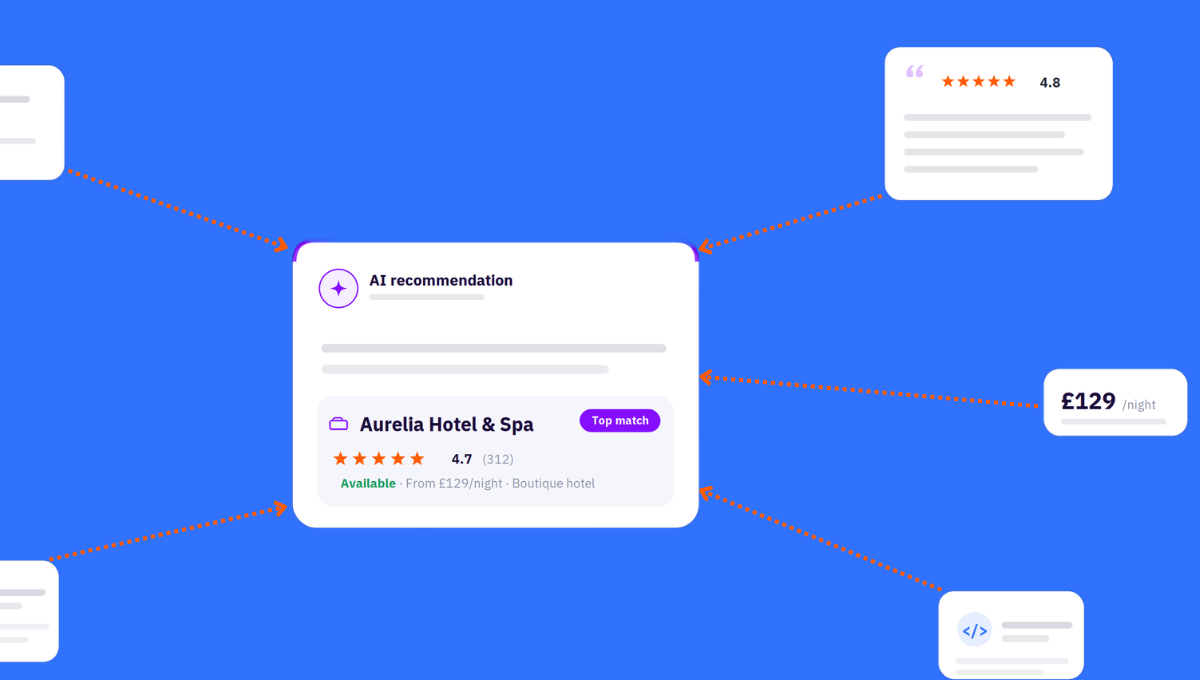
- Datos precisos y coherentes en los directorios relevantes, señales de reputación sólidas y contenido local estructurado son las entradas que los modelos de IA leen cuando elaboran recomendaciones locales
«Los LLM no son directorios ni publishers tradicionales, lo que significa que no existen conectores directos ni APIs para la ingesta de datos de clientes. Cualquier afirmación de un partnership de datos directo con un LLM para la ingesta de fichas debe tratarse con cautela. Así no funciona el ecosistema actualmente.»

Resulta que últimamente recibimos esta pregunta con frecuencia de clientes enterprise — en demos y en correos de seguimiento: «Habéis incluido grandes LLM como publishers. ¿Cómo funcionan realmente esas conexiones — son partnerships oficiales, integraciones directas, envíos o algo distinto?»
Es una pregunta legítima, porque cuando los proveedores hablan de «enviar datos verificados directamente a los LLM en tiempo real», insinúan que detrás de esa vaga promesa existe una especie de API mágica. Simplemente no la hay.
En palabras de nuestra Technical Product Manager, Luma Ghazaleh:
{{quote}}
Así que cuando nosotros — o cualquier otro proveedor en este espacio — hablamos de «conexiones» con los LLM, nos referimos a influencia indirecta en lugar de ingesta directa. Con una plataforma como Uberall, las marcas mejoran su presencia en todo el ecosistema del que dependen los LLM. Así es como funciona.
¿Puedes influir en cómo tu empresa aparece en ChatGPT y otros LLM?
Los Large Language Models como ChatGPT y Gemini no son directorios de empresas, y no aceptan envíos como sí lo hacen Yelp, Bing u otros directorios.
No hay un dashboard en el que iniciar sesión para actualizar tus horarios. Entonces, ¿cómo llegan realmente los datos de las empresas a estos sistemas LLM? Entender cómo obtienen los LLM los datos de las empresas significa comprender dos caminos distintos.
Cuando alguien le pregunta a una de estas herramientas cuál es el mejor hotel cerca de la Sagrada Familia o el mejor frozen yogurt cerca del 28001, el modelo construye su respuesta a partir de datos que ya ha recibido — ya sea de datos de entrenamiento o de búsqueda en directo — y no de datos que un proveedor le haya enviado.
La respuesta también depende de qué herramienta usen los clientes, porque no todas están construidas de la misma forma.
Los modelos basados en datos de entrenamiento (ChatGPT, Claude, Gemini, Grok) aprendieron sobre empresas a partir de una instantánea fija de internet — blogs gastronómicos, sitios de reseñas, artículos de prensa, listas editoriales «best of». Esa instantánea puede tener meses de antigüedad. También usan búsqueda en directo, pero los datos de entrenamiento van primero.
Los modelos de búsqueda en directo como Perplexity funcionan al revés — extraen de lo que está actualmente publicado e indexado, usando los datos de entrenamiento como complemento en lugar de fuente principal. Esta única diferencia ofrece a los usuarios resultados distintos.
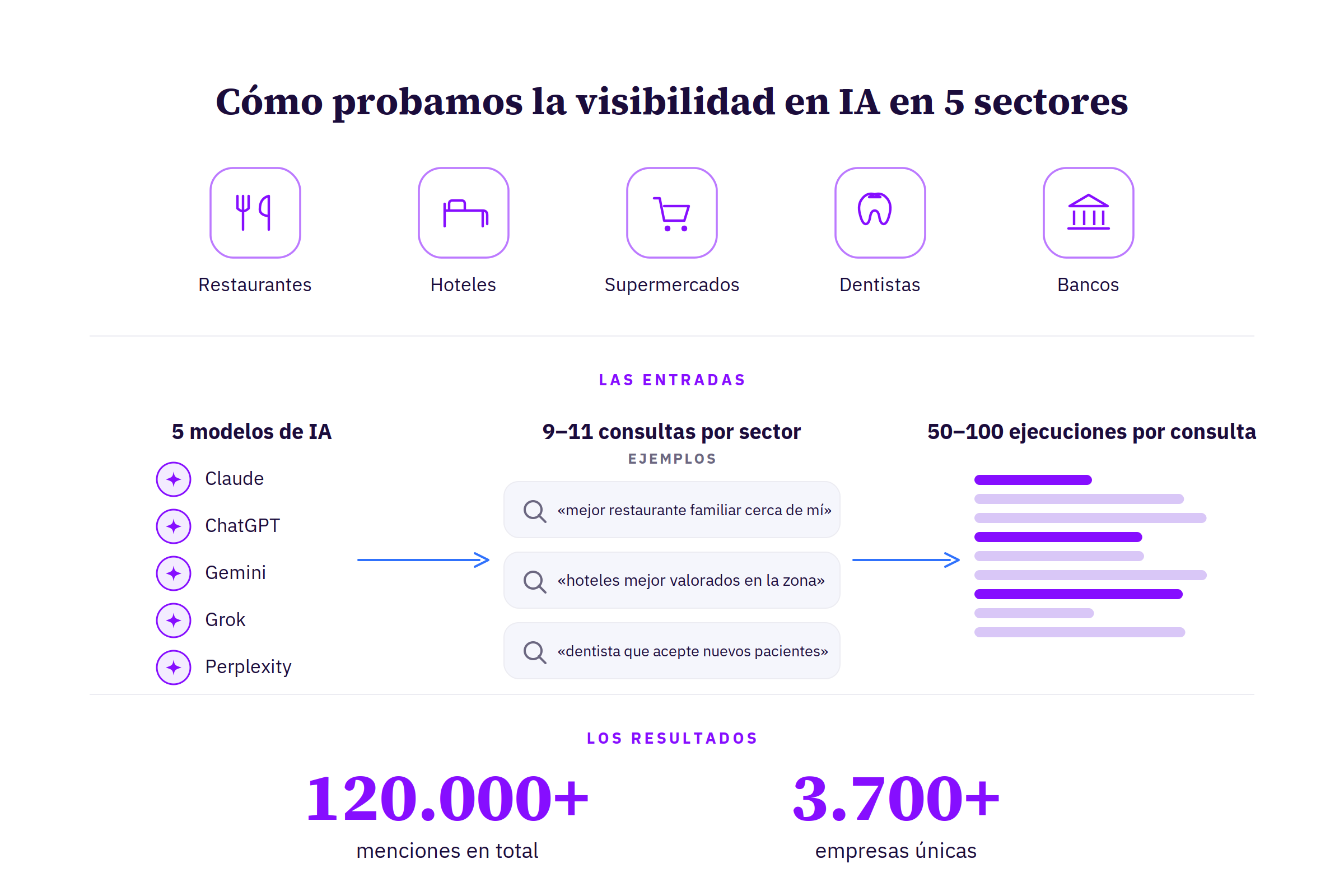
En el marco de la investigación inter-sectorial más reciente de Uberall sobre visibilidad de marca en IA vs Google, nuestra analista GEO/AEO Katya Shishchenko testó cómo cinco modelos de IA recomiendan empresas en los sectores de restauración, hotelería, alimentación, odontología y banca — ejecutando cada modelo contra 9 a 11 intents de prompts reales por sector, desde consultas básicas de descubrimiento hasta búsquedas por necesidad específica. Este proceso se repitió entre 50 y 100 veces por combinación, produciendo más de 120.000 menciones en 3.700+ empresas únicas.
Según la investigación, Perplexity mostró de forma consistente más empresas, citó sus fuentes y devolvió nombres de negocios reales y verificables. Los modelos estáticos tendían a recomendar el mismo conjunto reducido de empresas repetidamente, a alucinar nombres que no existen y a basarse en datos más antiguos. Lógico, ¿no?
Katya descubrió que cada modelo tiene también una personalidad propia:
- Claude es el más conservador — favorece empresas locales y comunitarias pero evita en gran medida nombrar proveedores de salud específicos. Las políticas de seguridad de Anthropic impiden que Claude dé recomendaciones que pudieran interpretarse como consejo médico, por lo que en nuestro estudio de odontología solo nombró clínicas en prompts relativos a necesidades clínicas inmediatas como urgencias.
- Gemini es el más diverso, probablemente porque cruza datos en directo de Google Maps. Muestra 8× más restaurantes únicos que ChatGPT en el mismo estudio.
- ChatGPT es consensual y concentrado — una shortlist corta y pegajosa, pero con las tasas de alucinación más altas en todos los sectores.
- Grok está orientado a las credenciales — referencia cualificaciones de chefs y contenido de Instagram más que cualquier otro modelo.
- Perplexity busca en directo, cita sus fuentes y genera el mayor número de menciones por ejecución. Para empresas con fuerte presencia web actual, es el modelo «más fácil» de conquistar.
OK, concretemos la pregunta: ¿Cómo consiguen las empresas que sus datos de ubicación entren en la búsqueda en directo? ¿Pueden aún influir en lo que hay en los datos de entrenamiento?
¿Qué fuentes de datos deberías priorizar para la visibilidad en LLM?
Llevamos más de un año mapeando la jerarquía de fuentes de datos IA en la que se apoyan herramientas como ChatGPT, Gemini y Perplexity — especialmente para búsquedas locales. Nuestra Technical Product Manager Luma realizó varios experimentos el año pasado, y desde entonces no hemos dejado de ampliar sus hallazgos.
Pero ¿qué entendemos por fuentes de datos IA? Son los distintos canales de los que las herramientas de IA extraen sus respuestas. Como norma general en todos los sectores, estos suelen estar «clasificados» en la jerarquía que te mostramos a continuación, lo que significa que los niveles superiores tienen mayor influencia en lo que se escribe en esas respuestas generadas. Si concentras tus esfuerzos en estas fuentes, puedes integrar eficazmente tus datos de ubicación en la búsqueda en directo y construir una visibilidad en LLM real.
Debes tener en cuenta, sin embargo, que las fuentes con mayor peso varían significativamente según el sector.
Top Tier: Google
Google sigue siendo la fuente número uno para consultas con intención local. ChatGPT y la mayoría de herramientas de IA inician búsquedas a través de Google o Bing Search, tratando los Perfiles de Empresa de Google (GBP) como fuentes autorizadas de reseñas, datos de ubicación, valoraciones, horarios, fotos y horas punta.
La mayoría de los modelos también usan datos de GBP para generar tarjetas de ubicación o snippets — los bloques estructurados que aparecen junto a una recomendación. Cada modelo extrae atributos diferentes: Perplexity crea las tarjetas más completas (nombre, fotos, valoración, número de reseñas, rango de precios, dirección, teléfono, web, categorías y horarios), mientras que Grok a menudo reduce una empresa a su dirección.
ChatGPT y Gemini se sitúan en un punto intermedio, combinando fotos, horarios, rango de precios y datos de categoría.
Aquí es donde la completitud del perfil resulta crucial. Si a tu GBP le falta un atributo que un modelo usa para construir su snippet — digamos horarios o un número de teléfono —, es probable que un competidor con un perfil más completo aparezca en su lugar.
High Tier: Yelp
Yelp es una de las fuentes más influyentes para consultas de restauración, retail, belleza y hostelería — y uno de los caminos más rápidos para aparecer en ChatGPT negocio.
Aparece con frecuencia en las respuestas generadas por IA gracias a su fuerte autoridad de dominio y su riqueza en contenido generado por usuarios. Los rankings de Yelp, el sentimiento de las reseñas y las valoraciones son referenciados por herramientas como ChatGPT — y en algunos casos, el sistema extrae listas completas de empresas directamente de Yelp cuando responde a consultas «best of».
Yelp también tiene una relación de licencia directa con OpenAI, lo que significa que sus datos son una fuente de datos IA conocida para las recomendaciones locales de ChatGPT.
Mid Tier: Directorios y sitios web específicos del sector
TripAdvisor, OpenTable, DoorDash y otras plataformas de entrega y reservas son especialmente relevantes para consultas relacionadas con viajes, restauración y comida a domicilio.
Pero el panorama de directorios va mucho más allá de los nombres evidentes, y por supuesto varía según el sector.
En odontología, Zocdoc es la única plataforma de reseñas individual donde el volumen predice significativamente la probabilidad de mención por IA. En banca, la puntuación en TrustPilot es la señal continua individual más fuerte para determinar si un banco es mencionado o no, y la puntuación BBB es la segunda — sin embargo, casi dos de cada tres bancos en el estudio de Katya ni siquiera habían reclamado sus perfiles de TrustPilot.
No todas las fuentes de citación son evidentes. En el mercado francés concretamente, casi la mitad de todas las citaciones IA procedían de cientos de pequeños directorios de nicho que individualmente parecen insignificantes pero que colectivamente son la mayor categoría de fuentes, citada 7× más a menudo que las propias webs de las marcas. Estos directorios más pequeños suelen obtener datos de agregadores mayores como Foursquare y TomTom, lo que significa que tus datos de fichas deben ser correctos para funcionar como fuente única de verdad a través de capas de fuentes que quizá ni estés rastreando.
Los sitios web de empresa y los blogs también entran en esta categoría — cuando están bien optimizados con contenido estructurado como menús, FAQs, marcado schema, citas de clientes o páginas de localizador de tiendas, los LLM tienen más probabilidad de referenciarlos.
Mid Tier: Cobertura en prensa y medios
Las publicaciones externas creíbles, las fuentes editoriales de nicho e incluso las listas «best of» en blogs de viajes o gastronomía producen contenido con alta autoridad de dominio que los modelos ponderan fuertemente.
En nuestra investigación, la correlación entre más cobertura de prensa y más menciones IA aparece en cada sector estudiado:
- En banca, las marcas con 75+ menciones en Google News dentro de una ventana de 90 días obtienen de media 15× más menciones IA que las que tienen menos de 10.
- En hotelería, la cobertura mediática tiene el mayor tamaño de efecto individual de todas las señales para la probabilidad de mención.
Lower Tier: Bing, Apple Maps, Foursquare
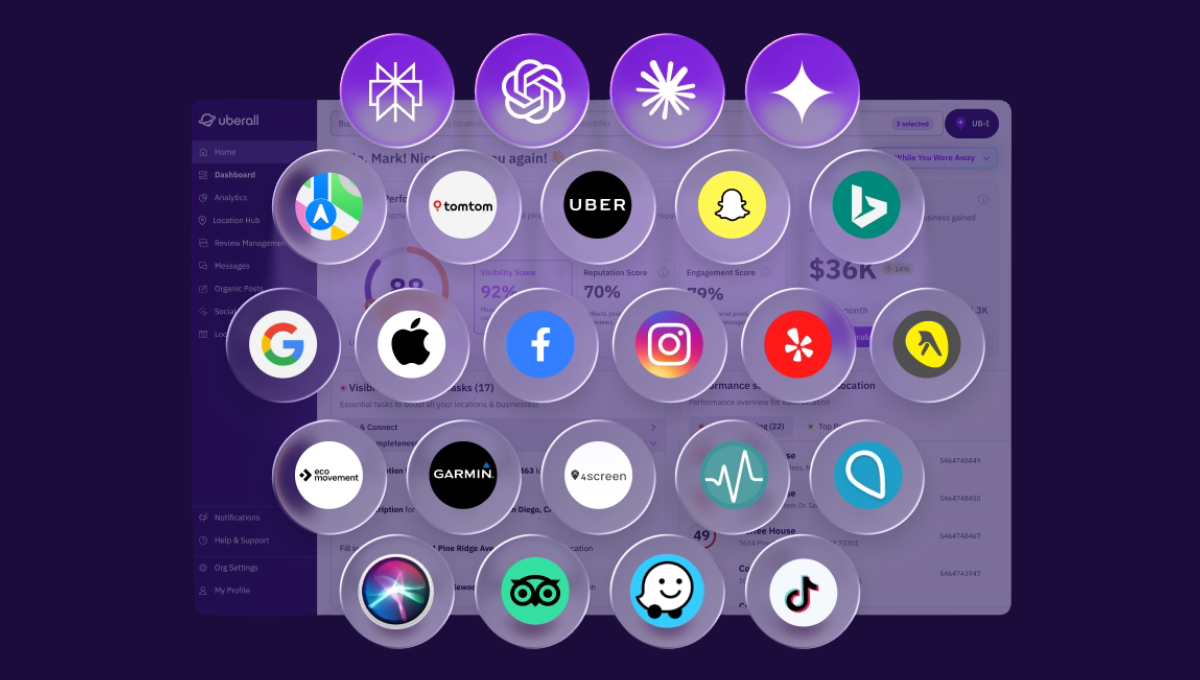
Estas plataformas aparecen con menos frecuencia en las respuestas de IA, pero juegan un papel más importante de lo que piensas. Bing es el motor de búsqueda que ChatGPT usa para la búsqueda en directo — lo que convierte a Bing Places en un input directo para el asistente de IA más utilizado.
Apple Maps alimenta a Apple Intelligence, y los datos de Foursquare aparecen en docenas de apps y servicios.
Esta completitud de perfil y coherencia de datos funciona como una capa de validación, reforzando la señal de que tu empresa existe, está activa y es fiable, y tiene información consistente en todas partes — aunque estas plataformas no sean las que se citan directamente.
Otras fuentes de datos IA que deberías monitorizar
Las señales a continuación no son fuentes de citación de primer nivel por sí solas, pero aparecen de forma constante en nuestra investigación como predictores de si una empresa es mencionada — y con qué frecuencia.
Cuáles importan más depende de tu sector:
- Google Knowledge Graph y Wikipedia: La presencia en Wikipedia amplifica la frecuencia de mención en banca (r = 0,321) y en hotelería, pero no crea menciones por sí sola. La presencia en el Knowledge Graph produce un uplift de mención de 3,75× en odontología. Ambas son señales de autoridad ganada que se refuerzan con el tiempo.
- Instagram y Facebook: El número de seguidores en Instagram es un predictor fuerte de la visibilidad en ChatGPT en restauración y hotelería. Tiene sentido porque más seguidores suele significar publicaciones más frecuentes para mantener la audiencia enganchada, lo que se traduce en más likes y compartidos, creando una huella de contenido mayor para el entrenamiento de modelos. De hecho, descubrimos que Instagram es el predictor individual más fuerte de la frecuencia de mención para hoteles boutique (r = 0,568). Los seguidores en Facebook predicen la probabilidad de mención en odontología (brecha de 4,7× entre clínicas mencionadas y no mencionadas). También mencionamos antes que Grok referencia contenido de Instagram más que otros modelos.
- YouTube: La presencia de un canal casi triplica las probabilidades de mención en odontología — y lo que importa es la existencia del canal, no el número de suscriptores. La mayoría de empresas aún no se han interesado, lo cual es exactamente la razón por la que supone una gran oportunidad para las marcas.
- Autoridad de dominio: Una autoridad de dominio superior a 68 produce 14× más menciones IA que por debajo de 20 en banca.
- Premios sectoriales, listas editoriales «best of» y certificaciones: En banca, 3+ apariciones en plataformas editoriales (Bankrate, NerdWallet, Forbes Advisor, WalletHub) se asocian con una tasa de mención del 100 %. En restauración, Perplexity referencia la Guía Michelin en el 94,5 % de las respuestas.
- Reddit: Cada vez más citado por Perplexity en particular, especialmente para consultas de restauración y descubrimiento local. Cubrimos las oportunidades de marketing en Reddit para negocios locales en un webinar de SEJ, resumido en ese artículo.
Esta jerarquía no es estática; cambia constantemente dependiendo de sectores, actualizaciones de modelos y también de los nuevos partnerships de datos que firman los proveedores de LLM y de la expansión de sus capacidades de búsqueda en tiempo real.
Pero en términos generales, y basándonos en nuestros hallazgos del año pasado y de este, las fuentes con la mayor autoridad de dominio, los datos estructurados más ricos y el contenido generado por usuarios más reciente son las que los modelos de IA más confían. Así es como las empresas están «integrando» actualmente sus datos de ubicación en la búsqueda en directo.
¿Qué puedes influir a partir de hoy?
Ahora que sabes que ningún proveedor puede enviar los datos de tu empresa a los LLM, necesitas entender que tu papel como SEO Manager multi-ubicación o responsable de PR consiste en priorizar absolutamente las tres cosas siguientes, lo antes posible, si quieres cómo aparecer en ChatGPT con tu negocio.
1. Precisión de los datos en los directorios relevantes
Una buena gestión de fichas es el fundamento — mantén los datos NAP, horarios, categorías y atributos coherentes en cada directorio que los modelos de IA leen. Alrededor del 68 % de las empresas locales aparecen de forma incorrecta en los resultados de IA debido a datos faltantes, incoherentes u obsoletos. Un análisis puede revelar exactamente dónde están esas brechas y cómo saber si mi marca aparece en ChatGPT correctamente. Cuando tan pocas empresas tienen información coherente en los sistemas de IA, acertar ya es una ventaja competitiva.
2. Señales de reputación sólidas
Las reseñas importan para los modelos de IA, pero no necesariamente de la forma en que todos pensábamos. Las valoraciones por estrellas no predicen significativamente las menciones IA en tres de los cinco sectores estudiados. El número de reseñas importa mucho más que tener solo unas pocas valoraciones de cinco estrellas. Los volúmenes altos de reseñas en plataformas como Yelp y Google también implican que una ficha ha pasado los filtros anti-spam y los umbrales de verificación, añadiendo una capa de validación — un visto bueno para recomendar.
El texto de las reseñas también contiene el vocabulario descriptivo en el que los LLM se apoyan al elaborar sus recomendaciones — si una empresa tiene una estupenda terraza, un espacio pet-friendly o un personal especialmente amable.
3. Contenido estructurado y legible por IA
Si quieres cómo hacer visible mi contenido en ChatGPT y otras herramientas de IA, asegurarte de que es rastreable es el prerrequisito más básico. Las grounding pages, las FAQs locales y las páginas locales optimizadas con schema ofrecen a los sistemas de IA una fuente única y citable de verdad para cada ubicación. Comprueba que tu robots.txt permite a los principales crawlers de IA (GPTBot, Google-Extended, ClaudeBot, PerplexityBot) acceder a tu sitio.
Otro punto técnico que merece la pena mencionar aquí es que la mayoría de modelos de IA no pueden leer JavaScript ni interactuar con elementos de página dinámicos; solo consumen texto plano. Si tus páginas locales están construidas sobre frameworks JavaScript pesados sin renderizado del lado del servidor (SSR), los LLM podrían no ser capaces de leerlas en absoluto.
Qué preguntarle a tu proveedor de fichas sobre la «implementación» de la visibilidad IA
Este es un filtro que deberías usar en cualquier conversación con un proveedor sobre búsqueda IA: pídeles que expliquen, en términos concretos, cómo los datos de tu empresa llegan a un LLM.
Si la respuesta incluye la palabra «directo» y el nombre de un Large Language Model en la misma frase, haz preguntas de seguimiento. Pide la documentación de la API. Pide el acuerdo de partnership. Pregunta qué pasa cuando actualizas un número de teléfono — ¿se sincroniza con ChatGPT del mismo modo que se sincroniza con Google?
En palabras de Luma: «La respuesta te dirá si estás evaluando un producto o un posicionamiento de marketing.»
Los proveedores que son honestos sobre cómo funciona este ecosistema — que la visibilidad en las respuestas de IA se construye a partir de datos coherentes, señales de reputación sólidas y contenido estructurado a través de las fuentes que la IA realmente lee — son los que están construyendo herramientas para ayudarte a analizar visibilidad en las respuestas de IA y optimizarla a escala. Los demás esperan que no hagas las preguntas de seguimiento inteligentes.
Los modelos de IA no aceptan tus fichas de empresa, pero la visibilidad en LLM tampoco es aleatoria. Como los motores de búsqueda, los sistemas LLM siguen patrones que puedes influir, y existen «factores de posicionamiento en LLM» de las fuentes de datos IA en este panorama. GEO Studio muestra a los equipos multi-ubicación cómo influir en estos patrones a nivel de cada establecimiento y de marca, a través de fichas, contenido y menciones externas, y permite hacer seguimiento de cómo cada tienda, sucursal o establecimiento aparece en las respuestas generadas por IA.
Conclusión principal de todos nuestros datos: la Generative Engine Optimization (GEO) no consiste en encontrar conectores LLM directos que ingieran los datos de tu empresa; se trata de limpiar esos datos a escala para que los LLM puedan correctamente conectar los puntos en torno a las ubicaciones de tu negocio.



1.800 marcas confían en nosotros para mantenerse visibles
— no solo aparecer una o dos veces en la búsqueda local.