The Next Frontier of Location Marketing: How MCP Transforms Your Tech Stack
Discover Model Context Protocol & how it will help multi-location marketers stay ahead in our article about the future of location marketing.

The most forward-thinking martech stacks are now blending generative and agentic AI — reducing repetitive tasks and unlocking entirely new capabilities. That’s why we’re excited to announce that the Uberall platform supports Model Context Protocol (MCP).
This advancement significantly enhances our platform-as-a-service foundation with a production-ready MCP server for social, reputation, and location data — connecting Uberall to the MCP ecosystem and enabling your AI tools to securely access and manage listings, locations, and social presence in real time.
MCP is fully open-source and free to use. Uberall’s MCP server is also publicly available for developers via Docker Hub.
So, what is MCP, and how does it fit into your stack? How will it amplify and simplify your local marketing efforts today? Let’s take a closer look.
What Is MCP?
Model Context Protocol (MCP) is an open protocol that unifies how applications provide context to AI models and allows them to take action across different systems. Think of it as a "USB-C for AI" — a universal port connecting AI models, data sources, and tools, making it especially powerful for location-based marketing.
At its core, MCP establishes a two-way connection between AI agents and external platforms. This allows your marketing AI not just to gather insights from multiple sources, but also to take action — such as updating customer data, sending personalized messages, or launching campaigns tailored to specific locations.
Putting MCP in Action
Let’s see what MCP looks like in action. Here are two real-world examples of how it can streamline and elevate marketing operations:
Example 1: Restaurant Reputation Management
A restaurant group uses MCP to monitor and manage their reputation across locations:
- Their AI assistant continuously monitors review platforms for new mentions
- When a negative review appears, it automatically categorizes the issue (service, food quality, etc.)
- It alerts the appropriate manager with suggested response templates
- The system tracks response times and sentiment changes
- Marketing campaigns are automatically adjusted based on reputation data
This integrated approach ensures consistent reputation management across all locations while saving countless hours of manual monitoring.
Example 2: Event-Based Marketing Coordination
An event venue uses MCP to coordinate marketing efforts before, during, and after events:
- Pre-event, the system monitors social media for attendee conversations
- During the event, it tracks location data to understand crowd movements
- It automatically adjusts digital signage based on crowd density
- Post-event, it aggregates social media content for future marketing
- It triggers follow-up campaigns based on attendee behavior
The seamless integration between systems creates a cohesive marketing approach that would be nearly impossible without MCP support.
Once developers set up the Uberall MCP server and start building, everyone in the business enjoys the impact. That’s because setups like this ensure businesses are AI-ready across customer-facing and internal tools.
Why MCP Matters for Location-Based Businesses
For brick-and-mortar businesses, location is everything. With MCP support, your marketing technology can now:
- Access real-time location data: Connect directly to location services to understand where your customers are and what they’re doing.
- Integrate social signals: Pull in social media activity related to specific locations, allowing for timely engagement and reputation management.
- Automate reputation monitoring: Track and respond to reviews and mentions across multiple platforms from a single interface.
- Create location-triggered experiences: Automatically launch marketing actions when customers enter specific geographic areas.
- Personalize at scale: Deliver hyperrelevant content based on a customer’s location history, preferences, and current position.
Before MCP, this required custom integrations, dev time, and a headache. Now? Plug and play orchestration. Tools like Claude, Cursor, and custom GPTs can use Uberall via MCP today — and more tools will join as the ecosystem grows.
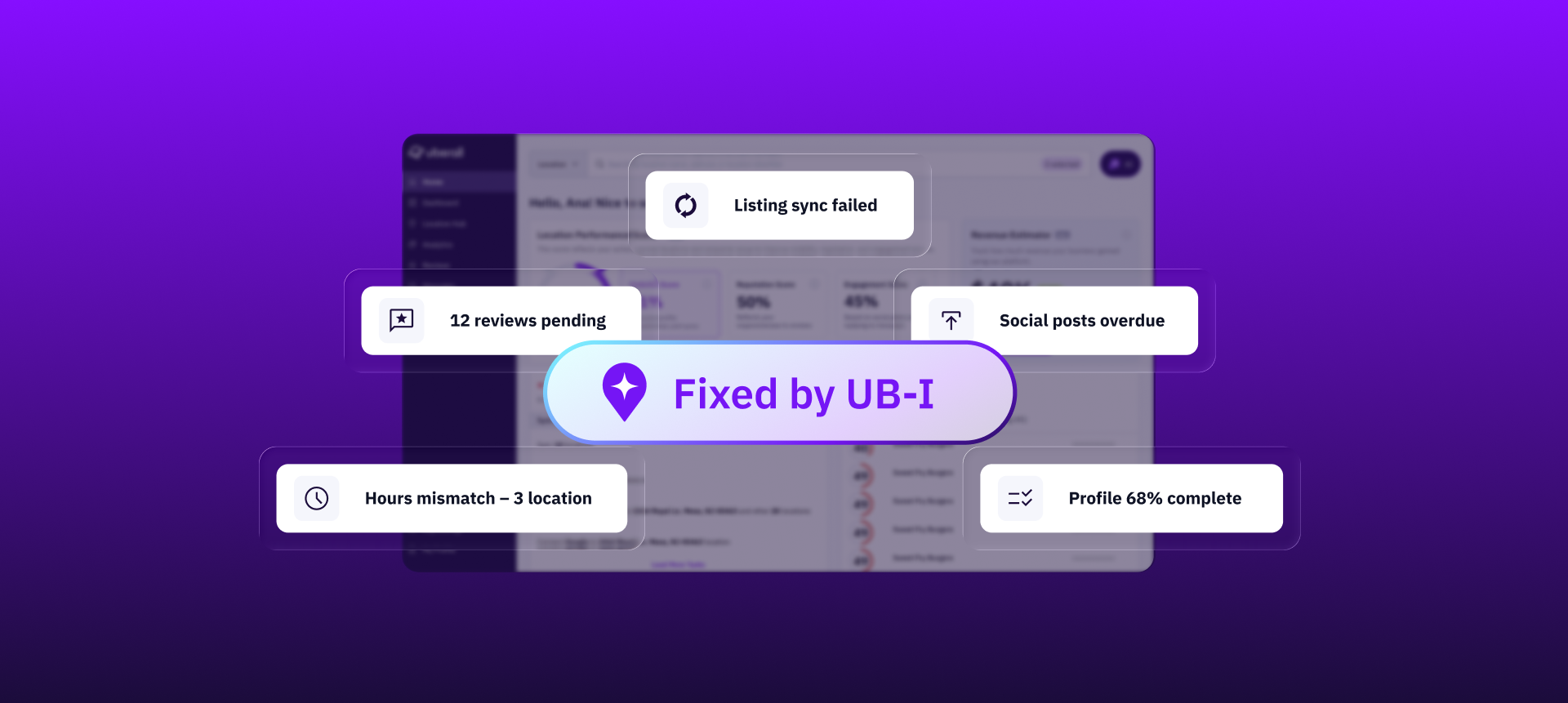
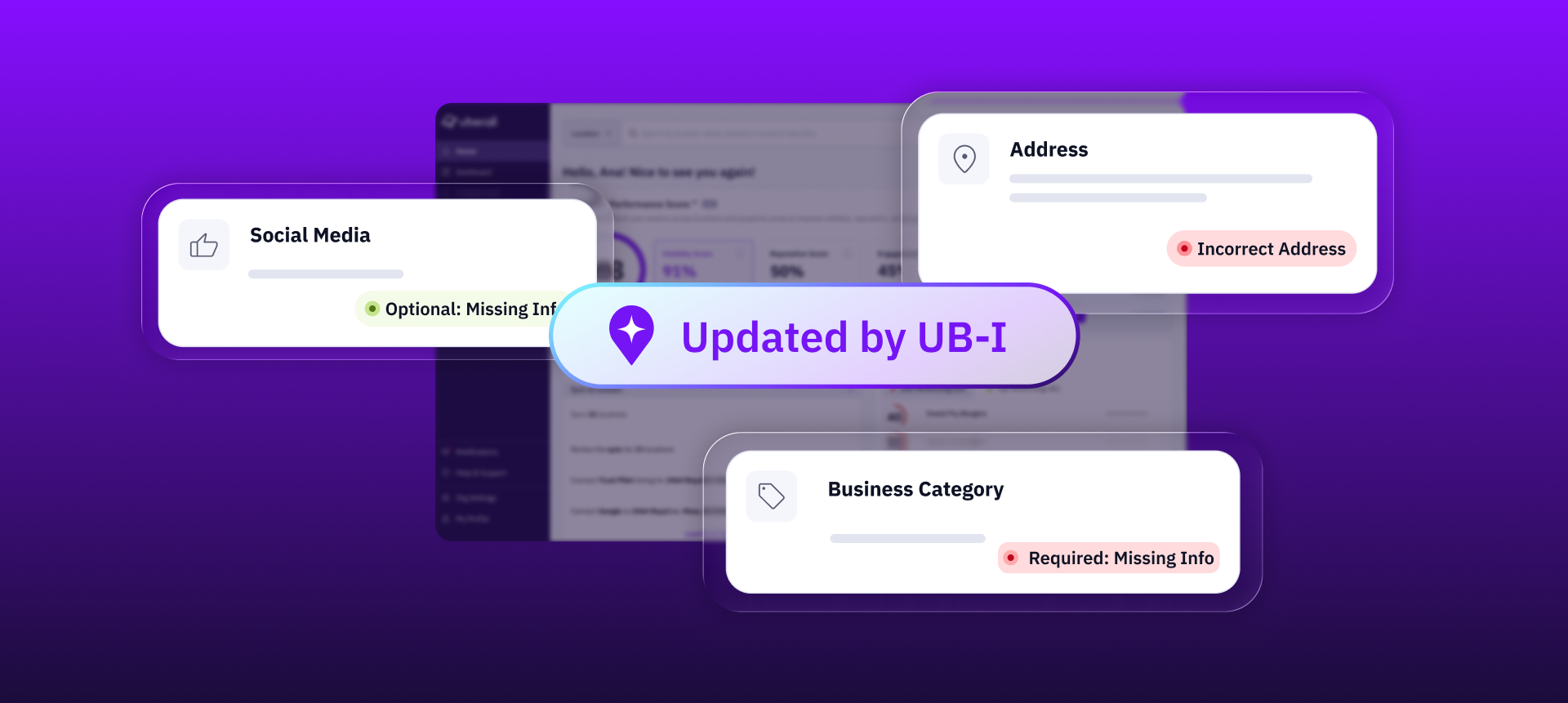
Uberall and MCP lay the groundwork for something truly game-changing: UB-I, our self-orchestrating AI agent purpose-built for location marketing.
UB-I is the first of its kind — designed to intelligently coordinate every layer of location marketing with unprecedented ease and efficiency. By leveraging MCP architecture, UB-I seamlessly connects with and orchestrates multiple data sources and tools, enabling brands to:
- Simultaneously monitor and manage your brand's presence across hundreds of location-based platforms
- Automatically respond to customer reviews using your brand voice and tone
- Coordinate location-specific promotions across multiple marketing channels
- Analyze location data to identify trends and opportunities
- Generate location-optimized content for each of your business locations
Are you exploring ways to connect AI agents with your own tools, customer service, or marketing stack? You can build on our official MCP server today — without any technical barriers. Explore how the future of AI in location marketing looks for your business.



1 800 marques nous font confiance pour rester visibles
— pas seulement apparaître une ou deux fois dans la recherche locale.