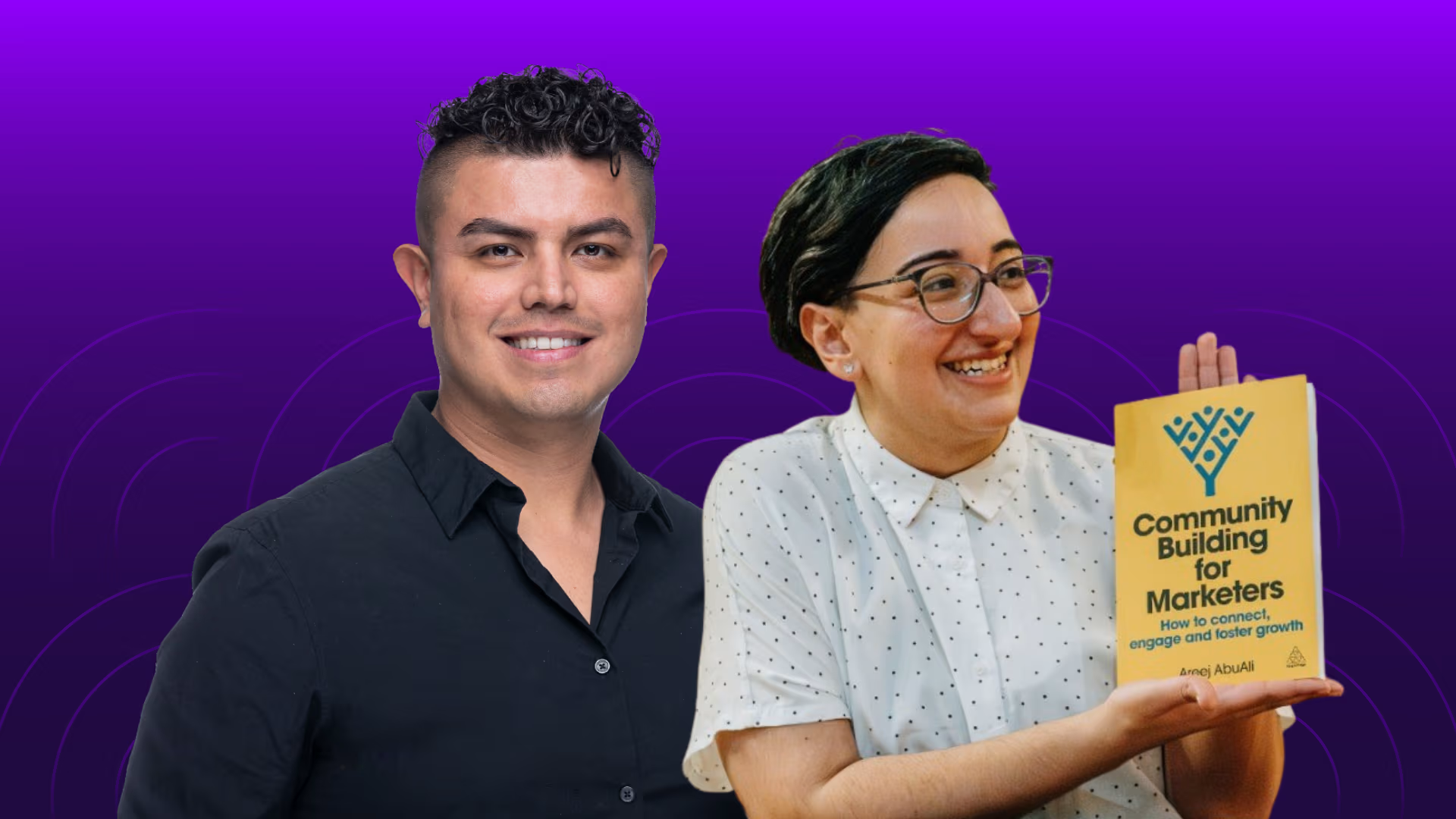
Episode 19: How to Create a Thriving Online and Offline Community

Key Takeaways
- A strong code of conduct that evolves with the community is what protects trust, inclusion, and belonging at scale
- The tipping point from group to community happens when members start leading conversations, answering questions, and enforcing values on their own
- Start small, focus on quality over quantity, and meet people on platforms they already use — a WhatsApp group can be just as powerful as a dedicated app
- Bridging online and offline experiences through pre-event channels, conference buddies, and onboarding sequences makes both stronger
- Community marketing is becoming one of the most important brand investments as social media fragments and consumers seek authentic connections
In a world where algorithms change daily and social platforms fragment, the brands that build genuine community — both online and offline — create something no algorithm can take away: trust, belonging, and loyalty. But building a real community is very different from growing a follower count or launching a Slack group.
In this episode of the Local Marketing Beat podcast, host Christian Hustle is joined by Areej AbuAli, Founder of Women in Tech SEO, and Krystal Taing, VP of Solutions at Uberall, to explore the origin story of one of digital marketing’s most respected communities, what makes it work at 10,000+ members, and what local brands can learn about building their own thriving communities.
Timestamps
00:00 Introduction and why community matters for local brands
01:41 The origin story: how Women in Tech SEO started from a gap in belonging
04:00 The tipping point: when a group becomes a member-led community
05:16 Krystal’s story: finding a welcoming space outside her local SEO bubble
08:00 Protecting trust at scale: the code of conduct and the WTS way
11:20 How online and offline experiences reinforce each other
14:01 Lessons for local brands: start small, focus on quality, use familiar platforms
18:00 Initiatives that drive organic growth: mentorships, conferences, and programs
20:00 Why community marketing is the future for brands in a fragmented digital world
From a Gap in Belonging to a Global Community of 10,000+
“I wasn’t really able to find that connection or feel represented in the different spaces that I went to. So I decided, why not just start an online group for women and people of marginalized gender to connect with one another, ask questions, answer questions, and just be kind.” — Areej AbuAli
Areej shares the founding story of Women in Tech SEO, which began in 2019 after more than five years of feeling like an outsider at SEO conferences.
The industry events she attended were overwhelmingly male, and there was an unspoken expectation that you needed a certain level of seniority or speaking credentials to be taken seriously. She started with a simple online group and monthly meetups in London — and was surprised by how many people had been looking for exactly the same thing.
Six years later, Women in Tech SEO has grown to over 10,000 members with in-person festivals in London, Berlin, Philadelphia, Portland, and Melbourne. For local brands thinking about community building, Areej’s story illustrates a foundational principle: The best communities start from a genuine gap, not a marketing strategy. The people who showed up first were not responding to a campaign — they were responding to a space that finally felt like it was built for them.
The Tipping Point: When Members Start Leading
“There was this beautiful tipping point where I’d log in and all the questions are already answered and folks are directing people, giving them resources, telling them, even sharing our code of conduct and rules on my behalf. It just started feeling very member-led.” — Areej AbuAli
Areej identifies the moment a group becomes a true community: When the founder no longer has to be present for it to function.
In the early days, she was logging in daily to prompt conversations, answer questions, and encourage participation. The tipping point came when members started doing all of that organically — answering each other’s questions, sharing resources, and even enforcing the community’s code of conduct without being asked.
For brands building communities around their locations — whether it is a franchise yoga studio, a restaurant chain, or a neighborhood retail brand — this is the benchmark to aim for.
A community is not a marketing channel you push content into. It is a space where your customers take ownership and create value for each other. Areej’s advice: Focus on creating the environment, then let the members do the work.
A Code of Conduct Is What Makes or Breaks a Community
“One of the pieces of advice I always give to folks who are still in the early days of starting community is make sure you have a solid code of conduct because that can make or break your community.” — Areej AbuAli
As Women in Tech SEO scaled from dozens to thousands, the code of conduct — what they call the WTS Way — became the most important tool for maintaining trust. Areej explains that the code evolves constantly based on new scenarios, and every update is communicated transparently to the entire community. When something goes wrong, the team shares what happened (without naming individuals), explains what action was taken, and updates the rules accordingly.
Krystal confirms that this transparency is palpable from day one. She describes the community as a space where people feel safe asking any question without fear of judgment — something she has not experienced in other professional communities. For brands managing review responses and customer interactions at scale, the parallel is direct: How you handle problems publicly defines your brand’s character.
A transparent, evolving set of values — communicated consistently — builds the kind of trust that turns customers into advocates.
Bridging Online and Offline Makes Both Stronger
“We always set up a Slack channel for all of the attendees a month in advance to our conferences. It’s such a nice way to break the ice before people can go meet in person. A lot of people end up with conference buddies and then they don’t feel so overwhelmed going to a conference and not knowing anyone.” — Areej AbuAli
Areej describes a deliberate strategy for connecting online and offline experiences. A month before every conference, a dedicated Slack channel opens for attendees. Solo attendees can find conference buddies before they arrive, reducing the anxiety of walking into a large event alone.
After the event, those same connections continue in the online community, where familiar names make the space feel welcoming rather than anonymous.
For multi-location brands running events — grand openings, seasonal promotions, workshops, loyalty nights — this model is directly applicable. Creating a simple group (WhatsApp, Facebook, or even a dedicated channel in your app) before an event builds anticipation and connection.
After the event, that group becomes a retention tool. Krystal adds that having already talked to someone online for years makes meeting them in person feel natural, not awkward — something brands can replicate by facilitating customer-to-customer conversations before and after in-store experiences.
Start Small, Stay Local, and Focus on Quality
“I think there’s always a lot of fixation on ‘I want to make sure I grow to 100, 200,’ but actually that does not matter at all. It’s about providing the space for your members to do all the work.” — Areej AbuAli
When asked for advice for brands starting their own community, Areej shares a personal example: A small personal training gym that created a WhatsApp group for its 30 to 50 local clients. That simple group — on a platform everyone already used — became the foundation for monthly picnics, group runs, and Sunday morning outdoor workouts.
The gym’s community kept Areej coming back not just for the training, but for the connections with local people who shared a common interest.
Her advice for local businesses is practical: Start on a familiar platform where your audience already lives. Keep it niche and local. Focus on quality connections over headcount. And let microcommunities emerge organically — members organizing their own runs, their own meetups, their own traditions.
The role of the brand is to create the environment and guide it, not to control every interaction. This approach aligns with how the strongest local social media strategies work: The brand sets the tone, and the community generates the content and engagement.
Why Community Marketing Is the Future for Local Brands
“Community is one of those currencies that you own. You have all your folks in your space and you’re able to connect with them directly. As a brand, whether it’s partnering up with existing engaged communities or making sure that you have your own community set up, it’s going to continue growing and becoming more and more important.” — Areej AbuAli
In her closing remarks, Areej frames community as owned media in an era of fragmented social platforms.
When algorithms change and reach declines, a brand’s community — its direct connection to engaged customers — remains intact. Krystal adds that in a remote-first, digitally saturated world, people are craving authentic interactions, and the brands that facilitate those spaces will win long-term loyalty.
For multi-location brands, this means community building should sit alongside listings management, review management, and local social as a core pillar of local marketing strategy.
Whether it is partnering with an existing community like Women in Tech SEO or building your own from scratch, the investment in authentic connection pays compounding returns — in retention, in advocacy, and in the kind of word-of-mouth that no ad budget can buy.
Ready to Transform Your Business?
Connect with our partnership team to learn how Uberall can help you achieve similar results. Get a personalized consultation and discover the opportunities waiting for your business.
.png)