Will AI Be Your Biggest Customer in 2027?
AI is changing how consumers find and choose businesses. Here’s a preview of what multi-location brands should be ready for in 2027.

What 230+ marketing experts raised
45%
said consumers are done with comparison — the most-raised theme.
42%
said the marketing role is changing faster than its job spec.
38%
said rankings, clicks and impressions no longer tell the full story.
19%
mentioned location data — the least-raised theme, and the biggest opportunity.
Foreword

2026 was the year consumers stopped comparing. They asked AI where to go, got two or three names, and picked one. AI has radically changed the path to purchase.
For marketers, that changes a lot. Brand love alone won't get you onto the shortlist if your details don't hold up. As AI takes on more of the work, your team's strategic judgment and craft matter more than ever. And AI visibility means little if you can't show what it's worth. I see it as a great AI reset for marketing.
As we all prepare for 2027, we asked leading industry experts and Uberall customers seven questions, from the biggest marketing shift of 2026 to their boldest predictions for the year ahead. We also put the same questions to four leading AI models, more than 1,000 times.
Here's a preview of what they told us, and what you can do about it now. The full report follows in January. Get ready: 2027 is going to shake things up.
Consumers Are Done with Comparison
Not so long ago, researching choice would be the driving factor behind consumer search intent: the best-reviewed, the best locations, and the best price. Increasingly, they want to know exactly which option is right for them. In some cases, they want their decision made. It was the theme our experts raised most often, coming up unprompted in 45% of responses.
“The biggest shift was that discovery stopped being a click. With AI Mode, ChatGPT and Perplexity answering the question directly, a growing share of the people who ‘found’ a brand in 2026 never visited a page. They met services and products inside a conversation.”
Maria Kennedy
Senior Digital PR Specialist, Printful and Printify
Industry research points in the same direction:
“A brand or retailer that has not made its value legible to machines will be invisible at the point of decision, no matter how much customers love it.”
Accenture, Talk to my AI Agent, 2026
That puts the pressure on all of the details and their accuracy. Many of our respondents made the same point: the brands that win are the ones whose information holds up when someone checks.
“By the end of 2027, for a lot of local searches, the consumer won’t visit a website before choosing a business. The AI will hand them two or three names, and if you’re not on that list, you’re invisible.”
Mark Goren
Founder & President, 10|20 Marketing

Our First Prediction
AI Will Be Harder to Win Over Than Any Other Customer
In 2026, brands learned that AI recommends what it can verify and cites the easiest information it can find. In 2027, AI will start acting like a customer itself, and a demanding one. Your brand can be fully trusted by your customers but still be left out of the conversation if your details don't hold up. That makes accurate, fresh, and consistent information, for example, prices, services, opening hours, critical components of your brand infrastructure.
In traditional search, a listing with incorrect opening hours might cost a click. Someone could still visit a website, seek out the right details, and choose you anyway. But AI search rarely offers that second chance. Instead, it hands over a shortlist of two or three names that it understands as being correct to solve a user query. A location with incomplete or inconsistent information may not make the list if it does not align with the specifics of the request. As AI agents start checking availability and booking on consumers’ behalf, that same data increasingly decides the sale itself. Location data is now much closer to conversion and revenue than ever before.
Traditional search
AI search
However, location data was the least-raised theme in our survey, with fewer than 1 in 5 responses (19%) mentioning it unprompted. While the basics may be unglamorous, they also seem easy to overlook, which is where the opportunity lies.
Some of our respondents expect this shift to arrive quickly:
“By the end of 2027, for a fast-growing share of local decisions, the first visit to your location will be made by an AI agent, not a human. Assistants will check your hours, read your reviews, compare you with three competitors and then either make the booking or present a shortlist of one.”
Katie King
Author & CEO, AI in Business
So what should brands do about it?
“Make sure your business is bookable and can answer common questions about details such as the number of gluten-free options, cancellation policies, and pricing.”
Claudia Tomina
CEO & Founder, Reputation Arm
Trust, but Verify
In 2027, the great divide will be between those who check what AI tells them and those who trust it implicitly. And that goes for consumers and brands alike. As AI agents take on more location work, brands can’t afford to be in the second group.
“AI is becoming more common in professional workflows, but not everyone is ready to trust AI output without verification. That’s why UB-I always highlights what changes were made, which locations are affected, and asks for confirmation — so users are always in control.”
Murilo Almeida
AI Product Manager, Uberall
It’s Time to Get Rid of the Marketing Job Spec
The role of marketing is changing faster than its job specs. It was one of the themes our experts raised most frequently, coming up unprompted in 42% of responses. AI agents will increasingly handle day-to-day work, such as updating listings, replying to reviews, and creating tailored content at scale.
Don’t Fire Your Marketing Team Just Yet
“AI running marketing on its own” was the idea our experts most often called overhyped. AI agents are taking on more of the work, and people are still the ones deciding what’s good enough to go out.
“You won’t see any more ‘we replaced our 5-person marketing team with an AI agent’ posts. Things start to break at scale, and companies will turn to the humans who understand nuance, fundamentals, and hidden context to right the ship.”
Chris Todd
Sr. Principal, Marketing Operations, CTM
So what’s left for us, the humans? We think judgment, creativity, and authenticity. The message surfaced by our experts was consistent: AI can produce the work, but people still decide whether it’s any good.
“Producing something quickly is useful, but understanding whether it should exist still takes judgment.”
Areej AbuAli
Founder, Women in Tech SEO
There’s a hidden cost of AI investment that rarely makes it into the business case: the talent needed to use it well. Judgment, a perfected craft, and commercial sense tend to come with experience, so more senior hires are becoming more valuable. At Uberall, we’re weighing this up ourselves. It raises another, harder question, too. If AI takes on the entry-level work, how do early-career marketers build the judgment the role now demands? The teams that answer it well will pair junior talent with senior judgment, and use AI to help people learn faster.

Our Second Prediction
Marketing Craftsmanship Will Outshine the Productivity of AI
AI has enabled content to become easier to produce and ever more abundant, but potentially risks becoming generic, indistinguishable from its competition. The rise of “AI slop” could damage brand trust.
Crafted content, curated by real people with sharp copy, authentic photos, and citing named experts is becoming a differentiator again. Human review is part of that craft: someone has to check what goes out, and own it.
The same discipline applies when defining a tech stack. Martech investment will shift from expansion to optimization: fewer new platforms, and more value from existing ones. Consolidation, interoperability, and data accessibility become priorities, judged on gains in efficiency, consumer experience, and commercial performance. The more context a platform holds, such as listings, social media posts, and search performance, the less likely its integrated AI agents are to fill in the gaps with guesswork. Instead, they will continue to become more and more useful.
The advantage will go to those who redesign workflows, redeploy talent, and measure the commercial impact of AI-enabled operations.
“Hot take, but in 2027 the production work gets cheap. Agents will write the category texts, build the reports and run the weekly checks, and they’ll do it well enough that ‘I make content’ or ‘I pull the numbers’ stops being a job description. The scarce resource is judgment.”
Juho Kuusijärvi
Commercial Director, Arvo Partners
Our Formula for a 2027 Hire
AI multiplies what you bring. Zero times AI is still zero.
(Judgment + Craft) × AI
= An Impactful Marketing Hire
Judgment
WHAT WE MEAN
The ability to assess commercial opportunity, shape the marketing narrative, make confident decisions and sense-check what AI produces
ASK IN THE INTERVIEW
“Tell me about a time you rejected work that looked fine on the surface.”
Craft
WHAT WE MEAN
The ability to turn an idea into work that stands out, in any channel or discipline
ASK IN THE INTERVIEW
“Show me something you made that AI couldn’t have.”
× AI
WHAT WE MEAN
Briefing, directing, and reviewing AI agents at scale
ASK IN THE INTERVIEW
“Walk me through how you’d brief an AI agent on this task, and how you’d check its work.”
If AI Visibility Is All You Measure, You Can’t Protect Your Marketing Budget
As AI reconfigures how consumers decide and choose, marketers are scrambling to figure out the best ways to appear in large language models’ (LLMs) answers. AI visibility is quickly becoming the most reported headline. Visibility can tell you if your business is cited in an answer, but your CFO wants to know what it is worth.
If you’re spending your budget on appearing in AI answers but can’t prove what that actually impacts, that budget is the first to be questioned. And visibility isn’t always good news. Being cited at the top is little comfort if AI describes you as the worst place to visit.
Our survey respondents are experiencing this disconnect too. Nearly 4 in 10 responses (38%) said that rankings, clicks, or impressions no longer tell the full story, but far fewer agreed on what, if anything, should replace them.
Our view: it’s all about revenue. Every recommendation AI surfaces should be traced to the action it inspires: a call, a booking, visit or a sale. For multi-location brands, that means measuring it location by location.
“Stop: using a single ranking position as the headline KPI. … Replace it with a share of AI recommendation per location, tracked over time and tied to calls, bookings, footfall, and revenue.”
Katie King
Author & CEO, AI in Business

Our Third Prediction
AI Visibility on Its Own Will Become 2027’s Vanity Metric
In 2027, the brands that will make the most gains will be the ones that connect what consumers see in AI answers with actions actually taken, across marketing, sales, and in every location. That’s the thinking behind Location Performance Optimization (LPO): keeping visibility, engagement, reputation, and conversions optimized and trending upward.
Interestingly, some of our respondents disagree on how quickly AI agents will take over purchasing. For 2027, most see AI as a discovery and shortlisting engine, with the sale still happening at the brand.
At Uberall, we think discussions in company boardrooms will soon look past AI share of voice to how often AI agents actually choose you and buy. For physical businesses, they’ll choose the location too. So the work starts at optimizing each location, and often in collaboration with the people who run it.
What to measure in 2027

How often AI recommends each location, tracked over time
How AI describes your brand, and whether the details are right
What those recommendations lead to: calls, bookings, direction requests, and visits
Revenue, location by location
RECAP
What This Means for 2027
Marketing has always been a science, and AI is making it an even more critical growth engine. Our preview has highlighted:
AI only recommends what it can verify.
Accurate, fresh, and consistent information is how brands earn a place on the shortlist.
Humans will always “win”.
Judgment, creativity, and commercial sense are what AI multiplies. Hire and develop for them.
Visibility is only the start.
An AI mention only counts if it turns into revenue. Measure what AI visibility brings in, from bookings and visits to sales, and track it location by location.
Putting It All into Practice with Uberall
Our predictions point to three priorities for 2027. Here’s how we help with each.
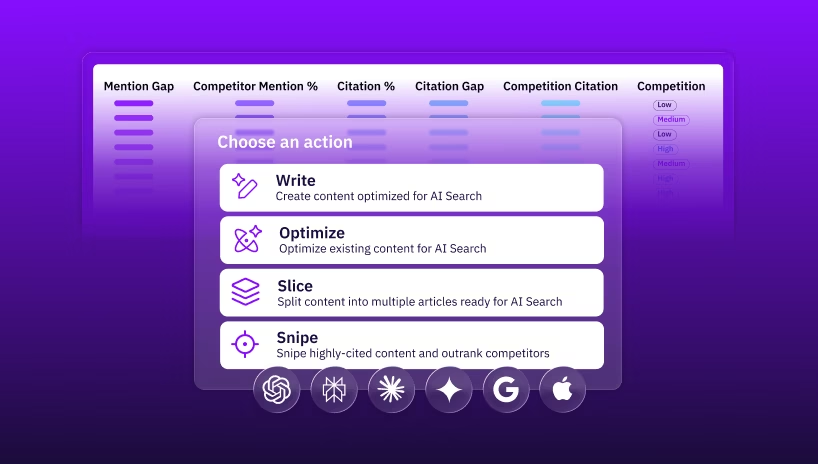
Win over AI as a customer.
GEO Suite helps you prepare the content AI is looking for, while UB-I, our AI agent for location performance, keeps details accurate across every location, from opening hours to services.
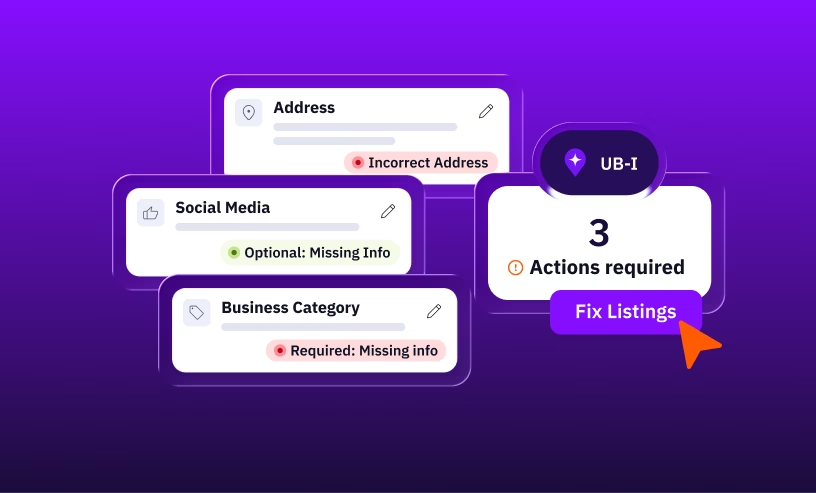
Keep people in charge.
UB-I does the work at scale, from review responses in your brand voice to location updates, and your team approves every change, with a full audit trail.
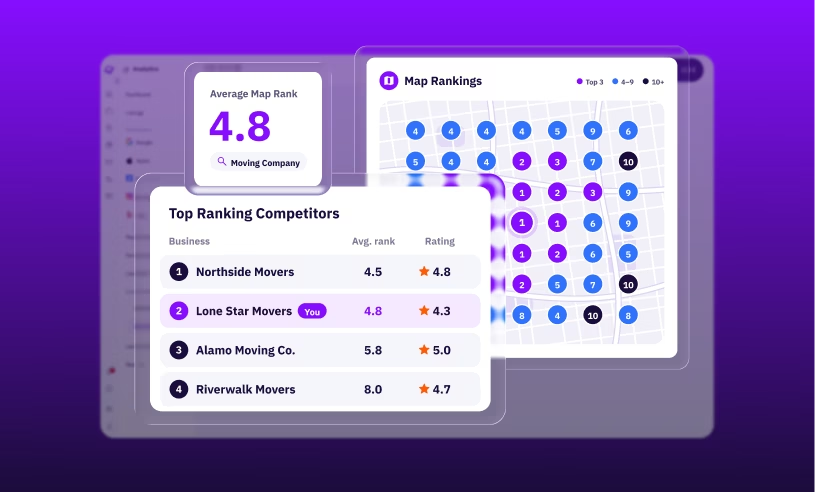
Measure what AI visibility is worth.
GEO Suite shows where each location appears in AI search and what to fix first.
We Also Asked the Machines
We put our survey questions to four leading AI models, and compared their answers with our experts'. One early signal: the models brought up location in almost every answer. In January, we'll share what we found.
So, What Comes Next?
In mid-January 2027, our full report will explore these themes in greater detail. Some of the most interesting findings raised as many questions as answers. We'll look at:

Agentic commerce.
Several respondents named it as a 2027 turning point. We'll look at how soon AI agents will book and buy on consumers' behalf, and what brands need in place first.

Advertising inside AI platforms.
Paid placements in conversational AI are early, but growing.

Budgets that keep up.
How to balance investment in foundations with room to experiment as the evidence changes.

Who controls the customer journey.
And what multi-location brands can still own, from first-party data to the experience at each location.

Industry differences.
What AI discovery means for healthcare, food service, retail, and financial services.

People and machines.
Where human experts and AI models agree, and where they don't.
What's been really exciting to see is the level of engagement around GEO, agentic AI, and the future of marketing success. Our customers and industry experts have been incredibly generous in sharing their thoughts and opinions as we set out to build our view for 2027, and we thank them for their contributions.
Technology changes how consumers find your brand. The details, the in-depth data, and the people behind each location will ultimately decide whether they choose you.
A Note on the Methodology
We asked Uberall customers and partners, as well as internal experts and industry thought leaders, how they see the future of location marketing and AI. We gathered their views through a seven-question survey, collected over two weeks in October 2026. We reviewed over 230 responses shared by marketing professionals from agencies, multi-location brands, technology companies, and the automotive sector. We also put the same questions to four leading AI models; see ‘We Also Asked the Machines’. We’ll share those findings in January.
We used Claude to support data cleaning and preparation, and an Uberall-configured model to assist with thematic coding. The team reviewed the AI-assisted analysis against the original responses.
This research is qualitative and not statistically representative of the wider industry. All quotes are used with permission. The Uberall marketing team made all final editorial decisions.
Find Out What Happens Next
Our full 2027 Trends Report will reveal what happens to multi-location brands that embrace AI-first discovery. Reserve your spot now to be the first to know.
Can't wait?
See how AI talks about your brand
with GEO Suite.
Form placeholder