Episode 18: How KFC Is Winning Gen Z with Digital and Local Marketing

Key Takeaways
- KFC UK & Ireland saw a 14% increase in Google Maps direction clicks after implementing a dedicated review response team
- Building a brand for the next generation means making under-24s your key advocates through culturally relevant campaigns and unexpected brand partnerships
- Specialty beverage launches are designed around Gen Z’s desire for self-expression and experiential consumption
- Social media is the most efficient channel for reaching younger audiences, but traditional media still drives scale
- Always listen to your customers across all channels, acknowledge issues, and offer solutions
For QSR brands competing for the next generation of loyal customers, the playbook is changing fast. Winning Gen Z requires more than great food — it demands culturally relevant digital experiences, optimized local presence, and a genuine commitment to listening and responding to customer feedback across every channel.
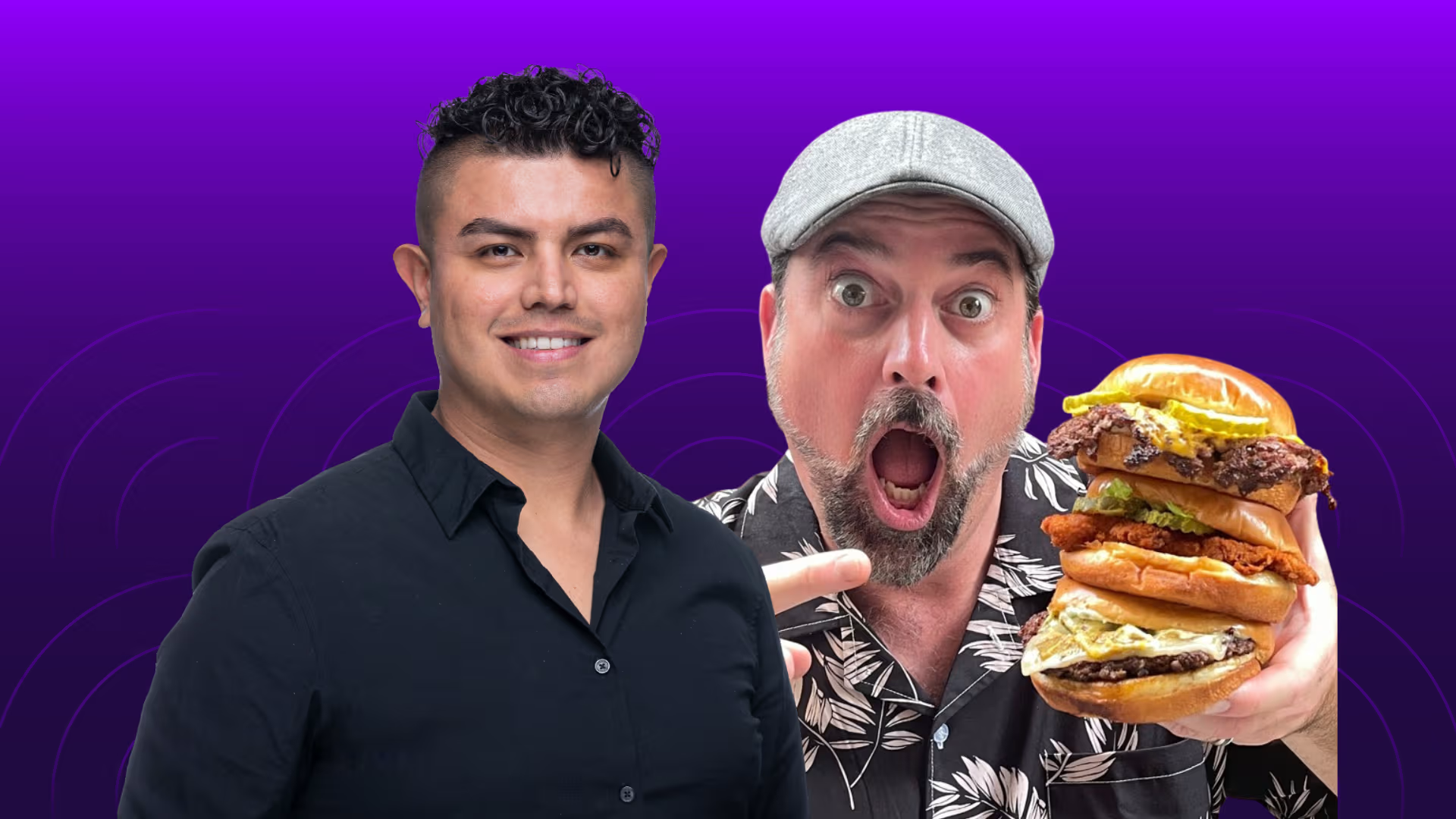
In this episode of the Local Marketing Beat podcast, host Christian Hustle sits down with Jaime Arribas, Senior Marketing Technology Manager at KFC UK & Ireland, to explore how the iconic brand is building for the next generation, how review management directly drove a 14% lift in direction clicks, what it takes to balance traditional and social spend, and how AI-driven search is reshaping KFC’s location marketing strategy.
Timestamps
00:00 Introduction to KFC’s digital strategy and guest Jaime Arribas
01:40 What “building a brand for the next generation” means at KFC
03:30 How Kwench targets Gen Z through self-expression and experience
04:30 The role of Google Business Profile, Apple Maps, and social media
05:15 14% increase in direction clicks and the review response strategy
06:50 Promoting specialty products across traditional and social channels
09:00 How KFC measures ROI from digital and location marketing
11:40 AI-driven search and the future of personalized local discovery
13:00 Key takeaway: listen and respond to your customers
14:50 Restaurant renovations and the omnichannel brand experience
Building a Brand for the Next Generation
“It basically means making KFC an iconic brand for the next generation. We want to emphasize our amazing taste and being part of the popular culture, and in that journey we want to make under-24s our key advocates.” — Jaime Arribas
Jaime explains that KFC UK & Ireland’s strategy centers on making the brand culturally relevant to younger consumers. This goes beyond advertising — it means partnering with unexpected brands that people would never associate with KFC, driving fame through culturally relevant campaigns, and positioning under-24s as the brand’s most important advocates.
The approach combines traditional media for scale (billboards, television, radio) with social-first campaigns designed for shareability and virality.
For multi-location brands in the food and beverage space, KFC’s approach demonstrates that building for the next generation is not about abandoning what makes the brand iconic — it is about wrapping that identity in formats and experiences that resonate with how younger consumers discover, share, and engage with brands today.
How a Specialty Beverage Captures Gen Z
“Gen Z loves expressing individuality, and especially drinks reflect the desire for self-expression. The younger generations value experiences over traditional goods, and specialty drinks often come with a sense of novelty or adventure.” — Jaime Arribas
Jaime describes how KFC’s new beverage brand, Kwench, is specifically designed to attract younger consumers who view drinks as a form of self-expression. The product is not just about quenching thirst — it is about novelty, adventure, and the kind of shareable experience that drives social media engagement. The visual identity and branding of Kwench are designed to feel native to the platforms where Gen Z spends time.
For QSR and franchise brands launching new products, the lesson is that product innovation and local marketing strategy need to be designed together. A specialty product launch should be accompanied by social-first creative, updated listings reflecting the new offering, and consistent messaging across all digital touchpoints so that when customers search for the product, every surface has the information they need.
Review Response Drove a 14% Increase in Direction Clicks
“Last year, just with the number of clicks on the directions button in Google Maps across all our restaurants in the UK and Ireland, these clicks increased by 14%. And one of our hypotheses is that growth came when we started replying to Google reviews and having a dedicated team reply.” — Jaime Arribas
KFC UK & Ireland saw a 14% year-over-year increase in Google Maps direction clicks — across more than 1,000 locations — and Jaime attributes a significant portion of that growth to the launch of a dedicated review management team.
Before this initiative, reviews were largely going unanswered. Once the team was in place, both existing customers (who felt heard when they raised issues) and new customers (who saw that the brand actively engaged with feedback) responded positively.
For any multi-location brand, this is a powerful case study in the connection between reputation management and measurable business outcomes. Direction clicks are one of the strongest intent signals in local search — a customer requesting directions is one step away from walking through the door. The fact that review response alone correlated with a 14% lift in that signal underscores why review management at scale should be a top priority for every location-based brand.
Balancing Traditional and Social Spend
“In terms of spend, traditional gets the most resources because of the cost. But then in terms of effort and the campaigns, I think they’re pretty much balanced. And social is our most efficient one.” — Jaime Arribas
Jaime offers a candid look at how KFC UK allocates marketing budget. Traditional channels (TV, billboards, radio) command the largest share of spend because of their higher costs, but social media delivers the most efficient returns — more exposure, more shares, and more engagement per pound spent. Every major traditional campaign has a corresponding social component, but some campaigns are designed exclusively for social, particularly when the product and audience align with digital-first consumption.
For multi-location brands managing local social media alongside broader campaigns, KFC’s model is instructive: Social is not a secondary channel that mirrors what traditional does. It is the most efficient channel for reaching younger audiences and should be treated as a primary investment, with creative and strategy designed natively for each platform.
Measuring ROI from Direction Clicks to Revenue
“We have created a basic algorithm taking into account the average order value, the clicks on directions — as that is showing an intent for the user to get to the restaurants — and we have that model so we can compare return on investment.” — Jaime Arribas
Jaime describes a two-track approach to measuring ROI.
For paid and social media, KFC works with an agency that has built a custom attribution model tracking new traffic, returning customers, and average order values. For organic location marketing — Google Maps, Apple Maps, listings — the team built its own model using direction clicks as the primary intent signal, combined with average order value data, to estimate revenue impact.
This dual approach acknowledges a reality that many multi-location brands face: Paid channels have established attribution tools, but organic local performance requires custom measurement. Jaime’s model — connecting direction clicks to estimated revenue — provides a practical framework for any brand using analytics to justify local marketing investment to leadership.
AI-Driven Search Will Revolutionize Location Marketing
“AI-driven search I think will be a revolution on the way we approach location marketing because this kind of personalized experience, knowing about the customer — it’s not just a search with context. Those tools know a lot.” — Jaime Arribas
While acknowledging that the AI search landscape is evolving rapidly and unpredictably, Jaime sees AI-driven search as transformative for location marketing.
The key difference, he explains, is personalization at a depth that traditional search could never achieve. AI tools know enough about individual users to deliver hyperrelevant recommendations — and for brands, this means that the quality and consistency of information across all digital surfaces matters more than ever.
For QSR brands and multi-location businesses, Jaime’s perspective reinforces the need to ensure that every location’s data — hours, menus, promotions, reviews — is accurate and comprehensive across all listing platforms. As AI search becomes the primary discovery mechanism for consumers, the brands that have invested in location data management will be the ones AI recommends.
Ready to Transform Your Business?
Connect with our partnership team to learn how Uberall can help you achieve similar results. Get a personalized consultation and discover the opportunities waiting for your business.
.png)