Get Consumers Clicking “Book” with These Hospitality Marketing Strategies
Step 1: Stand out from other hospitality brands. Step 2: Attract bookings. Step 3: Gain loyal customers. Discover expert hospitality marketing strategies.

Standing out in a saturated market of direct competitors or aggregators is the ultimate goal for all hospitality brands.
Without standing out, these businesses — made up of hotels, resorts, theme parks, casinos, cultural attractions, and theaters — struggle to drive bookings or meet their revenue goals.
Before spending their money, today’s consumers are “prequalifying” their purchase decisions with a lot of online research. More than 50% of consumers read more reviews and rely on trustworthy signals — not ads — to make their decisions. More than 30% check photos and services before committing.
Even for loyalty card members, which includes most of us, booking decisions rarely come down to points or perks alone, but reviews, photos, and as much detailed information or user-generated content as possible.
Because in hospitality, experiences matter. In an industry where every stay, meal, and attraction is expected to deliver something memorable, marketing this experience has become the ultimate differentiator.
1. Visibility: Being the First Choice
Visibility starts long before a guest reaches your website. It’s built across multiple online and offline touchpoints — from social media and review platforms to listings on Google, Apple Maps, and booking sites.
Managing all of these consistently is what keeps your brand discoverable and trustworthy in the moments that matter most. It’s also where many marketing teams struggle or burn out — especially without the right martech platforms in place to manage it all efficiently.
Local SEO is the engine behind this visibility, and in hospitality marketing, it drives discovery and direct bookings. While your local property may compete with the multi-million-dollar ad budgets of aggregator platforms, optimizing for local search helps you win where it counts: on the map, in the moment, and in front of guests ready to book.
- Complete your Google Business Profile: Ensure your name, location, description, and photos are accurate, engaging, and linked to your website or dedicated location page — not to your homepage.
- Optimize on-page signals: Showcase what makes your property unique, from amenities, standout amenities, and exceptional service to your connection with the local area. Prioritize your E-E-A-T signals.
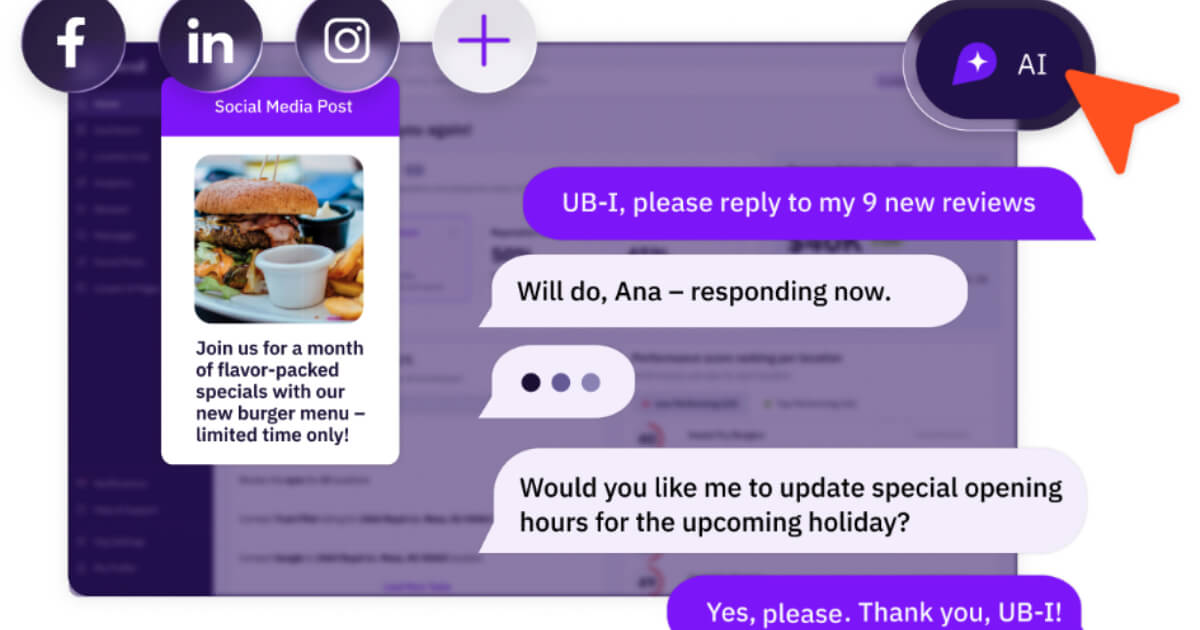
- Engage with reviews: Respond thoughtfully on platforms like Google, Yelp, Trustpilot, or Facebook. Both Google and AI tools such as ChatGPT reward responsiveness, and so do guests — because it signals relevance and recent activity.
- Don’t neglect Apple Maps, Bing Places, or less obvious platforms: LLMs access these platforms less frequently unless specifically prompted or when higher-priority sources are unavailable. You should, however, still ensure your profile is complete across these platforms to maintain LLM visibility.
Your guests can’t choose you if they can’t find you. The hospitality brands that maximize their visibility across the traditional SERP and AI search tools will stand out early — and earn trust when travelers are planning their next stay.
2. Reputation: Being the Popular Choice
Hospitality marketing today goes beyond filling rooms or seats — it’s about creating an emotional connection with potential and existing guests.
The goal is to give them that dream scenario they simply can’t refuse: a stay that feels aspirational yet attainable, and a brand they can trust to deliver every time.
Some of these decisions, after all, are considerable investments accompanied by high expectations. You can’t return a holiday or theater experience to the store.
A strong brand identity is how your brand makes people feel. And in hospitality, those feelings spread fast through electronic word of mouth (eWOM). They recognize the brand name, check reviews to see how your local site measures up to your brand’s global reputation, and scroll through guest photos on social media for reassurance before clicking “book.”
Encouraging reviews through post-visit emails, social posts, and receipts builds credibility, but the real power lies in how you respond. Engaging regularly and quickly with feedback — especially the negative reviews — not only strengthens brand perception but also boosts your local visibility.
Here’s what the latest data from our report reveals about the state of hospitality reputation management:
- Star rating: The industry average sits at a healthy 4.16, though some brands still struggle to stay above 3.
- Review volume: Leading brands gathered over 100,000 reviews, averaging more than 200 per location, while others barely register activity. The benchmark for strong visibility sits at 29 reviews per location per month.
- Response Rate: Fewer than half of all reviews receive a reply — a missed opportunity to engage guests and influence future bookings. Top-performing brands respond to nearly all feedback.
- Sentiment: With an average score of 74, guests are generally satisfied — but the gap between best and worst performers remains significant.
Managing reviews manually can quickly overwhelm your team. That’s where the best location marketing solutions built for hospitality make a real business impact — simplifying review management, ensuring faster response times, and helping corporate teams understand customer sentiment trends across locations.
And consistency across locations is critical. A localized hospitality marketing strategy can quickly become risky without clear oversight — from fragmented messaging to uneven guest experiences. Teams should plan from the top down by giving local teams the flexibility to act on guest insights while maintaining brand consistency and corporate control over reputation.
3. Engagement: Being the Future Choice
Engagement isn’t just about posting — it’s about maximizing curiosity, connection, and trust long before a guest steps onto the scene. Compelling content remains one of the most powerful tools in your hospitality marketing strategy.
Standing out requires more than occasional updates. Visual storytelling — through high-quality images, guest testimonials, and especially video — helps travelers visualize themselves as part of the experience you’re selling.
For hotels and resorts, that could mean behind-the-scenes tours, user-generated influencer content highlighting amenities, or destination highlights. Remember that consumers trust people more than brands — which is where the power of electronic word of mouth (eWOM) comes in. When local influencers or past guests share genuine experiences, it carries far more weight than any ad.
Regular engagement across your social media and Google and Apple profiles also keeps your brand visible in discovery moments. Promoting local recommendations, seasonal packages, or unique guest experiences helps bring destinations to life. And while many hospitality brands still underinvest in publishing posts and real-time engagement, that gap presents an opportunity: The brands that communicate consistently and creatively are the ones shaping consumer choices.
Our recent data shows engagement across major platforms is steadily rising — especially on visually driven channels:
It’s also important to remember on your website that behavioral signals like click-through rates, bounce rates, and time spent on page all influence local rankings — meaning valuable, authentic content does double duty for your brand.
4. Conversion: Being the Easiest Choice
Being visible is one thing — but converting that visibility into action takes more. It requires seamless online experiences that guide travelers from discovery to booking with minimal friction.
This seamlessness can come down to several factors, such as having clear CTAs and the right action links from your listings as well as structuring content properly on your location landing pages. Technical elements such as optimized page speed, accessibility, and mobile functionality are also important. This isn’t an exclusive list, but just remember: Don’t make converting harder than it needs to be.
Our recent performance data highlights just how much opportunity there is to capture intent when travelers interact with your brand online:
- Clicks for directions: Hospitality locations generated a median of 4,213 direction clicks in the first half of 2025 — a strong signal of in-person intent. Top-performing properties attracted more than 20,000 clicks, while some barely registered any. Every address, map pin, and local detail must be accurate and optimized to capture high-intent searches.
- Clicks to website: On average, each hospitality location received around 2,796 website clicks, as travelers explored booking options, amenities, and offers. But the best performers drew over 56,000 clicks per location — a dramatic gap that underlines the importance of fast, mobile-friendly websites with clear, persuasive booking paths.
- Clicks to call: Hospitality locations also generated a median of 245 calls per location — often from guests confirming reservations, checking availability, or asking about special arrangements. The most responsive locations handled over 4,300 calls, while others barely received one. Ensuring accurate contact details and training staff to handle inquiries quickly can turn these calls into confirmed stays.
Together, these numbers show a clear pattern: Hospitality brands that make it easy for guests to act — whether by calling, clicking, or getting directions — are the ones converting digital interest into real-world bookings.
The key is to remove friction at every step: When the journey from search to stay feels effortless, conversion follows naturally.
For hospitality marketers, optimizing these final steps transforms visibility, reputation, and engagement into measurable revenue, completing the Location Performance Optimization (LPO) loop.

Ready to Transform Your Business?
Connect with our partnership team to learn how Uberall can help you achieve similar results. Get a personalized consultation and discover the opportunities waiting for your business.